Anthony T. Campagnoni – författare
Visar alla böcker från författaren Anthony T. Campagnoni. Handla med fri frakt och snabb leverans.
3 produkter
3 produkter
Inbunden, Engelska, 1989
1 634 kr
Skickas inom 10-15 vardagar
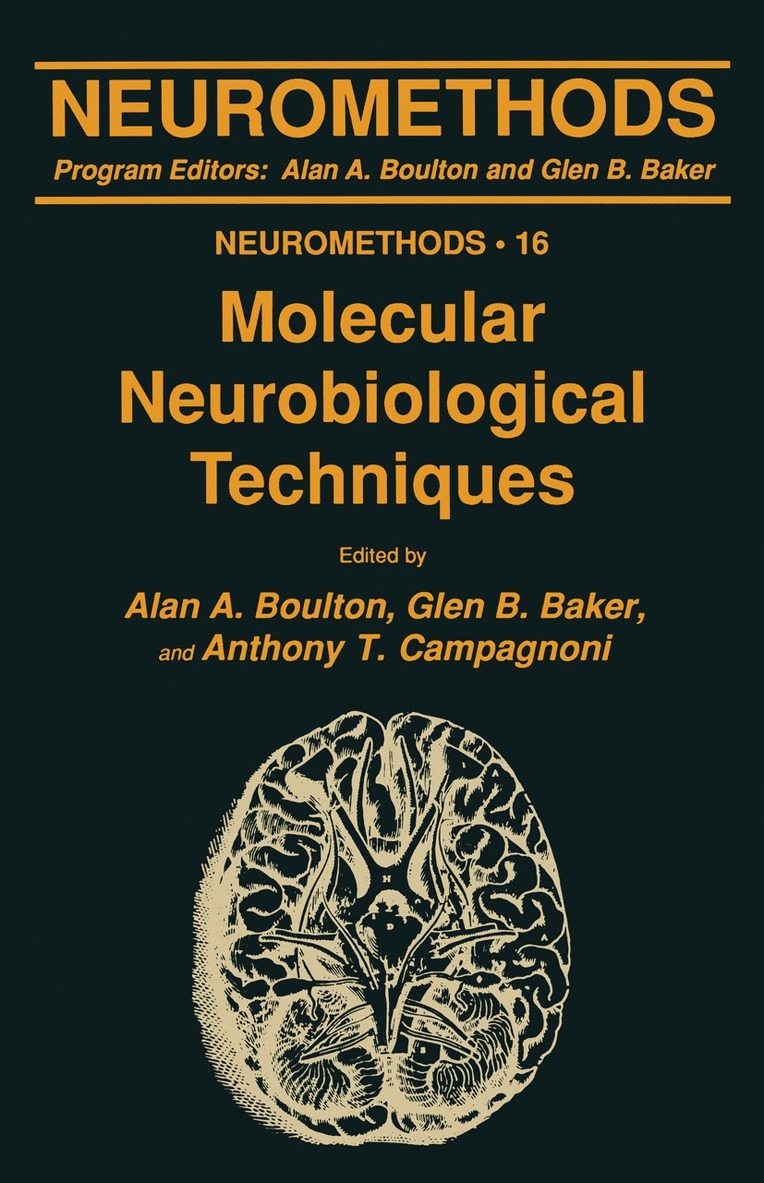
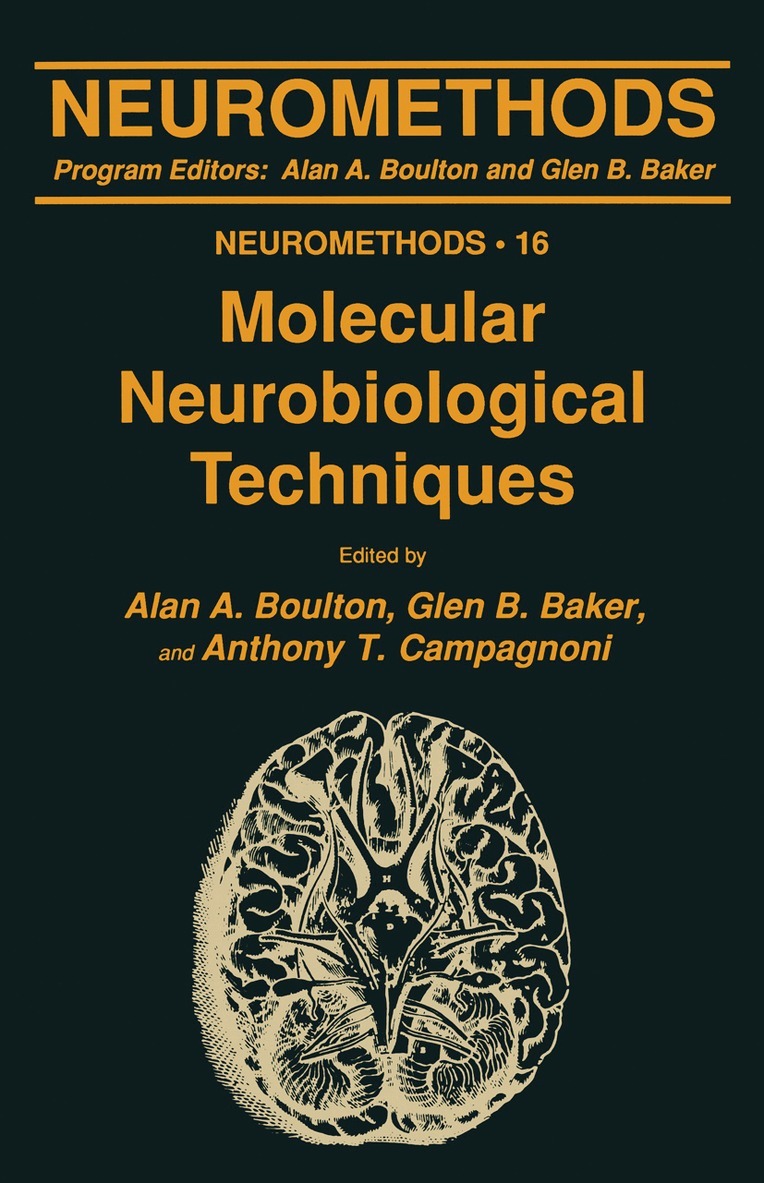
It goes without saying that the principles and techniques of molecular biology are having and will continue to have a major impact on investigations into nervous system structure and func tion. It is becoming increasingly apparent to neuroscientists in all subdisciplines that a working knowledge of the language, approaches, and techniques of molecular biology is indispensable for their work. For these reasons, the editors have decided to devote this volume of Neuromethods to the techniques of molecular biology and their application to neural systems. There currently exist a number of excellent reference technical manuals that de scribe molecular neurobiological techniques in great detail, and many of these are cited within the chapters included in this volume. It was not the intention of the editors or authors of this volume to duplicate these efforts. Rather, our intention was to present to the neuroscientist who is relatively unfamiliar with these methodologies an understanding of how specific techniques are used to approach major molecular neurobiological problems as well as a set of techniques that work in the laboratories of the individuals writing the chapters. In some cases, there are duplica tions of techniques these have been retained to illustrate the range of variability of the technique and/or the flexibility of the method to study different types of problems. We hope that the chapters will provide the reader with an understanding of the methods and their applicability to neurobiological problems; and, perhaps, suggest new directions for the reader's research efforts. Anthony T.
Häftad, Engelska, 2013
1 634 kr
Skickas inom 10-15 vardagar
It goes without saying that the principles and techniques of molecular biology are having and will continue to have a major impact on investigations into nervous system structure and func tion. It is becoming increasingly apparent to neuroscientists in all subdisciplines that a working knowledge of the language, approaches, and techniques of molecular biology is indispensable for their work. For these reasons, the editors have decided to devote this volume of Neuromethods to the techniques of molecular biology and their application to neural systems. There currently exist a number of excellent reference technical manuals that de scribe molecular neurobiological techniques in great detail, and many of these are cited within the chapters included in this volume. It was not the intention of the editors or authors of this volume to duplicate these efforts. Rather, our intention was to present to the neuroscientist who is relatively unfamiliar with these methodologies an understanding of how specific techniques are used to approach major molecular neurobiological problems as well as a set of techniques that work in the laboratories of the individuals writing the chapters. In some cases, there are duplica tions of techniques these have been retained to illustrate the range of variability of the technique and/or the flexibility of the method to study different types of problems. We hope that the chapters will provide the reader with an understanding of the methods and their applicability to neurobiological problems; and, perhaps, suggest new directions for the reader's research efforts. Anthony T.
E-bok
Engelska, 20081 977 kr
Läs direkt efter köp
It goes without saying that the principles and techniques of molecular biology are having and will continue to have a major impact on investigations into nervous system structure and func tion. It is becoming increasingly apparent to neuroscientists in all subdisciplines that a working knowledge of the language, approaches, and techniques of molecular biology is indispensable for their work. For these reasons, the editors have decided to devote this volume of Neuromethods to the techniques of molecular biology and their application to neural systems. There currently exist a number of excellent reference technical manuals that de scribe molecular neurobiological techniques in great detail, and many of these are cited within the chapters included in this volume. It was not the intention of the editors or authors of this volume to duplicate these efforts. Rather, our intention was to present to the neuroscientist who is relatively unfamiliar with these methodologies an understanding of how specific techniques are used to approach major molecular neurobiological problems as well as a set of techniques that work in the laboratories of the individuals writing the chapters. In some cases, there are duplica tions of techniques these have been retained to illustrate the range of variability of the technique and/or the flexibility of the method to study different types of problems. We hope that the chapters will provide the reader with an understanding of the methods and their applicability to neurobiological problems; and, perhaps, suggest new directions for the reader''s research efforts. Anthony T.