Antonella Carbonaro – författare
Visar alla böcker från författaren . Handla med fri frakt och snabb leverans.
4 produkter
4 produkter
1 530 kr
Skickas
The data that must be processed in healthcare includes text, numbers, statistics, and images, and healthcare systems are continuously acquiring novel data from cutting-edge technologies like wearable devices. Semantic intelligence technologies, such as artificial intelligence, machine learning, and the internet of things, together with the hybrid methodologies which combine these approaches, are central to the development of the intelligent, knowledge-based systems now used in healthcare. This book, Roles and Challenges of Semantic Intelligence in Healthcare Cognitive Computing explores those emerging fields of science and technology in which cognitive computing techniques offer the effective solutions poised to impact healthcare in the foreseeable future, minimizing errors and improving the effectiveness of personalized care models. The book assesses the current landscape, and identifies the roles and challenges of integrating cognitive computing techniques into the widespread adoption of innovative smart healthcare solutions. Each chapter is the result of collaboration by experts from various domains, and provides a detailed overview of the potential offered by new technologies in the field. A wide spectrum of topics and emerging trends are covered, reflecting the multidisciplinary nature of healthcare and cognitive computing and including digital twins, eXplainable AI, AI-based decision-support systems in intensive care, and culinary healthcare, as well as the semantic internet of things (SIoT), natural language processing, and deep learning and graph models.The book presents new ideas which will facilitate collaboration among the different disciplines involved, and will be of interest to all those working in this rapidly evolving field.
E-bok
PDF, Engelska, 2021995 kr
Läs direkt efter köp
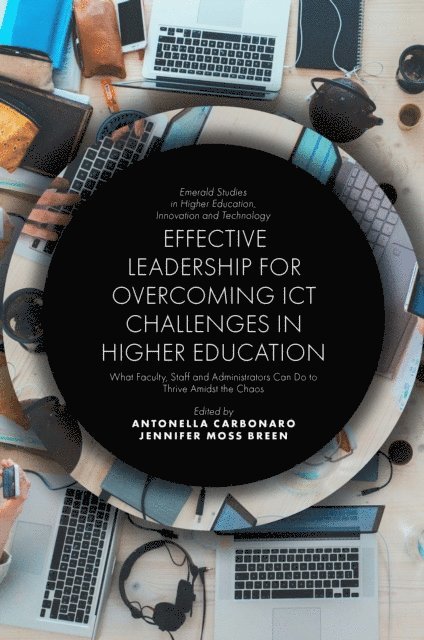
Although it is vital that the incorporation of ICT into academic culture is effective and lasting, the very nature of higher education, with its long ties to tradition and academic values, does not lend itself easily to emerging ICT strategies. This book asks how we, as educators, can shift mind-sets, practices, policies, and attitudes in higher education in order to serve society and meet the educational needs of today. Tackling the critical question of how to manage knowledge for value creation in the higher education environment, the authors draw attention to smart ICT use for knowledge creation and sharing. Serving up a mixture of case studies, examples, questions and tools, they also deliver insights on the human element involved in both ICT and higher education. By providing a conceptual model for implementing Knowledge 4.0 in educational environments, this book ultimately facilitates a dialogue within higher education institutions that brings forth emerging practices and examples of cultural adaptation. Confronting the idea that innovation brings chaos to institutions steeped in tradition, this edited collection is a must-have guide for those interested effecting technological change in educational environments while also sustaining academic quality and delivering meaningful learning outcomes.
Inbunden, Engelska, 2021
928 kr
Skickas inom 5-8 vardagar
Although it is vital that the incorporation of ICT into academic culture is effective and lasting, the very nature of higher education, with its long ties to tradition and academic values, does not lend itself easily to emerging ICT strategies. This book asks how we, as educators, can shift mind-sets, practices, policies, and attitudes in higher education in order to serve society and meet the educational needs of today. Tackling the critical question of how to manage knowledge for value creation in the higher education environment, the authors draw attention to smart ICT use for knowledge creation and sharing. Serving up a mixture of case studies, examples, questions and tools, they also deliver insights on the human element involved in both ICT and higher education. By providing a conceptual model for implementing Knowledge 4.0 in educational environments, this book ultimately facilitates a dialogue within higher education institutions that brings forth emerging practices and examples of cultural adaptation. Confronting the idea that innovation brings chaos to institutions steeped in tradition, this edited collection is a must-have guide for those interested effecting technological change in educational environments while also sustaining academic quality and delivering meaningful learning outcomes.
E-bok
Engelska, 2021995 kr
Läs direkt efter köp
Although it is vital that the incorporation of ICT into academic culture is effective and lasting, the very nature of higher education, with its long ties to tradition and academic values, does not lend itself easily to emerging ICT strategies. This book asks how we, as educators, can shift mind-sets, practices, policies, and attitudes in higher education in order to serve society and meet the educational needs of today. Tackling the critical question of how to manage knowledge for value creation in the higher education environment, the authors draw attention to smart ICT use for knowledge creation and sharing. Serving up a mixture of case studies, examples, questions and tools, they also deliver insights on the human element involved in both ICT and higher education. By providing a conceptual model for implementing Knowledge 4.0 in educational environments, this book ultimately facilitates a dialogue within higher education institutions that brings forth emerging practices and examples of cultural adaptation. Confronting the idea that innovation brings chaos to institutions steeped in tradition, this edited collection is a must-have guide for those interested effecting technological change in educational environments while also sustaining academic quality and delivering meaningful learning outcomes.