Antonina Harbus - Böcker
Visar alla böcker från författaren Antonina Harbus. Handla med fri frakt och snabb leverans.
4 produkter
4 produkter
1 211 kr
Skickas inom 10-15 vardagar
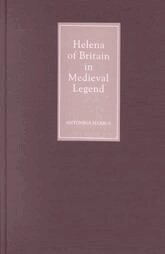
The first study to examine the origins, development, political exploitation and decline of the legend of St Helena, tracing its momentum and adaptive power from Anglo-Saxon England onwards.St Helena, mother of Constantine the Great and legendary finder of the True Cross, was appropriated in the middle ages as a British saint. The rise and persistence of this legend harnessed Helena's imperial and sacred status to portray her as a romance heroine, source of national pride, and a legitimising link to imperial Rome. This study is the first to examine the origins, development, political exploitation and decline of this legend, tracing its momentum and adaptive power from Anglo-Saxon England to the twentieth century. Using Latin, English, and Welsh texts, as well as church dedications and visual arts, the author examines the positive effect of the British legend on the cult of St Helena and the reasons for its wide appeal and durability in both secular and religious contexts.Two previously unpublished vitae of St Helena are included in the volume: a Middle English verse vita from the South English Legendary, and a Latin prose vita by the twelfth-century hagiographer, Jocelin of Furness.Antonina Harbus is Professor in the Department of English at Macquarie University, Sydney, Australia.
431 kr
Skickas inom 7-10 vardagar
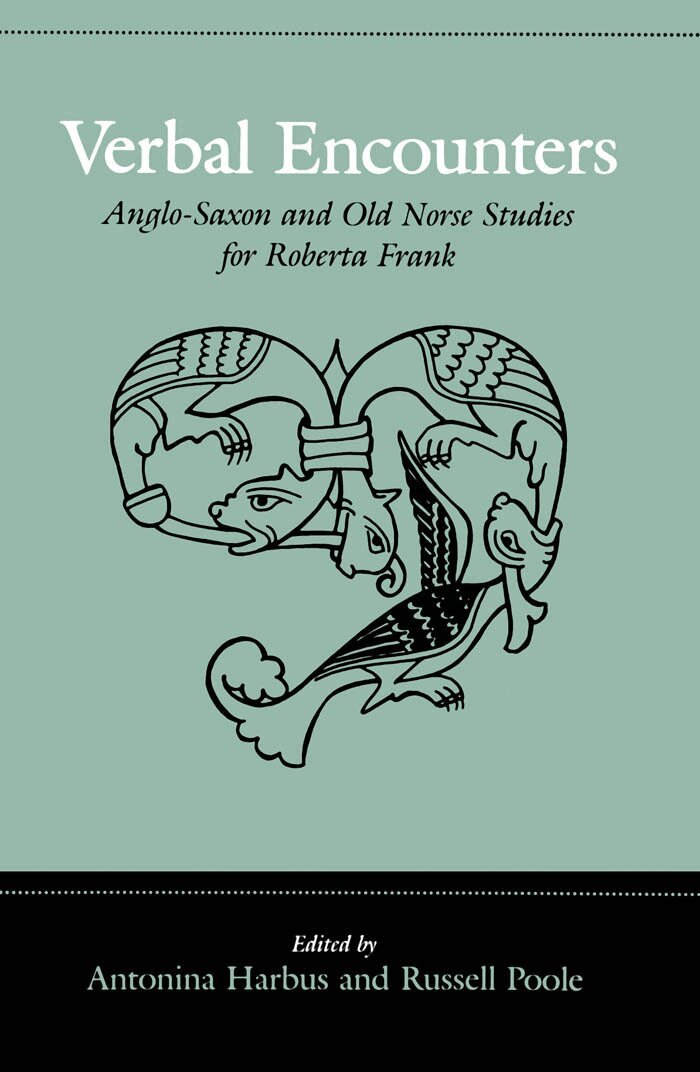
Due to conquests and colonialism through the centuries, it is not unusual for languages and cultures to be influenced by other, foreign languages and cultures. The modern English language, for example, owes many of its words to Old Norse and Latin, debts dating from contacts made during the Middle Ages. Verbal Encounters is a collection of papers on the cultural and linguistic exchange in Old Norse, Old English, and medieval Latin literature written in honour of Roberta Frank, former University Professor of Medieval Studies at the University of Toronto.The essays feature new scholarship in the field, on topics such as the integral position of Anglo-Latin within Anglo-Saxon culture and literature, constructions of feminine strength and effectiveness in Anglo-Saxon literature, the rise of Latin-based learning in twelfth-century Iceland, medieval Icelandic religious poetry, and the conversion to Christianity in medieval Scandinavia.The essays in Verbal Encounters are not merely a fitting tribute to Roberta Frank, but also strong contributions to current scholarship on medieval literature and culture.
1 194 kr
Skickas inom 7-10 vardagar
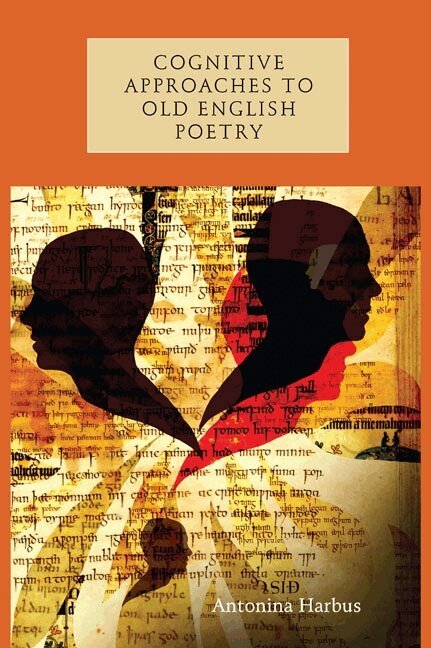
Offers an entirely new way of interpreting and examining Anglo-Saxon texts, via theories derived from cognitive studies.A major, thoughtful study, applying new and serious interpretative and critical perspectives to a central range of Old English poetry. Professor John Hines, Cardiff UniversityCognitive approaches to literature offernew and exciting ways of interpreting literature and mentalities, by bringing ideas and methodologies from Cognitive Science into the analysis of literature and culture. While these approaches are of particular value in relation to understanding the texts of remote societies, they have to date made very little impact on Anglo-Saxon Studies. This book therefore acts as a pioneer, mapping out the new field, explaining its relevance to Old English Literary Studies, and demonstrating in practice its application to a range of key vernacular poetic texts, including Beowulf, The Wanderer, and poems from the Exeter Book. Adapting key ideas from three related fields - Cognitive Literary/Cultural Studies, Cognitive Poetics, and Conceptual Metaphor Theory - in conjunction with more familiar models, derived from Literary Analysis, Stylistics, and Historical Linguistics, allows several new ways of thinking about Old English literature to emerge. It permits a systematic means of examining and accounting for the conceptual structures that underpin Anglo-Saxon poetics, as well as fuller explorations, at the level of mental processing, of the workings of literary language in context. The result is a set of approaches to interpreting Anglo-Saxon textuality, through detailed studies of the concepts, mental schemas, and associative logic implied in and triggeredby the evocative language and meaning structures of surviving works.ANTONINA HARBUS is Professor in the Department of English at Macquarie University, Sydney, Australia.
1 088 kr
Skickas inom 5-8 vardagar
Ideas about the human mind are culturally specific and over time vary in form and prominence. The Life of the Mind in Old English Poetry presents the first extensive exploration of Anglo-Saxon beliefs about the mind and how these views informed Old English poetry. It identifies in this poetry a particular cultural focus on the mental world and formulates a multivalent model of the mind behind it, as the seat of emotions, the site of temptation, the container of knowledge, and a heroic weapon. The Life of the Mind in Old English Poetry treats a wide range of Old English literary genres (in the context of their Latin sources and analogues where applicable) in order to discover how ideas about the mind shape the narrative, didactic, and linguistic design of poetic discourse. Particular attention is paid to the rich and slippery vernacular vocabulary for the mind which suggests a special interest in the subject in Old English poetry. The book argues that Anglo-Saxon poets were acutely conscious of mental functions and perceived the psychological basis not only of the cognitive world, but also of the emotions and of the spiritual life.