António A. Vicente - Böcker
Visar alla böcker från författaren António A. Vicente. Handla med fri frakt och snabb leverans.
5 produkter
5 produkter
Food Safety in the Seafood Industry
A Practical Guide for ISO 22000 and FSSC 22000 Implementation
Häftad, Engelska, 2016
822 kr
Skickas inom 7-10 vardagar
Seafood is one of the most traded commodities worldwide. It is thus imperative that all companies and official control agencies ensure seafood safety and quality throughout the supply chain. Written in an accessible and succinct style, Food Safety in Seafood Industry: A practical guide for ISO 22000 and FSSC 22000 implementation brings together in one volume key information for those wanting to implement ISO 22000 or FSSC 22000 in the seafood manufacturing industry.Concise and highly practical, this book comprises: a presentation of seafood industry and its future perspectivesthe description of the main hazards associated to seafood (including an annexe featuring the analysis of notifications related with such hazards published by Rapid Alert System for Food and Feed - RASFF)interpretation of ISO 22000 clauses together with practical examples adapted to the seafood manufacturing industrythe presentation of the most recent food safety scheme FSSC 22000 and the interpretation of the additional clauses that this scheme introduces when compared to ISO 22000This practical guide is a valuable resource for seafood industry quality managers, food technologists, managers, consultants, professors and students.This book is a tool and a vehicle for further cooperation and information interchange around seafood safety and food safety systems. QR codes can be found throughout the book; when scanned they will allow the reader to contact the authors directly, know their personal views on each chapter and even access or request more details on the book content. We encourage the readers to use the QR codes or contact the editors via e-mail (foodsatefybooks@gmail.com) or Twitter (@foodsafetybooks) to make comments, suggestions or questions and to know how to access the Extended Book Content.
2 692 kr
Skickas inom 10-15 vardagar
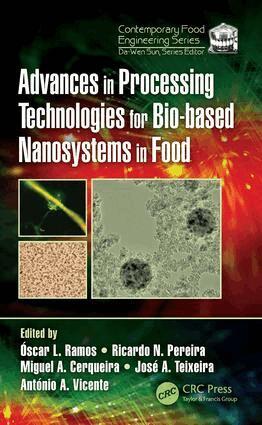
Nanotechnology can be used to address challenges faced by the food and bioprocessing industries for developing and implementing improved or novel systems that can produce safer, nutritious, healthier, sustainable, and environmental-friendly food products. This book overviews the most recent advances made on the field of nanoscience and nanotechnology that significantly influenced the food industry. Advances in Processing Technologies for Bio-Based Nanosystems in Food provides a multidisciplinary review of the complex mechanisms involved in the research, development, production and legislation of food containing nanostructures systems. Features: Presents the most recent advances made in the field of nanoscience and nanotechnology as applied to the food industry Discusses innovative approaches and processing technologies Shows how nanotechnology can be used to produce safer, nutritious, healthier, sustainable and environmental-friendly food products Covers the complex mechanisms involved in the research, development, production and legislation of food containing nanostructuresSelected examples of nanotechnology applications in food industry are shown, focusing on advanced aspects of food packaging, processing and preservation; followed by one contribution that presents the potential commercialization and the main challenges for scale-up. Comprised of 15 chapters, this book provides much-needed and up-to-date information on the use of emergent technologies in bio-based nanosystems for foods, and serves as an ideal reference for scientists, regulators, industrialists, and consumers that conduct research and development in the food processing industry.
1 362 kr
Skickas inom 10-15 vardagar
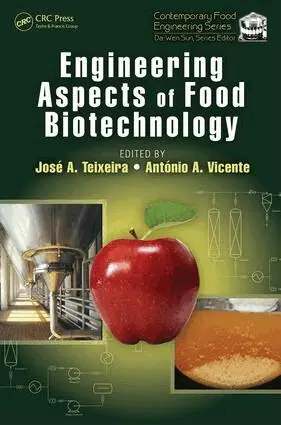
Food biotechnology’s typical developments and applications have occurred in the fields of genetics and in enzyme- and cell-based biological processes, with the goal of producing and improving food ingredients and foods themselves. While these developments and applications are usually well reported in terms of the underlying science, there is a clear lack of information on the engineering aspects of such biotechnology-based food processes. Filling this gap, Engineering Aspects of Food Biotechnology provides a comprehensive review of those aspects, from the development of food processes and products to the most important unit operations implied in food biotechnological processes, also including food quality control and waste management.The book focuses on the use of biotechnology for the production of ingredients to be used in the food industry. It addresses two relevant issues—consumer’s awareness of the relation between nutrition and good health and the importance of environmental sustainability in the food chain (i.e. production of polymers and in vitro meat). A chapter on the application of process analytical technology highlights the importance of this tool for satisfying the increasingly sophisticated and strict polices for quality control and monitoring of specific process phases. The book includes a detailed presentation of relevant unit operations developed to extract/purify the ingredients of biotechnological origin intended for food applications. In addition to examining the contributions of biotechnology to producing and improving food ingredients, the book provides a concise description of the role biotechnology plays in adding value to food processing by-products, including post-harvest losses, in relevant industries of the food sector. It builds a foundation for further research and development in the food processing industry.
3 264 kr
Skickas inom 10-15 vardagar
Food biotechnology’s typical developments and applications have occurred in the fields of genetics and in enzyme- and cell-based biological processes, with the goal of producing and improving food ingredients and foods themselves. While these developments and applications are usually well reported in terms of the underlying science, there is a clear lack of information on the engineering aspects of such biotechnology-based food processes. Filling this gap, Engineering Aspects of Food Biotechnology provides a comprehensive review of those aspects, from the development of food processes and products to the most important unit operations implied in food biotechnological processes, also including food quality control and waste management.The book focuses on the use of biotechnology for the production of ingredients to be used in the food industry. It addresses two relevant issues—consumer’s awareness of the relation between nutrition and good health and the importance of environmental sustainability in the food chain (i.e. production of polymers and in vitro meat). A chapter on the application of process analytical technology highlights the importance of this tool for satisfying the increasingly sophisticated and strict polices for quality control and monitoring of specific process phases. The book includes a detailed presentation of relevant unit operations developed to extract/purify the ingredients of biotechnological origin intended for food applications. In addition to examining the contributions of biotechnology to producing and improving food ingredients, the book provides a concise description of the role biotechnology plays in adding value to food processing by-products, including post-harvest losses, in relevant industries of the food sector. It builds a foundation for further research and development in the food processing industry.
552 kr
Skickas inom 10-15 vardagar
This book offers an overview of cannabinoids, from their chemical structures and biosynthesis to their applications in medicine, food, and beyond. It bridges the gap between historical uses and cutting-edge science, providing a detailed look at phytocannabinoids, endocannabinoids, and synthetic cannabinoids. With a special focus on food applications, the book examines how cannabinoids are being integrated into innovative food products, exploring their functional benefits, bioavailability, and regulatory challenges. It highlights the potential of cannabinoids as ingredients in functional foods and beverages, offering insights into industrial processes and the future of cannabinoid-enriched products. With clear explanations of cannabinoid metabolism, the endocannabinoid system, and advanced analytical techniques, this book also addresses emerging trends, legal considerations, and future opportunities. It is an invaluable resource for researchers, industry professionals, and students in chemistry, biology, and pharmacology.