Antonio Rigopoulos - Böcker
Visar alla böcker från författaren Antonio Rigopoulos. Handla med fri frakt och snabb leverans.
8 produkter
8 produkter
645 kr
Skickas inom 3-6 vardagar
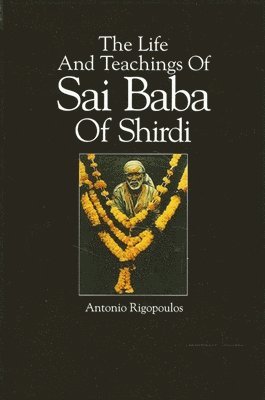
A vast and diversified religious movement originating from Sai Baba of Shirdi, is often referred to as "the Sai Baba movement." Through the chronological presentation of Sai Baba's life, light is shed on the various ways in which the important guru figures in this movement came to be linked to the saint of Shirdi.
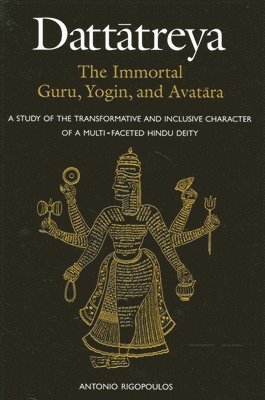
Dattātreya: The Immortal Guru, Yogin, and Avatāra
A Study of the Transformative and Inclusive Character of a Multi-faceted Hindu Deity
Inbunden, Engelska, 1998
1 057 kr
Tillfälligt slut
Presents the multi-faceted Hindu deity Dattatreya from his Puranic emergence to modern times.This book presents the multi-faceted Hindu deity Dattatreya from his Puranic emergence up to modern times. Dattatreya's Brahmanical portrayal, as well as his even more archaic characterization as a Tantric antinomian figure, combines both Vaisnava Saiva motifs. Over the course of time, Dattatreya has come to embody the roles of the immortal guru, yogin and avatara in a paradigmatic manner. From the sixteenth century Dattatreya's glorious characterization emerged as the incarnation of the trimurti of Brahma, Visnu, and Siva. Although Maharastra is the heartland of Dattatreya devotion, his presence is attested to throughout India and extends beyond the boundaries of Hinduism, being met with in Sufi circles and even in Buddhism and Jainism via Nathism.The scarce attention which most Western scholars of Indian religions have paid to this deity contrasts with its ubiquitousness and social permeability. Devotion to Dattatreya cuts through all social and religious strata of Indian society: among his adepts we find yogis, Brahmans, faqirs, Devi worshippers, untouchables, thieves, and prostitutes. This book explores all primary religious dimensions: myth, doctrine, ritual, philosophy, mysticism, and iconography. The comprehensive result offers a rich fresco of Hindu religion as well as an understanding of Marathi integrative spirituality: precisely this complexity of themes constitutes Dattatreya's uniqueness.
Dattātreya: The Immortal Guru, Yogin, and Avatāra
A Study of the Transformative and Inclusive Character of a Multi-faceted Hindu Deity
Häftad, Engelska, 1998
464 kr
Skickas inom 5-8 vardagar
Presents the multi-faceted Hindu deity Dattatreya from his Puranic emergence to modern times.This book presents the multi-faceted Hindu deity Dattatreya from his Puranic emergence up to modern times. Dattatreya's Brahmanical portrayal, as well as his even more archaic characterization as a Tantric antinomian figure, combines both Vaisnava Saiva motifs. Over the course of time, Dattatreya has come to embody the roles of the immortal guru, yogin and avatara in a paradigmatic manner. From the sixteenth century Dattatreya's glorious characterization emerged as the incarnation of the trimurti of Brahma, Visnu, and Siva. Although Maharastra is the heartland of Dattatreya devotion, his presence is attested to throughout India and extends beyond the boundaries of Hinduism, being met with in Sufi circles and even in Buddhism and Jainism via Nathism.The scarce attention which most Western scholars of Indian religions have paid to this deity contrasts with its ubiquitousness and social permeability. Devotion to Dattatreya cuts through all social and religious strata of Indian society: among his adepts we find yogis, Brahmans, faqirs, Devi worshippers, untouchables, thieves, and prostitutes. This book explores all primary religious dimensions: myth, doctrine, ritual, philosophy, mysticism, and iconography. The comprehensive result offers a rich fresco of Hindu religion as well as an understanding of Marathi integrative spirituality: precisely this complexity of themes constitutes Dattatreya's uniqueness.
Del 1 - Cultural, Historical and Textual Studies of South Asian Religions
Mahanubhavs
Inbunden, Engelska, 2011
1 099 kr
Skickas inom 5-8 vardagar
The ascetic devotional sect known as the Mahanubhavs – ‘Those of the Great Experience’ – arose in thirteenth-century Maharashtra and initially experienced a fairly rapid expansion across the northern and eastern areas of the region. However, by the end of the fourteenth century the sect had moved underground, having withdrawn to remote areas and villages in order to achieve defensive isolation from the larger Hindu context. Although the prominent leaders of the early Mahanubhavs were Brahmans (often converts from the prevailing advaita vaisnavism), their followers were (and are) mostly non-Brahmans – those of the lower castes, and even untouchables. Thus the Mahanubhavs were met with prejudice and distrust outside of their own closed circles, and this isolation continued until the beginning of the twentieth century. This volume offers an overview of the origins and main religious and doctrinal characteristics of the Mahanubhavs movement, with a particular focus on the aspects that reveal their difference and nonconformity.
674 kr
Skickas inom 3-6 vardagar
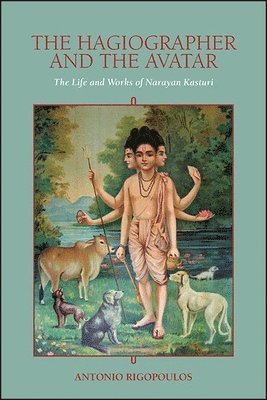
Examines the key role of a hagiographer within a charismatic religious movement.In this biographical study, Antonio Rigopoulos explores the fundamental role of a hagiographer within a charismatic religious movement: in this case, the postsectarian, cosmopolitan community of the Indian guru Sathya Sai Baba. The guru's hagiographer, Narayan Kasturi, was already a distinguished litterateur by the time he first met Sathya Sai Baba in 1948. The two lived together at the guru's hermitage more or less continuously from 1954 up until Kasturi's death, in 1987. Despite Kasturi's influential hagiography, Sathyam Sivam Sundaram, little scholarly attention has been paid to the hagiographer himself and his importance to the movement. In detailing Kasturi's relationship to Sathya Sai Baba, Rigopoulos emphasizes that the hagiographer's work was not subordinate to the guru's definition of himself. Rather, his discourses with the holy man had a reciprocal and reinforcing influence, resulting in the construction of a unified canon. Furthermore, Kasturi's ability to perform a variety of functions as a hagiographer successfully mediated the relationship between the guru and his followers. Drawing on years of research on the movement as well as interviews with Kasturi himself, this book deepens our understanding of this important pan-Indian figure and his charismatic religious movement.
1 545 kr
Skickas inom 3-6 vardagar
Examines the key role of a hagiographer within a charismatic religious movement.In this biographical study, Antonio Rigopoulos explores the fundamental role of a hagiographer within a charismatic religious movement: in this case, the postsectarian, cosmopolitan community of the Indian guru Sathya Sai Baba. The guru's hagiographer, Narayan Kasturi, was already a distinguished litterateur by the time he first met Sathya Sai Baba in 1948. The two lived together at the guru's hermitage more or less continuously from 1954 up until Kasturi's death, in 1987. Despite Kasturi's influential hagiography, Sathyam Sivam Sundaram, little scholarly attention has been paid to the hagiographer himself and his importance to the movement. In detailing Kasturi's relationship to Sathya Sai Baba, Rigopoulos emphasizes that the hagiographer's work was not subordinate to the guru's definition of himself. Rather, his discourses with the holy man had a reciprocal and reinforcing influence, resulting in the construction of a unified canon. Furthermore, Kasturi's ability to perform a variety of functions as a hagiographer successfully mediated the relationship between the guru and his followers. Drawing on years of research on the movement as well as interviews with Kasturi himself, this book deepens our understanding of this important pan-Indian figure and his charismatic religious movement.
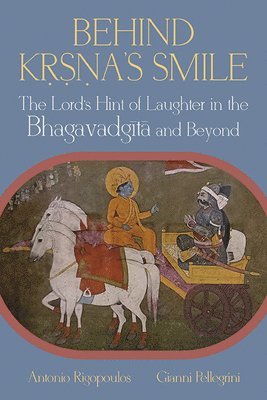
Behind Kṛṣṇa’s Smile
The Lord’s Hint of Laughter in the Bhagavadgītā and Beyond
Inbunden, Engelska, 2024
1 674 kr
Skickas inom 3-6 vardagar
Examines Kṛṣṇa's hint of laughter (prahasann iva) in the Bhagavadgītā, its interpretations in the Vedānta commentarial tradition, and its significance in Kṛṣṇaite iconography and literature.Behind Kṛṣṇa's Smile offers a wholly original perspective on the celebrated Bhagavadgītā, or "Song of God." The book investigates Kṛṣṇa's hint of laughter (prahasann iva) in Bhagavadgītā 2.10, which is generally understood to be the turning point of the famous poem, signaling the outpouring of his grace and teaching to Arjuna. Remarkably, it is from this verse that Śaṅkara and other leading theologians begin to write their commentaries. In addition to exploring the momentousness of Kṛṣṇa's hint of laughter and its impact on the poem's central teachings, Behind Kṛṣṇa's Smile provides a crucial interpretation of Kṛṣṇa's prahasann iva in the Vedānta commentarial tradition, from Śaṅkara up to modern times. The book also considers the meanings of the stock phrase prahasann iva in the larger epic framework of the Mahābhārata and Rāmāyaṇa. Moreover, the book offers the first comprehensive review of the significance of Kṛṣṇa's smile in Kṛṣṇaite iconography and literature, demonstrating that there is a unified canon bringing together the literary and performative dimensions of Kṛṣṇa’s hint of laughter.
Behind Kṛṣṇa’s Smile
The Lord’s Hint of Laughter in the Bhagavadgītā and Beyond
Häftad, Engelska, 2025
651 kr
Skickas inom 3-6 vardagar
Examines Kṛṣṇa's hint of laughter (prahasann iva) in the Bhagavadgītā, its interpretations in the Vedānta commentarial tradition, and its significance in Kṛṣṇaite iconography and literature.Behind Kṛṣṇa's Smile offers a wholly original perspective on the celebrated Bhagavadgītā, or "Song of God." The book investigates Kṛṣṇa's hint of laughter (prahasann iva) in Bhagavadgītā 2.10, which is generally understood to be the turning point of the famous poem, signaling the outpouring of his grace and teaching to Arjuna. Remarkably, it is from this verse that Śaṅkara and other leading theologians begin to write their commentaries. In addition to exploring the momentousness of Kṛṣṇa's hint of laughter and its impact on the poem's central teachings, Behind Kṛṣṇa's Smile provides a crucial interpretation of Kṛṣṇa's prahasann iva in the Vedānta commentarial tradition, from Śaṅkara up to modern times. The book also considers the meanings of the stock phrase prahasann iva in the larger epic framework of the Mahābhārata and Rāmāyaṇa. Moreover, the book offers the first comprehensive review of the significance of Kṛṣṇa's smile in Kṛṣṇaite iconography and literature, demonstrating that there is a unified canon bringing together the literary and performative dimensions of Kṛṣṇa’s hint of laughter.