Antony Gormley - Böcker
Visar alla böcker från författaren Antony Gormley. Handla med fri frakt och snabb leverans.
8 produkter
8 produkter
370 kr
Skickas inom 11-20 vardagar
Over a period of 100 days from July to October 2009, 2,400 people stood on the fourth plinth in Trafalgar Square for one hour. They were free to do as they chose during this period in the spotlight. Nobody could predict what would happen or the scale of the response. Many thousands applied for the 2,400 slots and candidates were selected randomly. Millions watched the events as they were all filmed and available online. Hundreds of thousands continued to turn to the website long after the project itself was finished. The event was a phenomenon, which we are grappling to understand. The entire enterprise was the conceived by Antony Gormley, and can be seen as a further example of the artist's ability to tap into the public consciousness. The book will contain studio portraits of all the 'plinthers' prior to their appearance. Photographs will be drawn from innumerable sources. The whole event has been remarkably photographed by Clare Richardson and the final edit will be drawn from a selection of 600 of her pictures of 'plinthers and public by day and night. Lee Hall will be writing a text about the importance of the square itself as a location. Essays will be included from Hans Ulrich Obrist, the art historian, as well as by both an anthropologist and a psychoanalyst. All the 'plinthers' were subject to extensive interviews set up by an oral history expert and their voices will contribute to the creation of a book that is more than a document. The aim is to capture the emotional intensity and the personally transformative effect that was created by one of the most extraordinary works of public art in our time.
383 kr
Skickas inom 7-10 vardagar
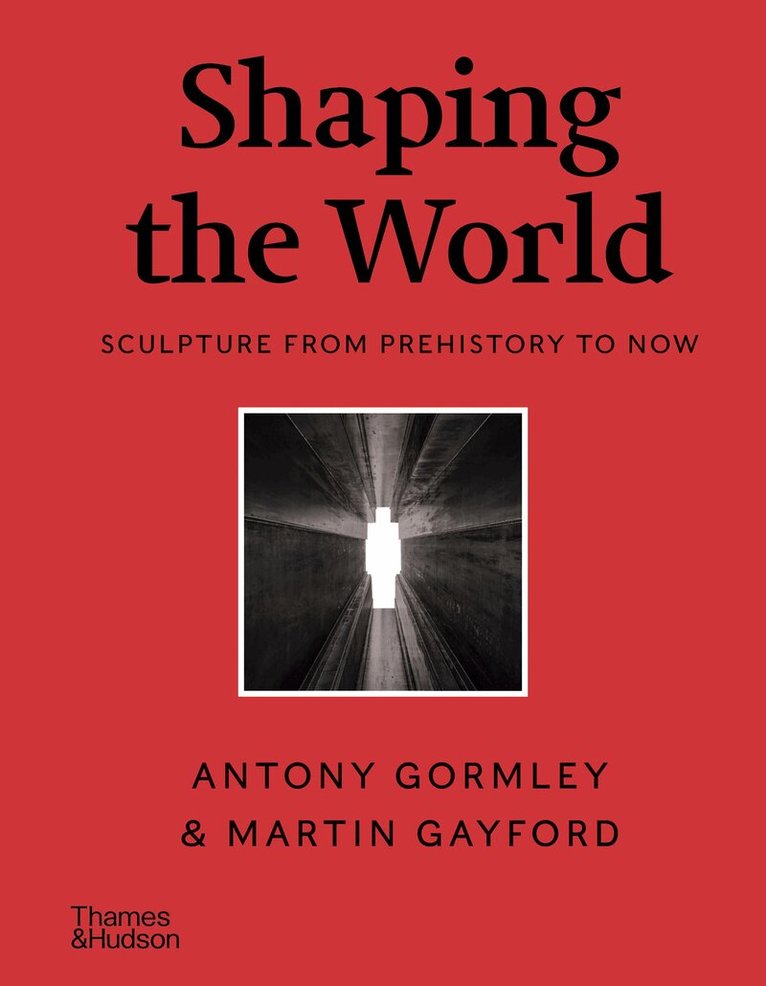
In this wide-ranging, thought-provoking and sometimes provocative new book, leading sculptor Antony Gormley, informed and energised by a lifetime of making, and art critic and historian Martin Gayford, explore sculpture as a transnational art form with its own compelling history. The authors’ lively conversations and explorations make unexpected connections across time and media. Sculpture has been practised by every culture throughout the world and stretches back into our distant past. The first surviving shaped stones may even predate the advent of language. Evidently, the desire to carve, mould, bend, chip away, weld, suspend, balance – to transform a vast array of materials and light into new shapes and forms – runs deep in our psyche and is a fundamental part of our human journey and need for expression. With more than 300 spectacular illustrations, Shaping the World juxtaposes a rich variety of works – from the famous Lowenmensch or Lion Man, c. 35,000 BCE to Michelangelo’s luminous Pietà in Rome, the Terracotta Warriors in China to Rodin’s The Kiss, Marcel Duchamp’s ready-mades, Olafur Eliasson’s extraordinary Weather Project and Kara Walker’s Fons Americanus, and Tomas Saraceno’s ongoing Aerocene project, as well as examples of Gormley’s own work. Antony Gormley and Martin Gayford take into account materials and techniques, and consider overarching themes such as light, mortality and our changing world. Above all, they discuss their view of sculpture as a form of physical thinking capable of altering the way people feel, and they invite us to look at sculpture we encounter – and more broadly the world around us – in a completely different way.
525 kr
Kommande
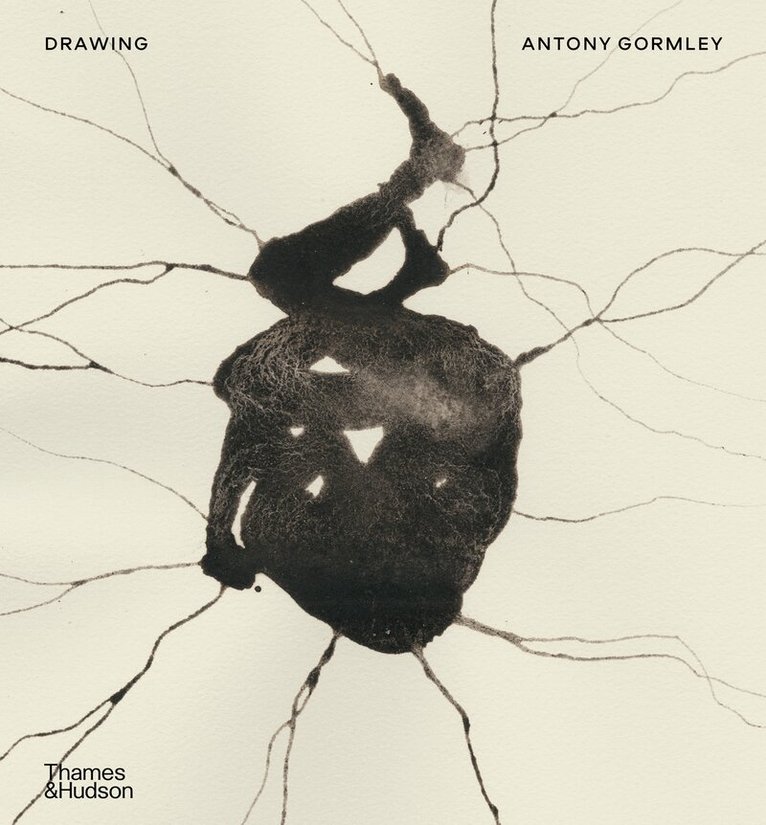
A comprehensive overview of Antony Gormley’s drawings from 1980 to the present, with insightful texts from the artist and major contributors. ‘What is drawing?’ the artist asks in the prologue to Drawing: Antony Gormley. ‘What does it mean to draw?’ This beautifully illustrated volume presents the first comprehensive overview of Antony Gormley’s drawings from 1980 to the present day, offering an intimate and enlightening window into the artist’s vision. Illustrating over 400 works, many of which have never been seen or published before, this major new publication traces Gormley’s exploration of drawing as a vital form of thought and feeling. The artist’s own reflections punctuate the book with deeply personal insights into his process, including ruminations on drawing’s possibilities – ‘the act of drawing is its own experimental field, a journey into the unarmed parts of our internal landscape’ – and meditations on ‘the intrinsic qualities of substances and liquids’, from charcoal, mushroom ink and blood to the earth beneath our feet. Accompanying Gormley’s writings are perceptive and occasionally moving texts by Jeanette Winterson, Margaret Iversen, Daisy Hildyard, W.J.T. Mitchell and Merlin Sheldrake. Each contributor offers a unique perspective on Gormley’s work and the wider meaning of drawing as an act of exploration and transformation. Drawing: Antony Gormley stands as both a personal and artistic journey. As Gormley himself reflects, ‘Drawings have immediacy. In a good session, drawing can be like going for a rugged, physical adventure on a blustery day with changing conditions of light and rain. A day passed without drawing is a day lost.’
186 kr
Skickas inom 7-10 vardagar
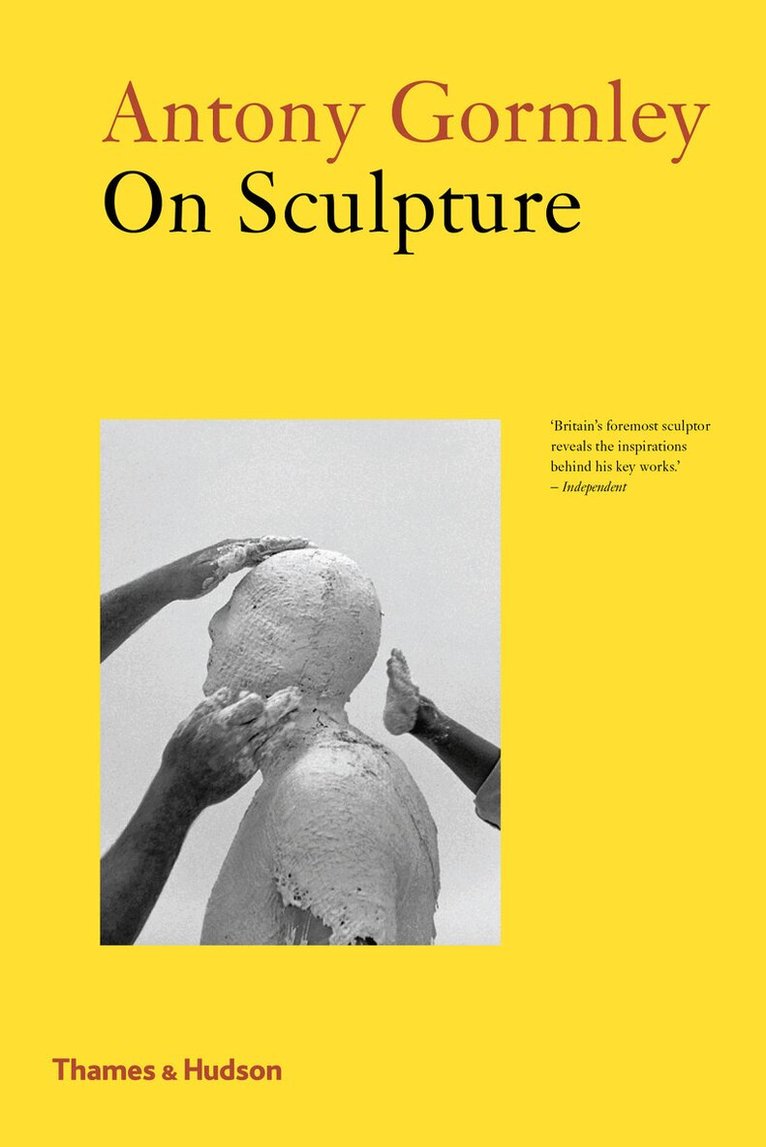
Antony Gormley occupies an unusual position as a highly popular sculptor – known chiefly for his Angel of the North (1998), a national landmark in the UK – who is also widely regarded as one of the most intellectually challenging artists working internationally. He is grounded in archaeology and anthropology, and looks to Asian and Buddhist traditions as much as to Western sculptural history, which he believes reached a punctuation point with Rodin. This is the first book to focus on Gormley’s thoughts on sculpture, positioning his career and artistic philosophy in relation to its history. The book is structured thematically over four chapters: the first explores Gormley’s thoughts on the body, time and space in relation to major works including European Field (1993) and ‘Still Standing’ (2011), Gormley’s rehang of the classical rooms at the Hermitage Museum in St Petersburg. The second chapter, ‘Sculptors’, was first delivered as a series of five lectures for the BBC; in each, Gormley discusses a sculpture he considers to be of huge creative importance: Epstein’s The Rock Drill (1913–15), Brancusi’s The Endless Column (1935–38), Giacometti’s La Place (1948–49), Joseph Beuys’s Plight (1985) and Richard Serra’s The Matter of Time (2005). In the third chapter, Gormley outlines the influence of Buddhist and Jain sculpture on his work and ideas, and the fourth showcases the artist’s most recent sculptures.
520 kr
Tillfälligt slut
Jeanette Winterson: LAND
An exploration of what it means to be human in remote places across the British Isles
Inbunden, Engelska, 2016
158 kr
Skickas inom 7-10 vardagar
370 kr
Skickas
307 kr
Skickas inom 3-6 vardagar