Antoon De Baets - Böcker
Visar alla böcker från författaren Antoon De Baets. Handla med fri frakt och snabb leverans.
6 produkter
6 produkter
901 kr
Skickas inom 10-15 vardagar
History is an important, dangerous, and fragile subject. Historical thought can be censored in widely diverging political and historiographical contexts, as historians are well aware. Yet the problems of censorship, often thought to be obvious, are rarely studied. Filling a significant void, this guide supplies information on the censorship of historical thought and the fate of persecuted historians in over 130 countries from Afghanistan to Zimbabwe and from 1945 to 2000. With each entry providing a chronological overview of cases and giving a full listing of sources, the book is the first systematic effort to overview the repression of historical thought.Aiming to encompass all countries in which censorship and persecution have taken place, De Baets sketches a world map of repression that goes beyond the well-known and well-studied cases. It assembles scattered data from three types of sources: the works of censors and censored, historical and biographical dictionaries and historiographical surveys, and reports from international human rights organizations. Showing the universality of historical censorship and its infinite variety in amount and degree, the book also provides a basis for further comparative research.
241 kr
Skickas inom 7-10 vardagar
The idea of human rights has been much criticized from a historical perspective but curiously enough its theoretical and practical contributions to the study of time, memory, and history have never been systematically explored. How is it to look at the past from a human rights perspective? How can historical writing benefit from applying human rights logic? In tackling these questions, the book first clarifies what a human rights view of the past is. The constituent dimensions of the past – time, memory, and history – are then reviewed, indicating what a human rights perspective can add to the study of each. Finally, the benefits accruing from a human rights view of the past to historical theory and practice are highlighted.
775 kr
Skickas inom 7-10 vardagar
The idea of human rights has been much criticized from a historical perspective but curiously enough its theoretical and practical contributions to the study of time, memory, and history have never been systematically explored. How is it to look at the past from a human rights perspective? How can historical writing benefit from applying a human rights logic? In tackling these questions, the Element first clarifies what a human rights view of the past is. The constituent dimensions of the past - time, memory, and history - are then reviewed, indicating what a human rights perspective can add to the study of each. Finally, the benefits accruing froma human rights view of the past to historical theory and practice are highlighted.
2 166 kr
Skickas inom 10-15 vardagar
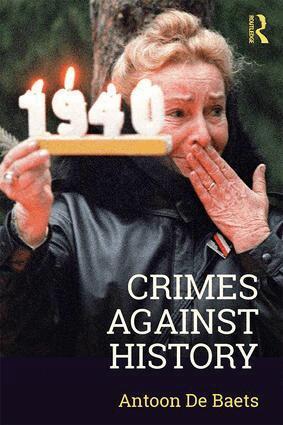
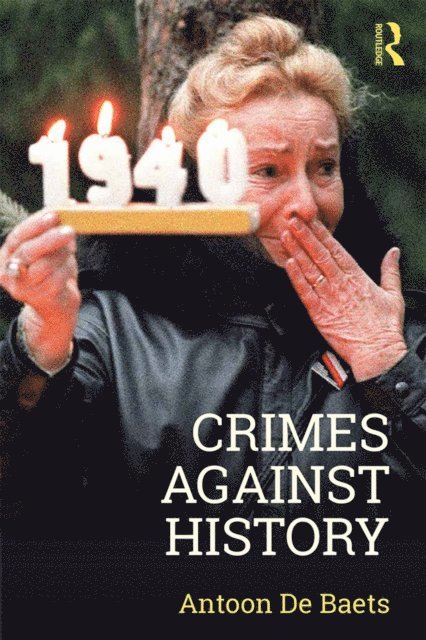
Crimes against History takes a global approach to the extreme forms of censorship to which history and historians have been subjected through the ages.The book opens by considering the varieties of censorship, from suppression, dismissal, and defamation to persecution and murder. Part I, "Kill switch," tells the tragic story of how the censorship of history has sometimes turned into deadly crimes against history, with chapters looking at topics such as historians and archivists being killed for political reasons, attacks by political leaders on historians, iconoclastic breaks with the past, and fake news. Part II, "Fragile freedom," reverses the perspective and examines how the censorship of history has backfired. Chapters consider the subversive power of historical analogies and resistance to the censorship of history. The book also contains a "Provisional memorial for history producers killed for political reasons (from ancient times until 2017)". It is a double tribute: to the history producers who were killed and to those who mustered the courage to resist the blows of censorship.
592 kr
Skickas inom 10-15 vardagar
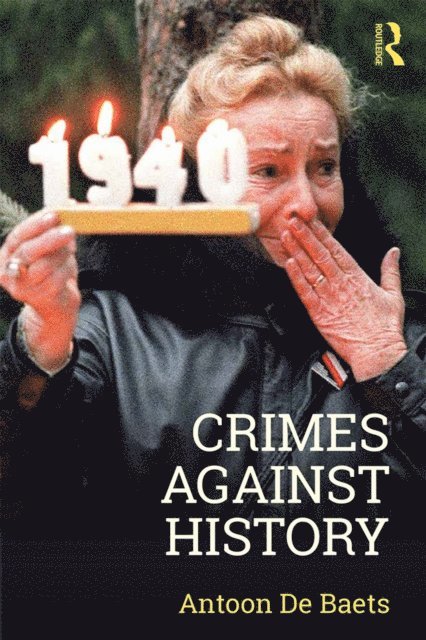
Crimes against History takes a global approach to the extreme forms of censorship to which history and historians have been subjected through the ages.The book opens by considering the varieties of censorship, from suppression, dismissal, and defamation to persecution and murder. Part I, "Kill switch," tells the tragic story of how the censorship of history has sometimes turned into deadly crimes against history, with chapters looking at topics such as historians and archivists being killed for political reasons, attacks by political leaders on historians, iconoclastic breaks with the past, and fake news. Part II, "Fragile freedom," reverses the perspective and examines how the censorship of history has backfired. Chapters consider the subversive power of historical analogies and resistance to the censorship of history. The book also contains a "Provisional memorial for history producers killed for political reasons (from ancient times until 2017)". It is a double tribute: to the history producers who were killed and to those who mustered the courage to resist the blows of censorship.
2 014 kr
Skickas inom 3-6 vardagar
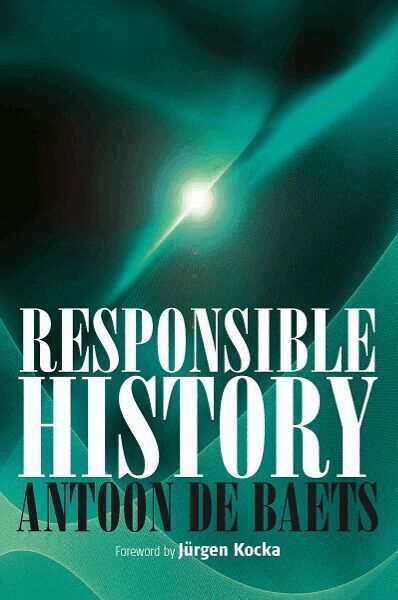
“I can warmly recommend Responsible History to any concerned historian in need of a reliable compass for responsible conduct. I endorse Voltaire’s words quoted in this book: ‘Those who can make you believe absurdities, can make you commit atrocities.’ Responsible conduct is necessary because irresponsible conduct is dangerous.” [From the Foreword.]The abuse of history is common and quite possibly once more on the rise. Although this is well documented, there is no general theory that enables historians to identify, prove, explain, and evaluate the many types of abuse of history. In this book, the author, founder of the Network of Concerned Historians, presents such a theory. Reflecting on the responsible use of history, the author identifies the duties that the living has toward the dead and analyzes the rights to memory and history necessary to fulfill these duties. He concludes his powerful argument by proposing a code of ethics as a guide for responsible historians. This work is vital for any historian who wants to oppose and prevent the abuse of history.