Anurag Reddy Ekkati – författare
Visar alla böcker från författaren Anurag Reddy Ekkati. Handla med fri frakt och snabb leverans.
2 produkter
2 produkter
2 000 kr
Kommande
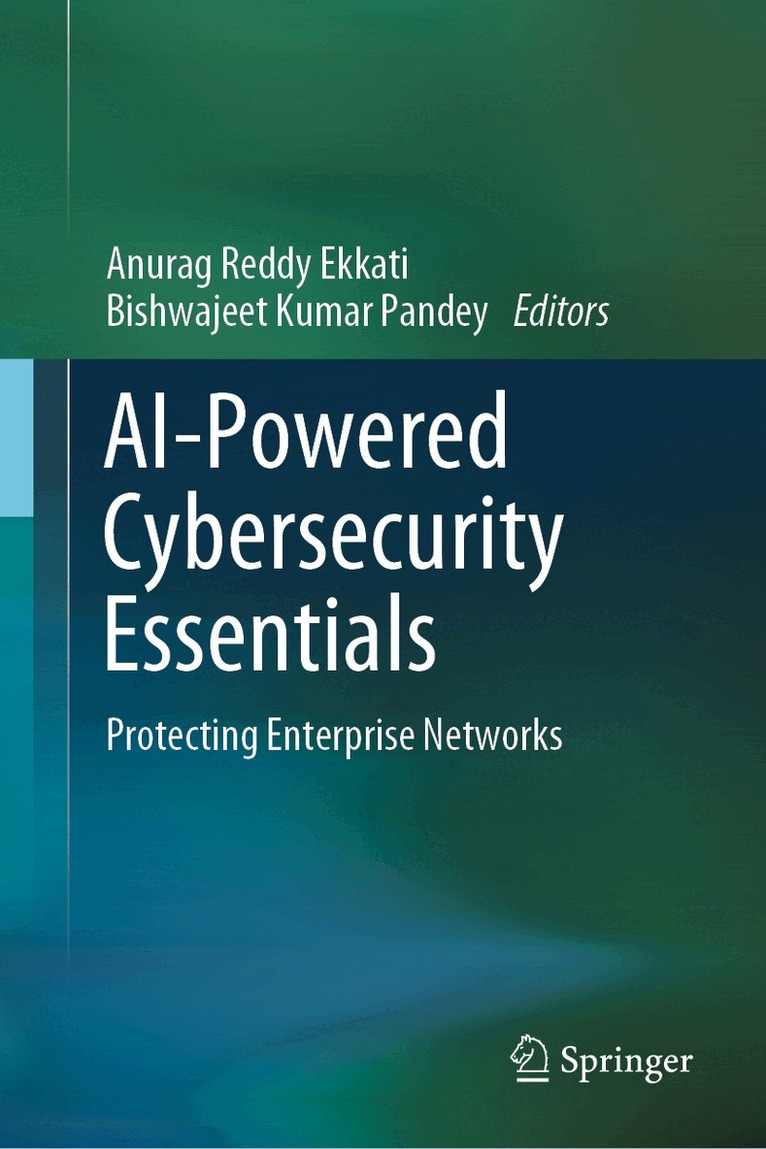
AI-Powered Cybersecurity Essentials: Protecting Enterprise Networks explores how modern AI and machine learning safeguard complex, hybrid enterprise environments. The book progresses from cybersecurity and ML foundations to applied defenses: AI-enhanced intrusion detection, malware and APT discovery, automated incident response, and predictive threat intelligence with risk analysis. It then covers securing cloud and hybrid networks, protecting IoT and edge devices, rigorous evaluation and validation of AI-driven solutions, and the ethical and regulatory guardrails that govern responsible deployment, closing with actionable future trends.Written for security architects, SOC analysts, network engineers, and researchers, the book blends principles with practical patterns, reference workflows, and implementation checklists. Readers will learn to design and tune AI-assisted controls, integrate them with existing stacks, operationalize detection and response, measure effectiveness, and navigate governance and compliance—so they can confidently deploy resilient, human-centered, AI-enabled defenses across the enterprise.
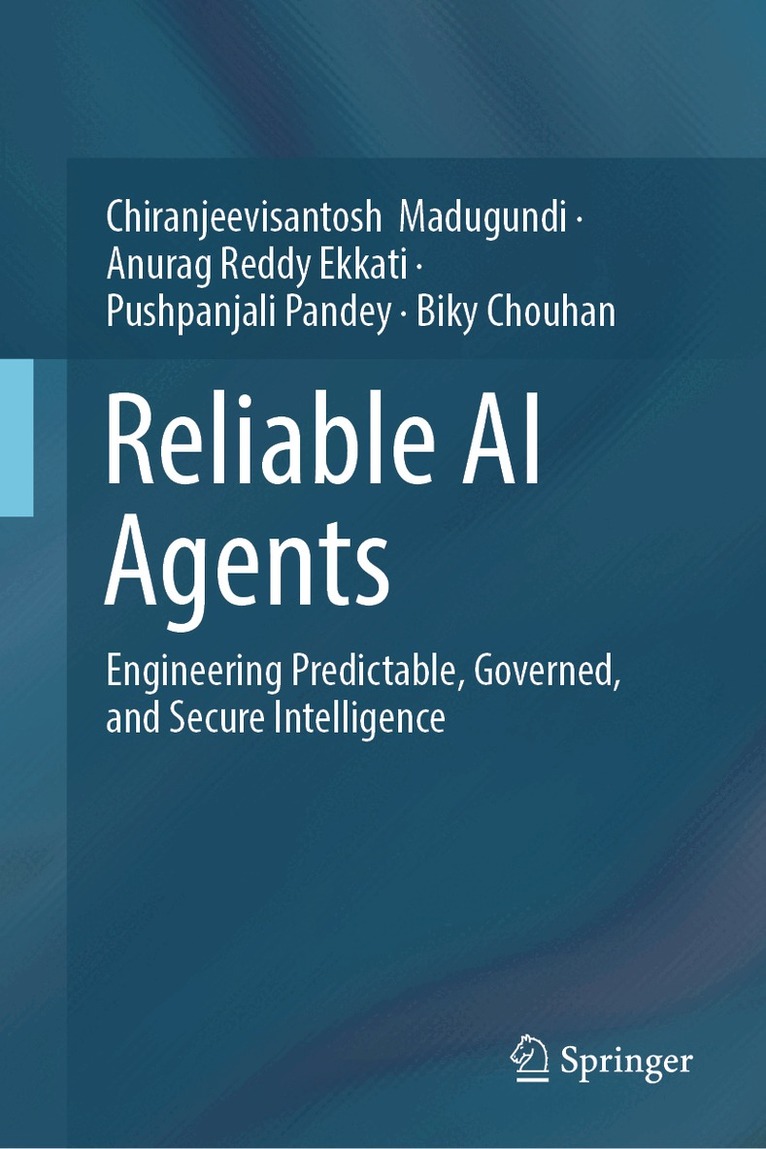
Reliable AI Agents
Engineering Predictable, Governed, and Secure Intelligence
Inbunden, Engelska, 2026
941 kr
Kommande
The book presents Model Context Protocol (MCP) as a practical control plane for governed agent execution across code-first and no-code environments. Users learn how to design structured flows, manage prompt hierarchies, enforce access boundaries, measure reliability, and integrate evaluation into deployment pipelines. With architectural patterns and implementation guidance, this book gives a blueprint for building AI agents that are predictable, auditable, secure, and production ready. This book also explains how to build AI agents that behave reliably in real-world production environments. It covers the architecture of modern agentic systems, including planning, orchestration, tool execution, memory, validation, policy enforcement, security guardrails, controlled deployment, and observability. It also illustrates how to move beyond prompt-centric experimentation and engineer agents as dependable software systems. Advanced-level students focused on AI and computer science will find this book useful as a secondary textbook. Professionals working in this field, including AI engineers, software architects, platform engineers, and security professionals will also find this book useful as a reference.