April Vinding – författare
Visar alla böcker från författaren April Vinding. Handla med fri frakt och snabb leverans.
6 produkter
6 produkter
Häftad, Engelska, 2016
255 kr
Skickas inom 5-8 vardagar
E-bok
Engelska, 2016345 kr
Läs direkt efter köp
Faith is a container that holds a match: a puzzle, a flame, a fight.How do we make sense of God through human relationship?How do the layers of experience and theology interleave?How do the persons of the Trinity appear in the formative altars of our lives?With vivid imagery and a compelling lyric voice, Triptych grapples with the complications of the faith of incarnation and how their dimensions shift as we grow. Probing the implications of trinity, the memoir unfolds in three sections. "Fathers" wrestles through faith in childhood, trying to make sense of the lines of love and duty and how fathers represent a Father God. "Sons" chronicles blistered experiences of young adulthood: trying to find love and cope with sexuality when being faithful means a flame burns both human and divine. "Holy Ghosts" continues the stitching and colliding of human and divine relationships by confronting marriage and the Spirit as intimate, intervening, and intrusive.
Inbunden, Engelska, 2016
430 kr
Skickas inom 5-8 vardagar
Häftad, Engelska, 2023
479 kr
Skickas inom 5-8 vardagar
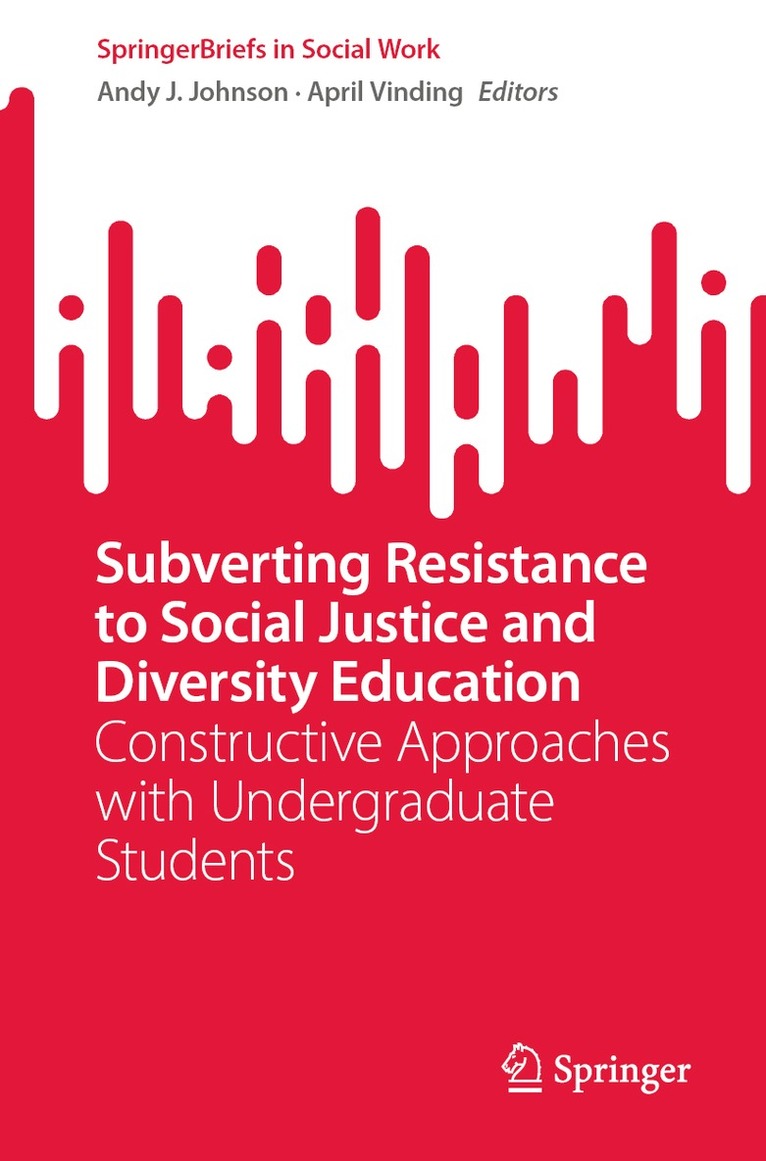
This compact book is constructed using psychological theory and research to empower university faculty to facilitate student engagement and address student resistance to diversity and social justice education more effectively. University faculty teaching diversity and social justice have traditionally encountered various forms of student resistance. Recent cultural trends of political opposition to teaching critical race theory and other forms of increased polarization and scapegoating with decreased levels of social tolerance have exacerbated challenges in promoting student engagement in diversity and social justice education in universities and colleges. In contrast to traditional models that tend to be confrontational in addressing student biases, the new Moving Towards Social Justice (MTSJ), Relational Partnership Development Model (RPDM) and process theoretical models seek to build on appropriate pre-existing strengths, interests,values, and the developmental readiness of students who might otherwise oppose learning about the contexts, lives, and predicaments of marginalized persons living in various intersections of gender, race, ethnicity, national origin, immigration status, sexual orientation, gender identity and ability/disability status. Emphasis is placed on the development of professional and life skills, such as wisdom and intercultural competence, which provide incentives and remove barriers to learning about social justice and diversity. Project-based learning approaches grounded in a developmental framework to foster the thriving and well-being of diverse students, collaborative partners in the community, and diverse persons served by the community partners are emphasized. The role of empirical assessment, feedback, and program refinement over time is also delineated within the models.Subverting Resistance to Social Justice and Diversity Education: Constructive Approaches with Undergraduate Students is an indispensable and timely resource for university and college instructors who teach courses or have significant portions of a class that involve education around social justice, diversity, and intersectionality issues, such as cross-cultural psychology, multicultural psychology, social work, sociology, intercultural communication, and counseling or clinical practice with individuals or families from diverse social locations. University officers of diversity, faculty development providers, and other administrators interested in empowering university faculty to increase student engagement in social justice and diversity education also would find the book a useful reference.
E-bok
Engelska, 2023611 kr
Läs direkt efter köp
This compact book is constructed using psychological theory and research to empower university faculty to facilitate student engagement and address student resistance to diversity and social justice education more effectively. University faculty teaching diversity and social justice have traditionally encountered various forms of student resistance. Recent cultural trends of political opposition to teaching critical race theory and other forms of increased polarization and scapegoating with decreased levels of social tolerance have exacerbated challenges in promoting student engagement in diversity and social justice education in universities and colleges. In contrast to traditional models that tend to be confrontational in addressing student biases, the new Moving Towards Social Justice (MTSJ), Relational Partnership Development Model (RPDM) and process theoretical models seek to build on appropriate pre-existing strengths, interests,values, and the developmental readiness of students who might otherwise oppose learning about the contexts, lives, and predicaments of marginalized persons living in various intersections of gender, race, ethnicity, national origin, immigration status, sexual orientation, gender identity and ability/disability status. Emphasis is placed on the development of professional and life skills, such as wisdom and intercultural competence, which provide incentives and remove barriers to learning about social justice and diversity. Project-based learning approaches grounded in a developmental framework to foster the thriving and well-being of diverse students, collaborative partners in the community, and diverse persons served by the community partners are emphasized. The role of empirical assessment, feedback, and program refinement over time is also delineated within the models.Subverting Resistance to Social Justice and Diversity Education: Constructive Approaches with Undergraduate Students is an indispensable and timely resource for university and college instructors who teach courses or have significant portions of a class that involve education around social justice, diversity, and intersectionality issues, such as cross-cultural psychology, multicultural psychology, social work, sociology, intercultural communication, and counseling or clinical practice with individuals or families from diverse social locations. University officers of diversity, faculty development providers, and other administrators interested in empowering university faculty to increase student engagement in social justice and diversity education also would find the book a useful reference.
Engelska, 2023
613 kr
Skickas inom 5-8 vardagar