Ara H. Merjian - Böcker
Visar alla böcker från författaren Ara H. Merjian. Handla med fri frakt och snabb leverans.
6 produkter
6 produkter
124 kr
Skickas inom 5-8 vardagar
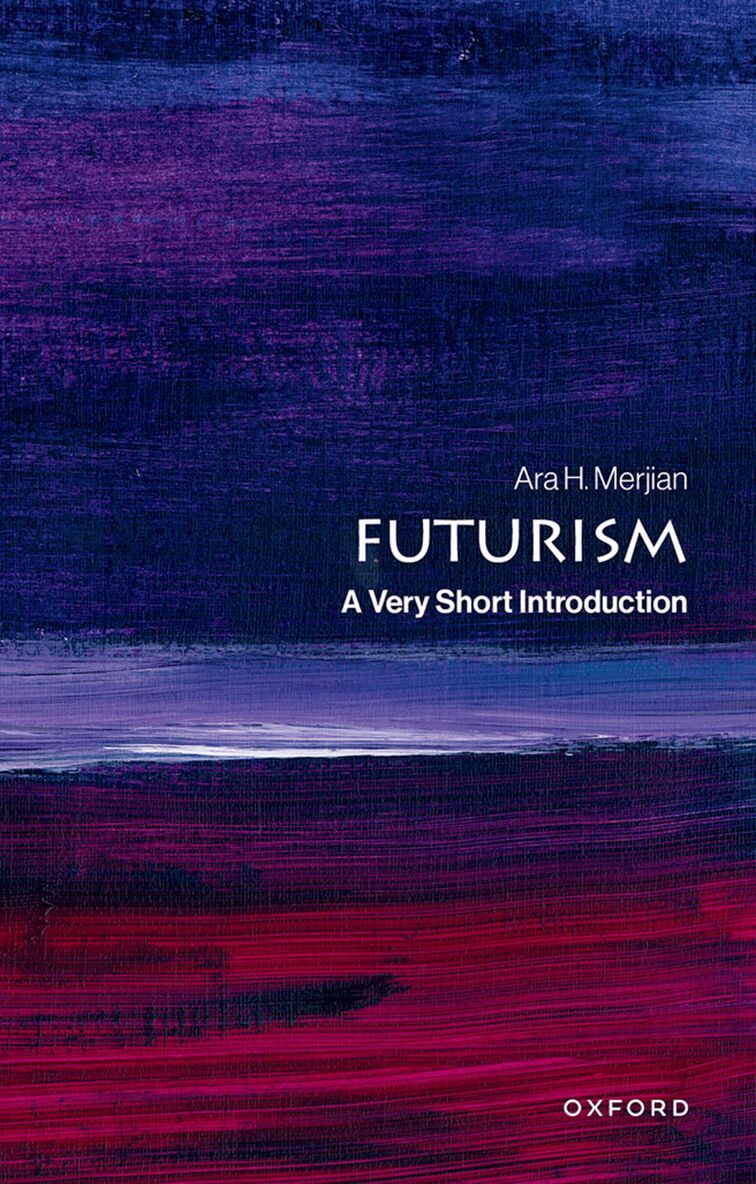
Very Short Introductions: Brilliant, Sharp, InspiringFrom the motorcar to the radio, modern technology radically transformed urban life by the first decade of the twentieth century. As one of Western Europe's least industrialized countries, Italy appeared impervious to such developments. It was this state of affairs at which the Futurist movement took aim. With its founding in 1909, the poet and impresario F.T. Marinetti called for a revitalization of aesthetic expression by means of "movement and aggression." A growing cadre of Futurist painters, poets, authors, and musicians exchanged Italy's cultural patrimony for new technologies, media, and metaphors, championing machine-propelled speed and its salutary hazards. Cubist painting, collage, and sculpture lent the Futurist campaign a revolutionary style to match its rhetorical fervor. Yet whereas Cubism remained a revolution of artistic form, Futurism sought to shatter the boundaries between art and life itself. Indeed, the movement's challenge to twentieth-century culture lay not in any specific set of images or objects, but a more comprehensive revolution of sensibility. By the mid-1910s there circulated several dozen Futurist proclamations on everything from men's clothing to set design, photography to film, dance to politics. That political impetus proved relentlessly paradoxical in origin and upshot. From its base in Milan, Futurist activity spread throughout the entire peninsula, while related movements emerged almost immediately in Moscow, Lisbon, Tiblisi, and Tokyo. Prefiguring and then propagandizing Fascist imperialism, Futurism also galvanized a range of progressive modernist phenomena. More than a century later, the “activist model” of the Futurist avant-garde remains deeply fraught in its historical implications. ABOUT THE SERIES: The Very Short Introductions series from Oxford University Press contains hundreds of titles in almost every subject area. These pocket-sized books are the perfect way to get ahead in a new subject quickly. Our expert authors combine facts, analysis, perspective, new ideas, and enthusiasm to make interesting and challenging topics highly readable.
Against the Avant-Garde
Pier Paolo Pasolini, Contemporary Art, and Neocapitalism
Inbunden, Engelska, 2020
442 kr
Skickas inom 7-10 vardagar
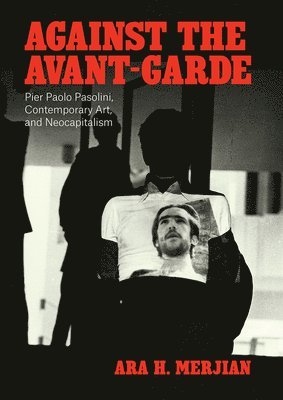
Recognized in America chiefly for his films, Pier Paolo Pasolini (1922-1975) in fact reinvented interdisciplinarity in post-war Europe. Pasolini self-confessedly approached the cinematic image through painting, and the numerous allusions to early modern frescoes and altarpieces in his films have been extensively documented. Far less understood, however, is Pasolini's fraught relationship to the aesthetic experiments of his own age. In Against the Avant-Garde, Ara H. Merjian demonstrates how Pasolini's campaign against neocapitalist culture fueled his hostility to the avant-garde. An atheist indebted to Catholic ritual; a revolutionary Communist inimical to the creed of 1968; a homosexual hostile to the project of gay liberation: Pasolini refused the politics of identity in favor of a scandalously paradoxical practice, one vital to any understanding of his legacy. Against the Avant-Garde examines these paradoxes through case studies from the 1960s and 70s, concluding with a reflection on Pasolini's far-reaching influence on post-1970s art. Merjian not only reconsiders the multifaceted work of Italy's most prominent post-war intellectual, but also the fraught politics of a European neo-avant-garde grappling with a new capitalist hegemony.
556 kr
Skickas inom 7-10 vardagar
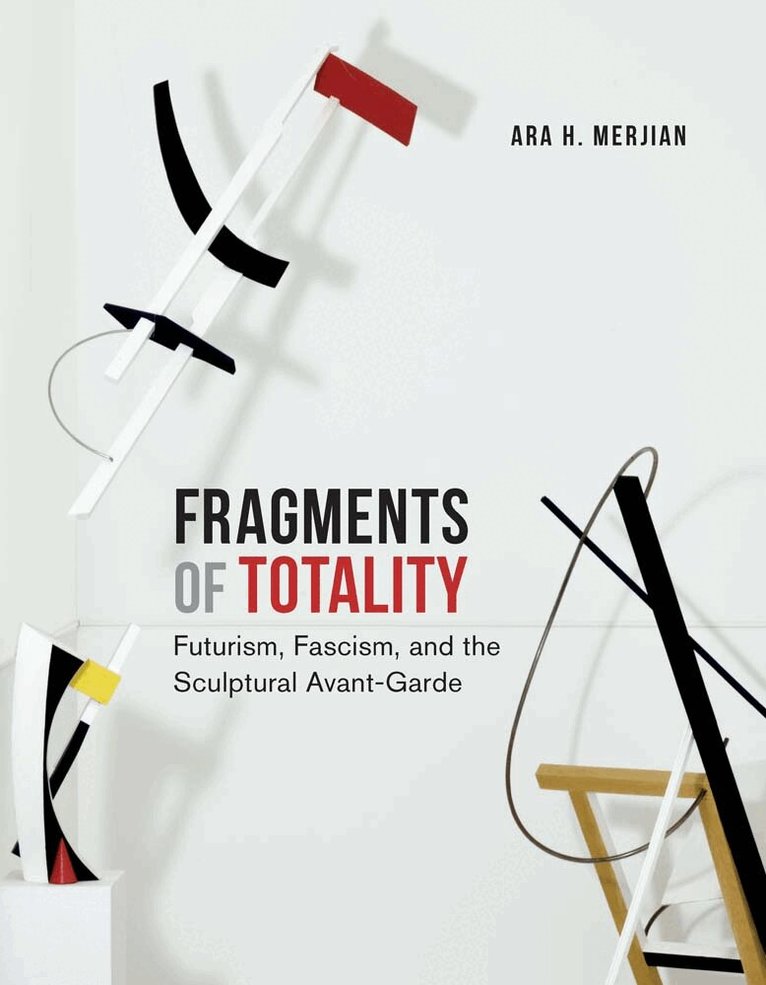
A new history of Futurism and its fraught ideological ambitions, centered on sculptural experimentation Winner, Robert Motherwell Book Award As the first comprehensive avant-garde of the twentieth century, Italian Futurism sought to integrate modern life with every imaginable aesthetic medium. The detached materiality of sculpture offered a singular proving ground for the drive to merge art and existence. Sculpture’s theory and practice offers a distillation of Futurism’s larger aims and frustrations: a will to mechanize haunted by the tradition of craft; the liberation of flight burdened by mass and gravity; the lyrical mutiny of form chastened by the exigencies of design; and a dream of totality splintered by the contingency of the fragment. Centered on avant-garde sculpture in Italy and other European countries between the world wars, Fragments of Totality ventures a new history of Futurism and its fraught ideological ambitions. Illuminating understudied works by prominent artists like Giacomo Balla, Enrico Prampolini, Fortunato Depero, and Bruno Munari alongside the efforts of many lesser-known figures, this first major study of Futurist sculpture opens onto wider questions: from labor and leftist Futurism, to the politics of aesthetic autonomy, to the intersections between race, imperialism, and materials. The medium—and the idea—of sculpture sets into relief the demands of any project of modern cultural totality. Futurism’s shifting definitions of “plasticity” underscore the volatile political economy not only of interwar Italy, but also perhaps of a wider Western epoch.
905 kr
Skickas inom 7-10 vardagar
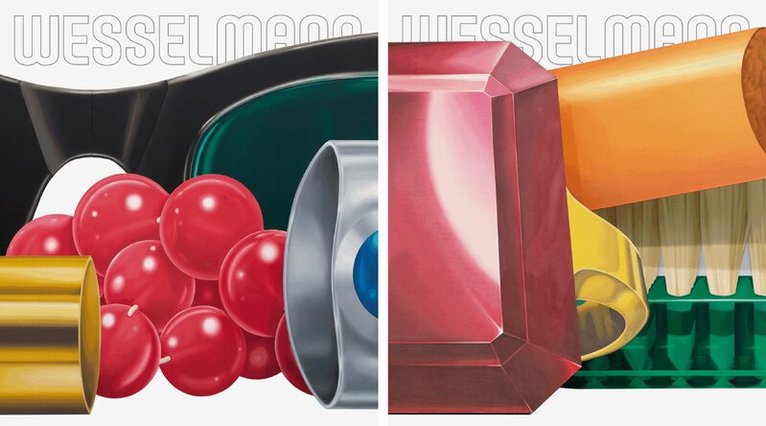
Accompanying an exhibition at Gagosian New York, this catalogue explores nine of Tom Wesselmann s monumental works made between 1967 and 1981. It marks the first time that the complete series of Standing Still Lifes has been exhibited. Each work in the series is comprised of multiple canvases shaped according to the outline of the commonplace objects that they depict. Wesselmann was one of the leading American Pop artists, perhaps best known for his Great American Nude series.
292 kr
Skickas inom 3-6 vardagar
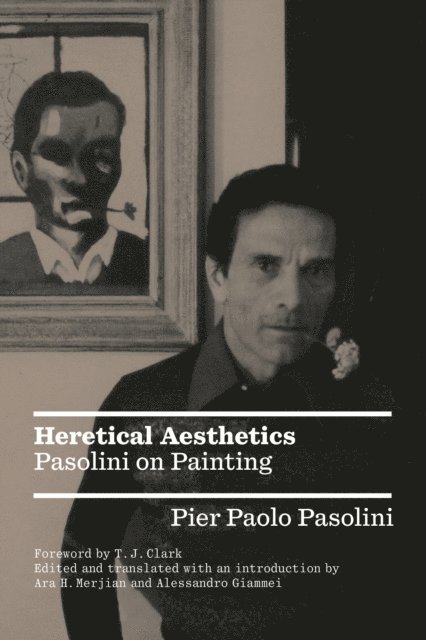
One of Europe's most mythologized Marxist intellectuals of the 20th century, Pier Paolo Pasolini was not only a poet, filmmaker, novelist, and political martyr. He was also a keen critic of painting. An intermittently practicing artist in his own right, Pasolini studied under the distinguished art historian Roberto Longhi, whose lessons marked a life-long affinity for figurative painting and its centrality to a particular cinematic sensibility. Pasolini set out wilfully to "contaminate" art criticism with semiotics, dialectology, and film theory, penning catalogue essays and exhibition reviews alongside poems, autobiographical meditations, and public lectures on painting. His fiercely idiosyncratic blend of Communism and classicism, localism and civic universalism, iconophilia and aesthetic "heresy," animated and antagonized Cold War culture like few European contemporaries. This book offers numerous texts previously available only in Italian, each accompanied by an editorial note elucidating its place in the tumultuous context of post-war Italian culture. Prefaced by the renowned art historian T.J. Clark, a historical essay on Pasolini's radical aesthetics anchors the anthology. One hundred years after his birth, Heretical Aesthetics sheds light on one of the most consequential aspects of Pasolini's intellectual life, further illuminating a vast cinematic and poetic corpus along the way.
782 kr
Kommande