
Aragon-salamanca Alfonso Aragon-salamanca – författare
Visar alla böcker från författaren . Handla med fri frakt och snabb leverans.
2 produkter
2 produkter
E-bok
PDF, Engelska, 1997505 kr
Läs direkt efter köp
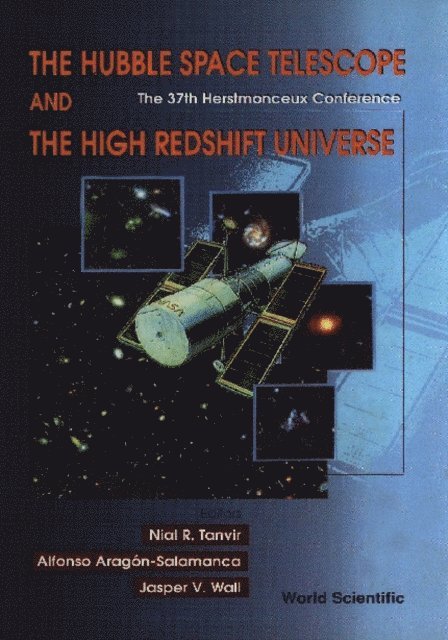
Since the successful refurbishment mission, the Hubble Space Telescope has made dramatic and exciting progress in unravelling the nature of sources at high redshift. The upcoming installation of the next generation of instruments will give further impetus to the field, particularly in the infrared spectral region.The proceedings of this landmark meeting review the results of the first three years of post-repair data, including the deepest astronomical images ever obtained: the Hubble Deep Field. This was the first presentation of these exciting results at a major international conference. The interface between HST and ground-based facilities and planned programmes with forthcoming HST instruments are also extensively discussed.
E-bok
PDF, Engelska, 1995509 kr
Läs direkt efter köp
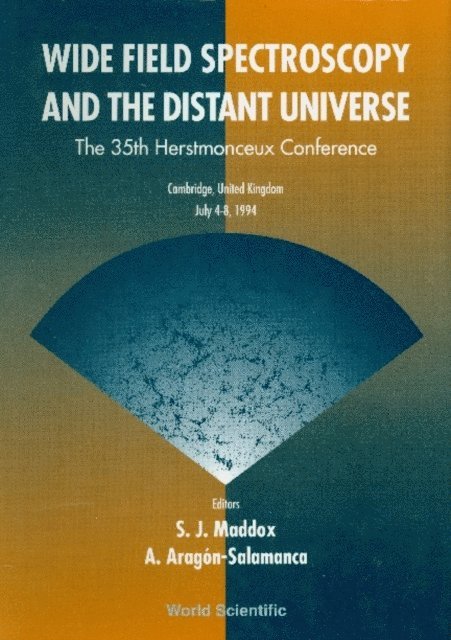
Galaxies represent the most readily visible fabric of the cosmos. Their morphological types, luminosities and environmental surroundings contain valuable clues as to their origin and evolution. Locally, a strong correlation is seen between galaxy morphology and environmental location; this may have been molded at surprisingly modest redshifts. Spectroscopic and photometric studies of deep fields also suggest remarkably recent changes in the galaxy population. The associated growth of structure during the same interval can be tracked via X-ray studies of distant clusters of galaxies.Very recently, impressive observational facilities have been completed, each of which has extended the astronomers'' dataset to look-back times where such evolutionary effects can be studied.This volume discusses surveys which share a common theme — the need for a large number of ground-based spectra. It focuses on the various approaches via a single theme concerned with the evolution of galaxies and their distribution. In the near future, impressive new observational facilities will be able to generate large statistical spectroscopic surveys, and the aim of this volume is to assess the scientific impact that ongoing and future spectroscopic surveys can make. Emphasis is placed on the role of non-optical and satellite facilities and the co-ordination of international efforts.