Ari Aukusti Lehtinen – författare
Visar alla böcker från författaren Ari Aukusti Lehtinen. Handla med fri frakt och snabb leverans.
5 produkter
5 produkter
Inbunden, Engelska, 2004
2 039 kr
Skickas inom 10-15 vardagar
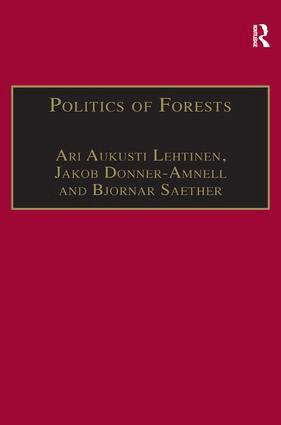
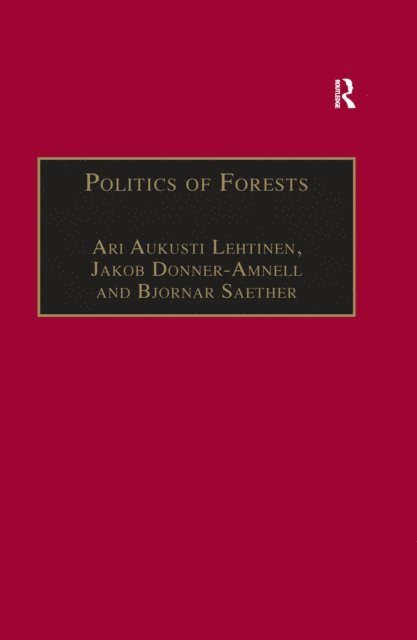
Bringing together case studies from Canada, the Nordic countries and Russia, this book is the first to provide a comparative examination of the current transformations in the forest industry regimes and the challenges they make for the communities dependent on this industry. Questioning how globalization has influenced forest regimes, the book focuses on individual forest companies and argues that they are the main motors of the industry's internationalization, often without taking due consideration of the complex interrelations between society, the environment and forest trade. During the current phase of globalization, the sphere of material production within the forest industry has increasingly been modified by more speculative signals from the market. Both the growing role of investor interests, as well as the broader societal demands for 'greening' the production chain, have forced managers to be more sensitive to the performance profile and image of their companies. In conclusion, the book highlights instances of processes working towards homogenization and diversity, and suggests that while Anglo-American management practice is increasingly important across the northern forest regions, it is also meeting with resistance due to historical and political conditions.
Häftad, Engelska, 2006
765 kr
Skickas inom 10-15 vardagar
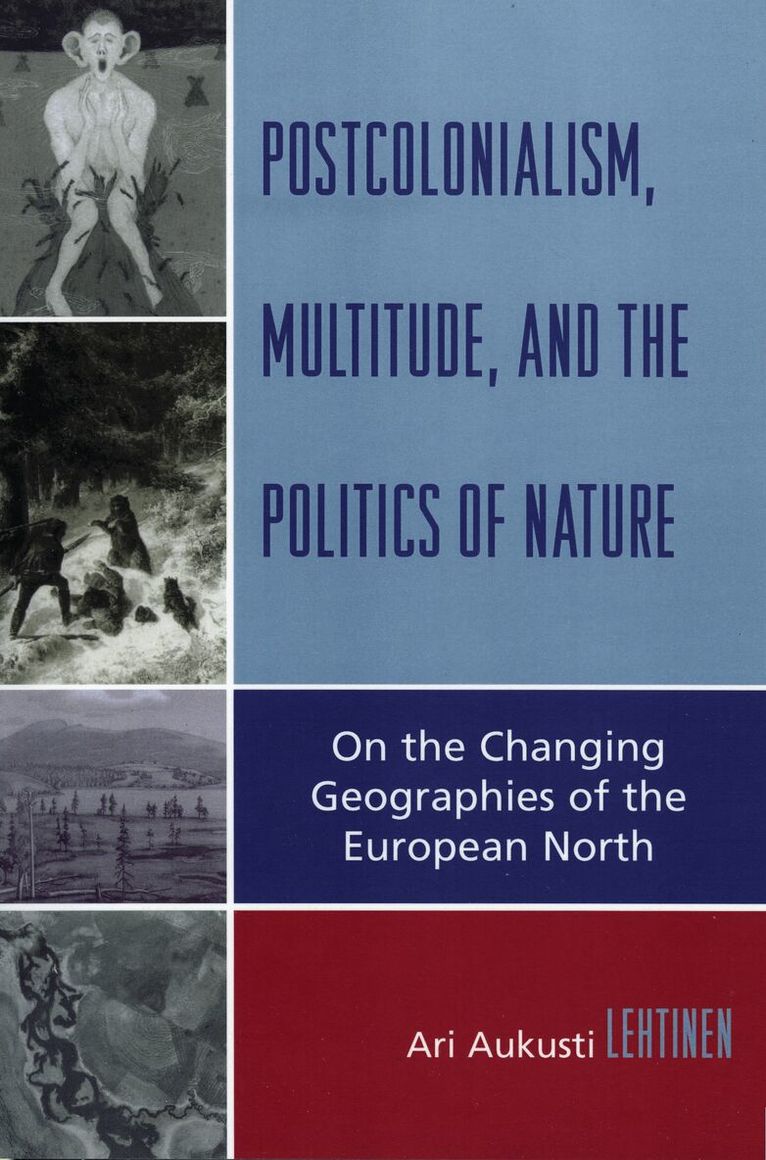
Postcolonialism, Multitude, and the Politics of Nature offers an overview of the latest developments of Nordic human geography and relates it to parallel Anglo-American and Continental European debates. The case studies focus on the Finnish-Russian Greenbelt, also known as the Fennoscandian Greenbelt, located at the long north-south border between the two countries. The Greenbelt is a geopolitical and socioenvironmental hybrid, or anomaly, that contains an array of cultural, economic, environmental, political, and epistemic interfaces. The drama and the dynamics of the border challenge the analytical and interpretative capabilities of human geography. Postcolonialism, Multitude, and the Politics of Nature describes in detail the lands and lives of the Greenbelt inhabitants who settled down in a multicultural meeting place of Finno-Ugric, Scandinavian, and Slavic cultures, as well as Orthodox and Lutheran faiths. The Greenbelt is also studied in relation to contemporary pressures of globalization, ranging from geopolitical reformulation of the relations between the European Union and Russia to transcontinental reorganizations in trade and environmental concerns.
Häftad, Engelska, 2016
778 kr
Skickas inom 10-15 vardagar
Bringing together case studies from Canada, the Nordic countries and Russia, this book is the first to provide a comparative examination of the current transformations in the forest industry regimes and the challenges they make for the communities dependent on this industry. Questioning how globalization has influenced forest regimes, the book focuses on individual forest companies and argues that they are the main motors of the industry's internationalization, often without taking due consideration of the complex interrelations between society, the environment and forest trade. During the current phase of globalization, the sphere of material production within the forest industry has increasingly been modified by more speculative signals from the market. Both the growing role of investor interests, as well as the broader societal demands for 'greening' the production chain, have forced managers to be more sensitive to the performance profile and image of their companies. In conclusion, the book highlights instances of processes working towards homogenization and diversity, and suggests that while Anglo-American management practice is increasingly important across the northern forest regions, it is also meeting with resistance due to historical and political conditions.
E-bok
Engelska, 2017892 kr
Läs direkt efter köp
Bringing together case studies from Canada, the Nordic countries and Russia, this book is the first to provide a comparative examination of the current transformations in the forest industry regimes and the challenges they make for the communities dependent on this industry. Questioning how globalization has influenced forest regimes, the book focuses on individual forest companies and argues that they are the main motors of the industry''s internationalization, often without taking due consideration of the complex interrelations between society, the environment and forest trade. During the current phase of globalization, the sphere of material production within the forest industry has increasingly been modified by more speculative signals from the market. Both the growing role of investor interests, as well as the broader societal demands for ''greening'' the production chain, have forced managers to be more sensitive to the performance profile and image of their companies. In conclusion, the book highlights instances of processes working towards homogenization and diversity, and suggests that while Anglo-American management practice is increasingly important across the northern forest regions, it is also meeting with resistance due to historical and political conditions.
E-bok
PDF, Engelska, 2017892 kr
Läs direkt efter köp
Bringing together case studies from Canada, the Nordic countries and Russia, this book is the first to provide a comparative examination of the current transformations in the forest industry regimes and the challenges they make for the communities dependent on this industry. Questioning how globalization has influenced forest regimes, the book focuses on individual forest companies and argues that they are the main motors of the industry''s internationalization, often without taking due consideration of the complex interrelations between society, the environment and forest trade. During the current phase of globalization, the sphere of material production within the forest industry has increasingly been modified by more speculative signals from the market. Both the growing role of investor interests, as well as the broader societal demands for ''greening'' the production chain, have forced managers to be more sensitive to the performance profile and image of their companies. In conclusion, the book highlights instances of processes working towards homogenization and diversity, and suggests that while Anglo-American management practice is increasingly important across the northern forest regions, it is also meeting with resistance due to historical and political conditions.