Ariel de la Fuente – författare
Visar alla böcker från författaren Ariel de la Fuente. Handla med fri frakt och snabb leverans.
3 produkter
3 produkter
E-bok
PDF, Engelska, 2000570 kr
Läs direkt efter köp
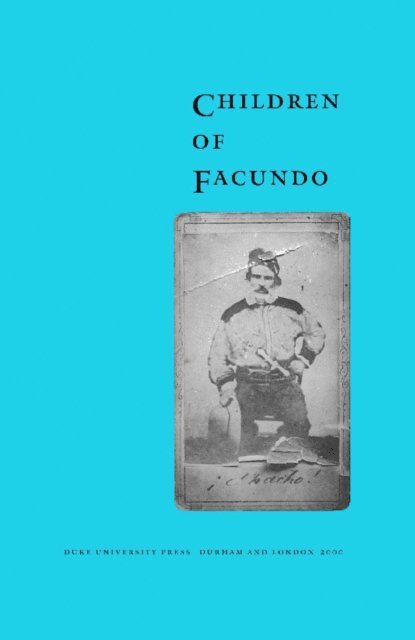
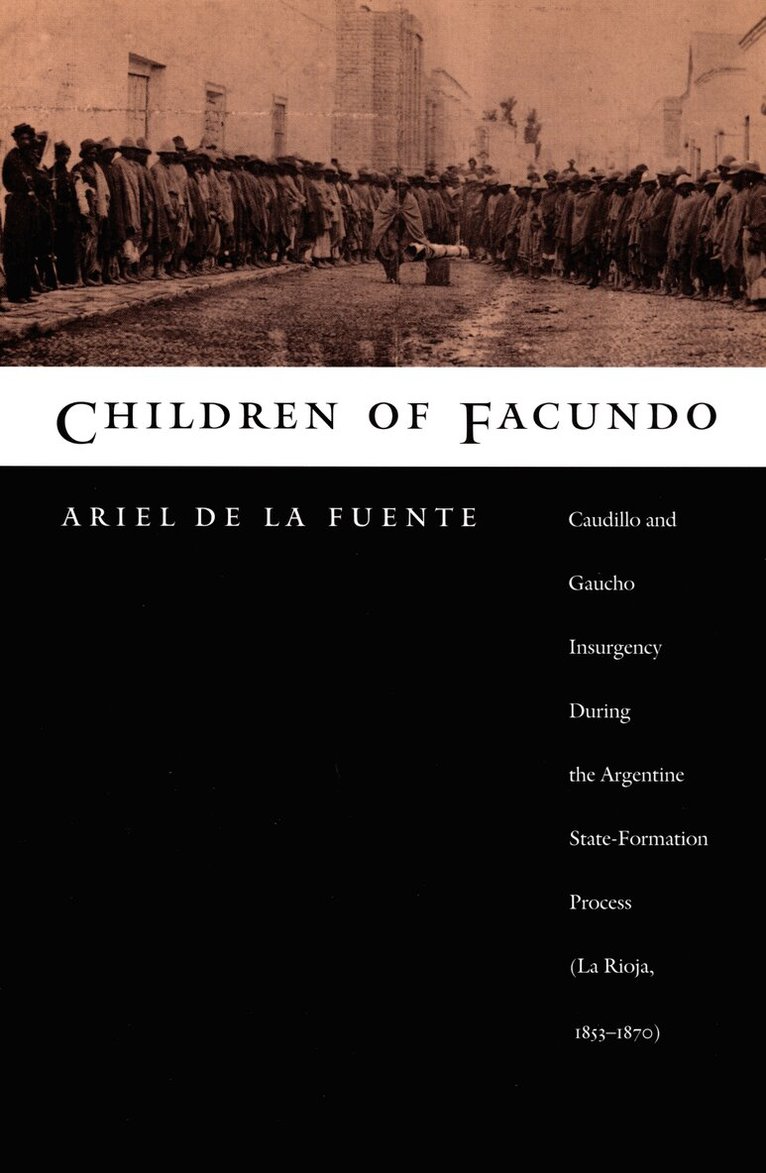
In Children of Facundo Ariel de la Fuente examines postindependence Argentinian instability and political struggle from the perspective of the rural lower classes. As the first comprehensive regional study to explore nineteenth-century society, culture, and politics in the Argentine interior—where more than 50 percent of the population lived at the time—the book departs from the predominant Buenos Aires-centered historiography to analyze this crucial period in the processes of state- and nation-building.La Rioja, a province in the northwest section of the country, was the land of the caudillos immortalized by Domingo F. Sarmiento, particularly in his foundational and controversial book Facundo. De la Fuente focuses on the repeated rebellions in this district during the 1860s, when Federalist caudillos and their followers, the gauchos, rose up against the new Unitarian government. In this social and cultural analysis, de la Fuente argues that the conflict was not a factional struggle between two ideologically identical sectors of the elite, as commonly depicted. Instead, he believes, the struggle should be seen from the perspective of the lower-class gauchos, for whom Unitarianism and Federalism were highly differentiated party identities that represented different experiences during the nineteenth century. To reconstruct this rural political culture de la Fuente relies on sources that heretofore have been little used in the study of nineteenth-century Latin American politics, most notably a rich folklore collection of popular political songs, folktales, testimonies, and superstitions passed down by old gauchos who had been witnesses or protagonists of the rebellions. Criminal trial records, private diaries, and land censuses add to the originality of de la Fuente’s study, while also providing a new perspective on Sarmiento’s works, including the classic Facundo.This book will interest those specializing in Latin American history, literature, politics, and rural issues.
Del 18 - Liverpool Latin American Studies
Borges, Desire, and Sex
Inbunden, Engelska, 2018
875 kr
Skickas inom 5-8 vardagar
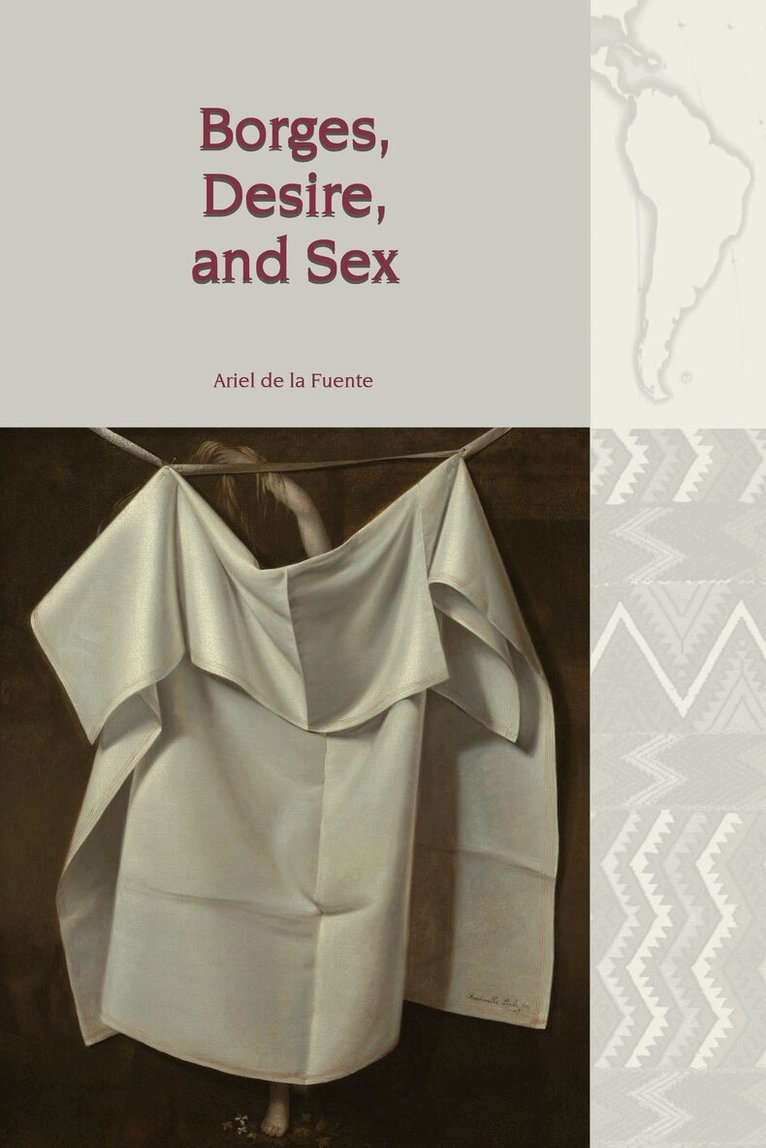
An Open Access edition of this book is available on the Liverpool University Press website and through Knowledge Unlatched.The Argentine Jorge Luis Borges, one of the most sophisticated writers of the twentieth century, suffered from sexual impotence. This emotionally overwhelming condition shaped his literary experience in ways that have not been understood. Until now Borges has largely been considered an asexual author who could not read, think, or write about desire and sex, but in this book historian Ariel de la Fuente shows that sexuality was a major preoccupation for him, both as a reader and as an author. De la Fuente has conducted an extensive literary investigation in Borges’s figurative erotic library and presents for the first time a study of the relationship between Borges’s sexual biography, his erotic readings, and the writing of desire and sex in his work. The author explores relevant literary questions while employing a historical method and the book is truly an interdisciplinary study at the intersection of history with Latin American, European, and Eastern literatures, poetry, philosophy, and sexuality. Argued with clarity, Borges, Desire, and Sex offers an unexpected perspective on the literature and figure of a world-wide influential author.
Del 18 - Liverpool Latin American Studies
Borges, Desire, and Sex
Häftad, Engelska, 2020
477 kr
Skickas inom 5-8 vardagar
An Open Access edition of this book is available on the Liverpool University Press website and through Knowledge Unlatched.The Argentine Jorge Luis Borges, one of the most sophisticated writers of the twentieth century, suffered from sexual impotence. This emotionally overwhelming condition shaped his literary experience in ways that have not been understood. Until now Borges has largely been considered an asexual author who could not read, think, or write about desire and sex, but in this book historian Ariel de la Fuente shows that sexuality was a major preoccupation for him, both as a reader and as an author. De la Fuente has conducted an extensive literary investigation in Borges’s figurative erotic library and presents for the first time a study of the relationship between Borges’s sexual biography, his erotic readings, and the writing of desire and sex in his work. The author explores relevant literary questions while employing a historical method and the book is truly an interdisciplinary study at the intersection of history with Latin American, European, and Eastern literatures, poetry, philosophy, and sexuality. Argued with clarity, Borges, Desire, and Sex offers an unexpected perspective on the literature and figure of a world-wide influential author.