Ariel E. Lugo - Böcker
Visar alla böcker från författaren Ariel E. Lugo. Handla med fri frakt och snabb leverans.
6 produkter
6 produkter
2 118 kr
Skickas inom 10-15 vardagar
Big-Leaf Mahogany is the most important commercial timber species of the tropics. Current debate concerning whether to protect it as an endangered species has been hampered by the lack of complete, definitive scientific documentation. This book reports on vital research on the ecology of big-leaf mahogany, including genetic variations, regeneration, natural distribution patterns and the silvicutural and trade implications for the tree.

1 590 kr
Skickas inom 10-15 vardagar
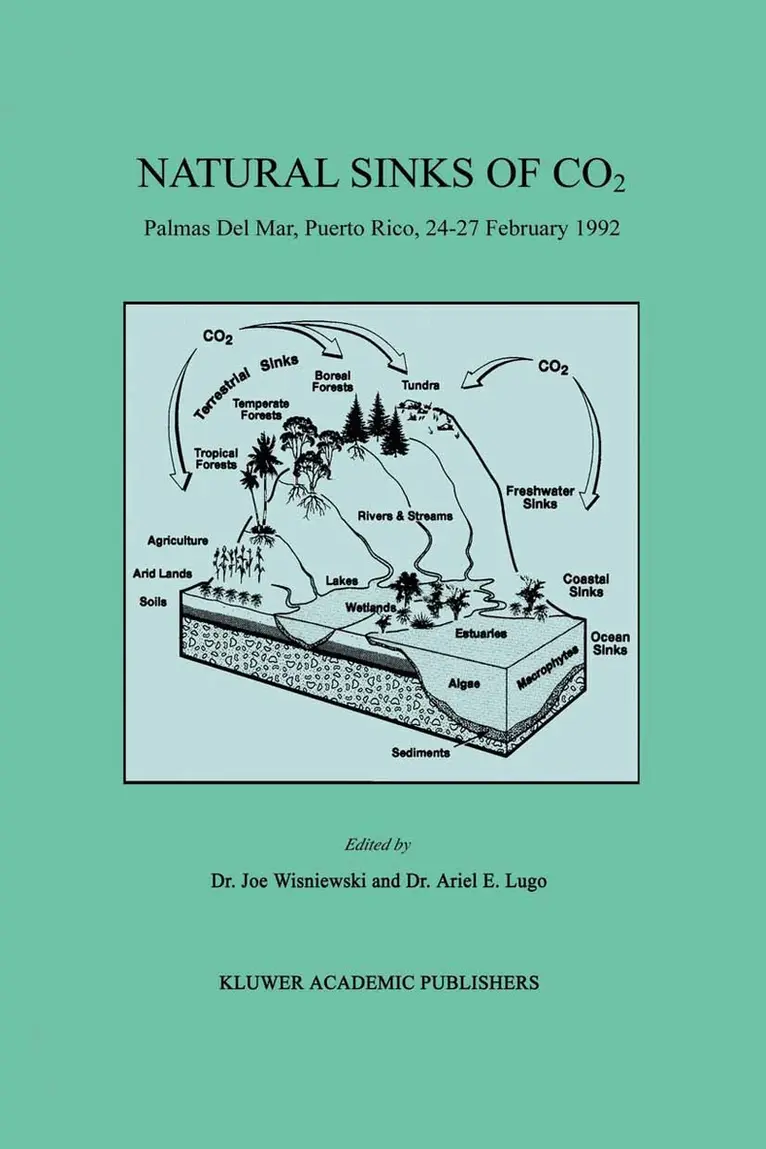
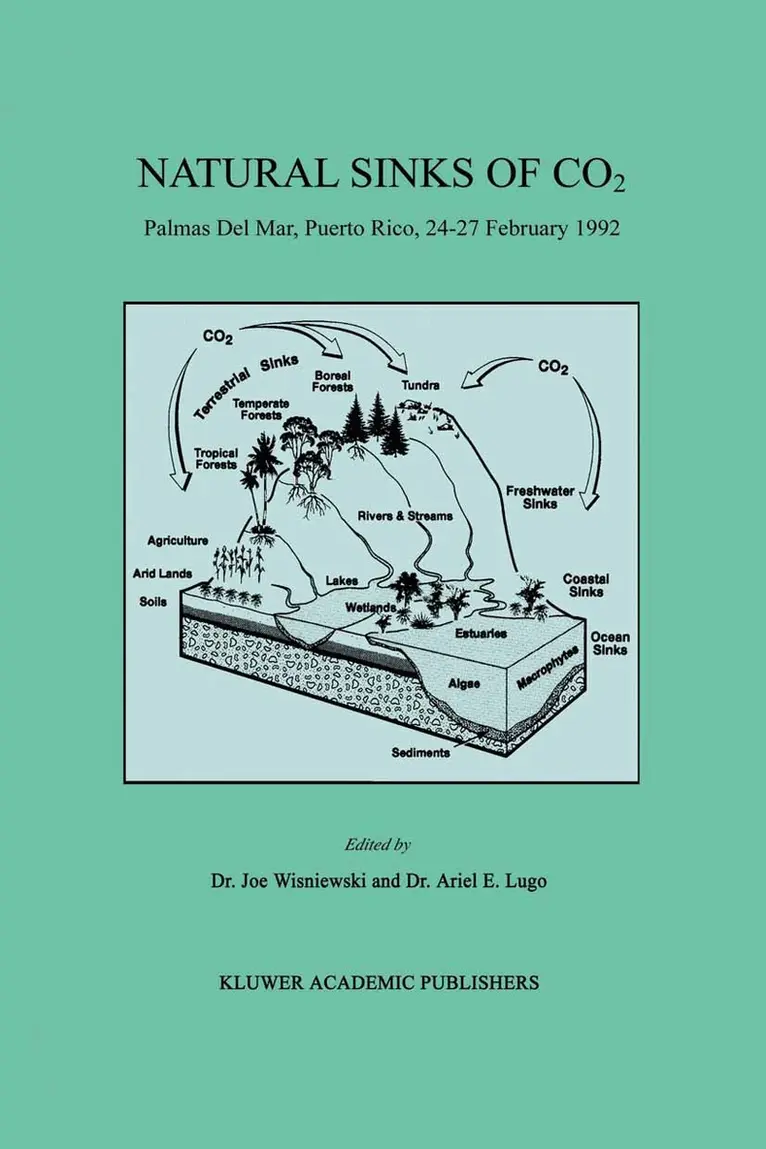
Most of the attention with respect to the increase in atmospheric greenhouse gas concentrations centres around three issues: human-generated sources of carbon, mostly from burning fossil fuels; tropical deforestation, which accelerates the production of atmospheric carbon while causing havoc with biodiversity and the economic development of tropical countries; and the temperature increase that may accompany the increased atmospheric greenhouse gas concentrations. This book focuses extensively on the reverse to emissions of carbon dioxide (CO 2), the sequestering of atmospheric carbon by aquatic and terrestrial ecosystems. Natural ecosystems are currently sequestering carbon and it is economically feasible to manage existing and additional terrestrial (forest, soil, saline land) and aquatic (coastal, wetland and ocean) ecosystems to substantially increase the levels of carbon storage. The prospect of managing natural systems to absorb additional carbon should begin to change the mindset under which scientists, policy makers and society deal with the issue of further greenhouse gas increases.
2 118 kr
Skickas inom 10-15 vardagar
Big-Leaf Mahogany is the most important commercial timber species of the tropics. Current debate concerning whether to protect it as an endangered species has been hampered by the lack of complete, definitive scientific documentation. This book reports on vital research on the ecology of big-leaf mahogany, including genetic variations, regeneration, natural distribution patterns and the silvicutural and trade implications for the tree.
1 067 kr
Skickas inom 10-15 vardagar
Forestry professors used to remind students that, whereas physicians bury their mistakes, foresters die before theirs are noticed. But good institutions live longer than the scientists who contribute to building them, and the half-century of work of the USDA Forest Service's Institute of Tropical Forestry (ITF) is in plain view: an unprecedented corpus of accomplishments that would instill pride in any organization. There is scarcely anyone interested in current issues of tropical forestry who would not benefit from a refresher course in ITF's findings: its early collaboration with farmers to establish plantations, its successes in what we now call social forestry, its continuous improvement of nursery practices, its screening trials of native species, its development of wood-processing technologies appropriate for developing countries, its thorough analysis of tropical forest function, and its holistic approach toward conservation of endangered species. Fortunately, ITF has a long history of information exchange through teaching; like many others, I got my own start in tropical forest ecology fromjust such a course in Puerto Rico. And long before politicians recognized the global importance of tropical forestry, the ITF staff served actively as ambassadors of the discipline, visiting tropical coun tries everywhere to learn and, when invited to do so, to help solve local problems. It is a general principle of biogeography that species' turnover rates on islands are higher than those on continents. Inevitably, the same is true of scientists assigned to work on islands.
Social-Ecological-Technological Effects of Hurricane María on Puerto Rico
Planning for Resilience under Extreme Events
Häftad, Engelska, 2018
590 kr
Skickas inom 10-15 vardagar
This book deals with the immediate effects of, and response to, Hurricane María on the social, ecological, and technological systems (SETS) of Puerto Rico. The SETS approach to analyzing hurricane effects places into historical context the role of social and technological factors, and compares social and ecological resilience on the same temporal scales. Written from the perspective of a Puerto Rican scientist who experienced Maria's wrath first-hand, the book uses extensive empirical knowledge of the ecological effects of hurricanes on Caribbean forests and combines that knowledge with a detailed analysis of the effects of Hurricane María on the social and technological fabric of Puerto Rico.The comparison suggests that the effects of extreme events are dictated not only by the strength of the physical event, but also by the conditions of affected SETS at the time when the event exerts influence over them. Moreover, SETS have historical legacies that influence howresilient they can be when affected by an extreme event. Therefore, preparation and response to extreme events require an integrated social, ecological, and technological effort, known as the SETS response. The SETS response requires an understanding of the energetics of extreme events and their effects on the economy, which in turn determines social and technological resilience. Hurricane María demonstrated that the social and technological systems of Puerto Rico were not adapted to dealing with extreme events, in contrast with the ecological systems, which were. Hurricane María’s effect on Puerto Rico can be used as an example from which valuable lessons emerge for making SETS more adaptable and resilient to extreme events.
1 590 kr
Skickas inom 10-15 vardagar
Most of the attention with respect to the increase in atmospheric greenhouse gas concentrations centers around three issues: human-generated sources of carbon, mostly from burning fossil fuels; tropical deforestation, which accelerates the production of atmospheric carbon while causting havoc with biodiversity and the economic development of tropical countries; and the temperature increase that may accompany increased atmospheric greenhouse gas concentrations. This is the first book to focus extensively on the reverse to emissions of carbon dioxide (CO2), i.e. the sequestering of atmospheric carbon by aquatic and terrestrial ecosystems. Natural ecosystems are currently sequestering carbon and it is economically feasible to manage existing and additional terrestrial (forest, soil, saline land) and aquatic (coastal, wetland and ocean) ecosystems to substantially increase the level of carbon storage. The prospect of managing natural systems to absorb additional carbon should begin to change the mindset under which scientists, policy makers and society deal with the issue of further greenhouse gas increases.