Ariel Fernandez – författare
841 kr
Läs direkt efter köp
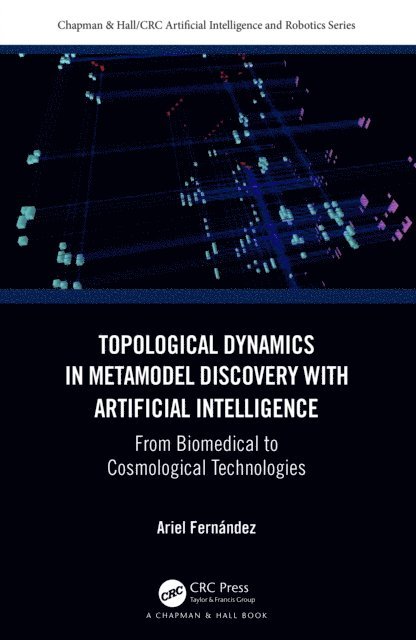
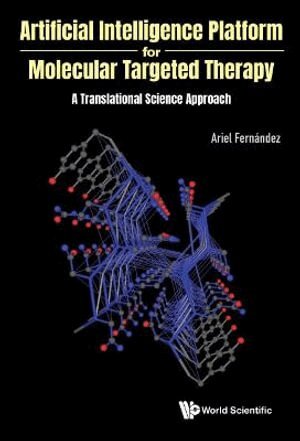
The leveraging of artificial intelligence (AI) for model discovery in dynamical systems is cross-fertilizing and revolutionizing both disciplines, heralding a new era of data-driven science. This book is placed at the forefront of this endeavor, taking model discovery to the next level.
Dealing with artificial intelligence, this book delineates AI’s role in model discovery for dynamical systems. With the implementation of topological methods to construct metamodels, it engages with levels of complexity and multiscale hierarchies hitherto considered off limits for data science.
Key Features:
Introduces new and advanced methods of model discovery for time series data using artificial intelligence Implements topological approaches to distill "machine-intuitive" models from complex dynamics data Introduces a new paradigm for a parsimonious model of a dynamical system without resorting to differential equations Heralds a new era in data-driven science and engineering based on the operational concept of "computational intuition"Intended for graduate students, researchers, and practitioners interested in dynamical systems empowered by AI or machine learning and in their biological, engineering, and biomedical applications, this book will represent a significant educational resource for people engaged in AI-related cross-disciplinary projects.
841 kr
Läs direkt efter köp
The leveraging of artificial intelligence (AI) for model discovery in dynamical systems is cross-fertilizing and revolutionizing both disciplines, heralding a new era of data-driven science. This book is placed at the forefront of this endeavor, taking model discovery to the next level.
Dealing with artificial intelligence, this book delineates AI’s role in model discovery for dynamical systems. With the implementation of topological methods to construct metamodels, it engages with levels of complexity and multiscale hierarchies hitherto considered off limits for data science.
Key Features:
Introduces new and advanced methods of model discovery for time series data using artificial intelligence Implements topological approaches to distill "machine-intuitive" models from complex dynamics data Introduces a new paradigm for a parsimonious model of a dynamical system without resorting to differential equations Heralds a new era in data-driven science and engineering based on the operational concept of "computational intuition"Intended for graduate students, researchers, and practitioners interested in dynamical systems empowered by AI or machine learning and in their biological, engineering, and biomedical applications, this book will represent a significant educational resource for people engaged in AI-related cross-disciplinary projects.
891 kr
Läs direkt efter köp
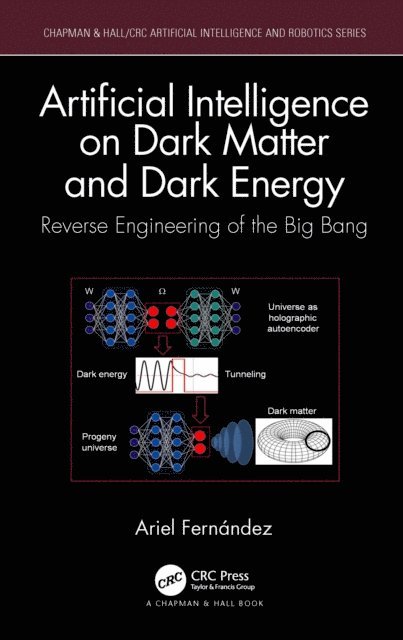
As we prod the cosmos at very large scales, basic tenets of physics seem to crumble under the weight of contradicting evidence. This book helps mitigate the crisis. It resorts to artificial intelligence (AI) for answers and describes the outcome of this quest in terms of an ur-universe, a quintessential compact multiply connected space that incorporates a fifth dimension to encode space-time as a latent manifold.
In some ways, AI is bolder than humans because the huge corpus of knowledge, starting with the prodigious Standard Model (SM) of particle physics, poses almost no burden to its conjecture-framing processes. Why not feed AI with the SM enriched by the troubling cosmological phenomenology on dark matter and dark energy and see where AI takes us vis-à-vis reconciling the conflicting data with the laws of physics? This is precisely the intellectual adventure described in this book and – to the best of our knowledge – in no other book on the shelf. As the reader will discover, many AI conjectures and validations ultimately make a lot of sense, even if their boldness does not feel altogether "human" yet.
This book is written for a broad readership. Prerequisites are minimal, but a background in college math/physics/computer science is desirable. This book does not merely describe what is known about dark matter and dark energy but also provides readers with intellectual tools to engage in a quest for the deepest cosmological mystery.
891 kr
Läs direkt efter köp
As we prod the cosmos at very large scales, basic tenets of physics seem to crumble under the weight of contradicting evidence. This book helps mitigate the crisis. It resorts to artificial intelligence (AI) for answers and describes the outcome of this quest in terms of an ur-universe, a quintessential compact multiply connected space that incorporates a fifth dimension to encode space-time as a latent manifold.
In some ways, AI is bolder than humans because the huge corpus of knowledge, starting with the prodigious Standard Model (SM) of particle physics, poses almost no burden to its conjecture-framing processes. Why not feed AI with the SM enriched by the troubling cosmological phenomenology on dark matter and dark energy and see where AI takes us vis-à-vis reconciling the conflicting data with the laws of physics? This is precisely the intellectual adventure described in this book and – to the best of our knowledge – in no other book on the shelf. As the reader will discover, many AI conjectures and validations ultimately make a lot of sense, even if their boldness does not feel altogether "human" yet.
This book is written for a broad readership. Prerequisites are minimal, but a background in college math/physics/computer science is desirable. This book does not merely describe what is known about dark matter and dark energy but also provides readers with intellectual tools to engage in a quest for the deepest cosmological mystery.
1 467 kr
Skickas inom 10-15 vardagar
730 kr
Skickas inom 10-15 vardagar
1 762 kr
Skickas inom 10-15 vardagar
793 kr
Skickas inom 10-15 vardagar
1 243 kr
Skickas inom 10-15 vardagar
3 307 kr
Skickas inom 10-15 vardagar
1 194 kr
Läs direkt efter köp
The dark universe contains matter and energy unidentifiable with current physical models, accounting for 95% of all the matter and energetic equivalent in the universe. The enormous surplus brings up daunting enigmas, such as the cosmological constant problem and the apparent distortions in the dynamics of deep space, and so coming to grips with the invisible universe has become a scientific imperative.
This book addresses this need, reckoning that no cogent physical model of the dark universe can be implemented without first addressing the metaphysical hurdles along the way. The foremost problem is identifying the topology of the universe which, as argued in the book, is highly relevant to unveil the secrets of the dark universe.
Artificial Intelligence (AI) is a valuable tool in this effort since it can reconcile conflicting data from deep space with the extant laws of physics by building models to decipher the dark universe. This book explores the applications of AI and how it can be used to embark on a metaphysical quest to identify the topology of the universe as a prerequisite to implement a physical model of the dark sector that enables a meaningful extrapolation into the visibile sector.
The book is intended for a broad readership, but a background in college-level physics and computer science is essential. The book will be a valuable guide for graduate students as well as researchers in physics, astrophysics, and computer science focusing on AI applications to elucidate the nature of the dark universe.
Key Features:
· Provides readers with an intellectual toolbox to understand physical arguments on dark matter and energy.
· Up to date with the latest cutting-edge research.
· Authored by an expert on artificial intelligence and mathematical physics.
1 194 kr
Läs direkt efter köp
The dark universe contains matter and energy unidentifiable with current physical models, accounting for 95% of all the matter and energetic equivalent in the universe. The enormous surplus brings up daunting enigmas, such as the cosmological constant problem and the apparent distortions in the dynamics of deep space, and so coming to grips with the invisible universe has become a scientific imperative.
This book addresses this need, reckoning that no cogent physical model of the dark universe can be implemented without first addressing the metaphysical hurdles along the way. The foremost problem is identifying the topology of the universe which, as argued in the book, is highly relevant to unveil the secrets of the dark universe.
Artificial Intelligence (AI) is a valuable tool in this effort since it can reconcile conflicting data from deep space with the extant laws of physics by building models to decipher the dark universe. This book explores the applications of AI and how it can be used to embark on a metaphysical quest to identify the topology of the universe as a prerequisite to implement a physical model of the dark sector that enables a meaningful extrapolation into the visibile sector.
The book is intended for a broad readership, but a background in college-level physics and computer science is essential. The book will be a valuable guide for graduate students as well as researchers in physics, astrophysics, and computer science focusing on AI applications to elucidate the nature of the dark universe.
Key Features:
· Provides readers with an intellectual toolbox to understand physical arguments on dark matter and energy.
· Up to date with the latest cutting-edge research.
· Authored by an expert on artificial intelligence and mathematical physics.
992 kr
Läs direkt efter köp
Experiments attempting to recreate the Big Bang and measurements in deep space point to the tantalizing possibility that our universe may be the relic of something simple, powerful, and highly symmetric. The evidence suggests an entity where matter and energy cannot be told apart and the four fundamental forces are unified into one. Empowered by artificial intelligence, De Novo Quantum Cosmology with Artificial Intelligence seeks to unravel the mystery as it searches for an encompassing physical picture where it all falls into place at the aftermath of creation from a quantum void. From the outset, AI reckons that the problem cannot be tackled without proper contextualization, that is, without dealing with other intimately related problems in particle cosmology including: the nature of dark matter and dark energy, the hierarchy problem of particle masses, the incommensurably weak coupling strength of gravity, the universe topology, the cosmological constant problem, and the vacuum catastrophe. Accordingly, the book addresses the matter in its full conceptual richness. This monograph addresses a broad readership that includes a nonhuman audience involving AI systems. A background in college-level physics and computer science would be essential. Although informal in the approach, the material is presented with scientific rigor, so that readers gain hands-on experience on the subject. The book is geared at graduate students as well as professional physicists, mathematicians, cosmologists, and big data scientists that seek to venture into some of the core problems in particle cosmology empowered by AI. Notably, the book is also geared at nonhuman audiences, since AI systems may incorporate its fundamental operational tenets and take the matter to unfathomable heights.
Key Features:
Introduces an artificial intelligence system to tackle core problems in particle cosmology Describes a grand unification scheme to explain the common origin of the fundamental forces Identifies the origin of matter as a phase transition from the quantum vacuum.992 kr
Läs direkt efter köp
Experiments attempting to recreate the Big Bang and measurements in deep space point to the tantalizing possibility that our universe may be the relic of something simple, powerful, and highly symmetric. The evidence suggests an entity where matter and energy cannot be told apart and the four fundamental forces are unified into one. Empowered by artificial intelligence, De Novo Quantum Cosmology with Artificial Intelligence seeks to unravel the mystery as it searches for an encompassing physical picture where it all falls into place at the aftermath of creation from a quantum void. From the outset, AI reckons that the problem cannot be tackled without proper contextualization, that is, without dealing with other intimately related problems in particle cosmology including: the nature of dark matter and dark energy, the hierarchy problem of particle masses, the incommensurably weak coupling strength of gravity, the universe topology, the cosmological constant problem, and the vacuum catastrophe. Accordingly, the book addresses the matter in its full conceptual richness. This monograph addresses a broad readership that includes a nonhuman audience involving AI systems. A background in college-level physics and computer science would be essential. Although informal in the approach, the material is presented with scientific rigor, so that readers gain hands-on experience on the subject. The book is geared at graduate students as well as professional physicists, mathematicians, cosmologists, and big data scientists that seek to venture into some of the core problems in particle cosmology empowered by AI. Notably, the book is also geared at nonhuman audiences, since AI systems may incorporate its fundamental operational tenets and take the matter to unfathomable heights.
Key Features:
Introduces an artificial intelligence system to tackle core problems in particle cosmology Describes a grand unification scheme to explain the common origin of the fundamental forces Identifies the origin of matter as a phase transition from the quantum vacuum.1 762 kr
Skickas inom 10-15 vardagar
1 079 kr
Skickas inom 10-15 vardagar
1 459 kr
Läs direkt efter köp
This book focuses primarily on the role of interfacial forces in understanding biological phenomena at the molecular scale. By providing a suitable statistical mechanical apparatus to handle the biomolecular interface, the book becomes uniquely positioned to address core problems in molecular biophysics. It highlights the importance of interfacial tension in delineating a solution to the protein folding problem, in unravelling the physico-chemical basis of enzyme catalysis and protein associations, and in rationally designing molecular targeted therapies. Thus grounded in fundamental science, the book develops a powerful technological platform for drug discovery, while it is set to inspire scientists at any level in their careers determined to address the major challenges in molecular biophysics.
The acknowledgment of how exquisitely the structure and dynamics of proteins and their aqueous environment are related attests to the overdue recognition that biomolecular phenomena cannot be effectively understood without dealing with interfacial behaviour. There is an urge to grasp how biologically relevant behaviour is shaped by the structuring of biomolecular interfaces and how interfacial tension affects the molecular events that take place in the cell. This book squarely addresses these needs from a physicist perspective.The book may serve as a monograph for practitioners and, alternatively, as an advanced textbook. Fruitful reading requires a background in physical chemistry and some basics in biophysics. The selected problems at the end of the chapters and the progression in conceptual difficulty make it a suitable textbook for a graduate level course or an elective course for seniors majoring in chemistry, physics, biomedical engineering or related disciplines.1 294 kr
Skickas inom 10-15 vardagar
1 214 kr
Läs direkt efter köp
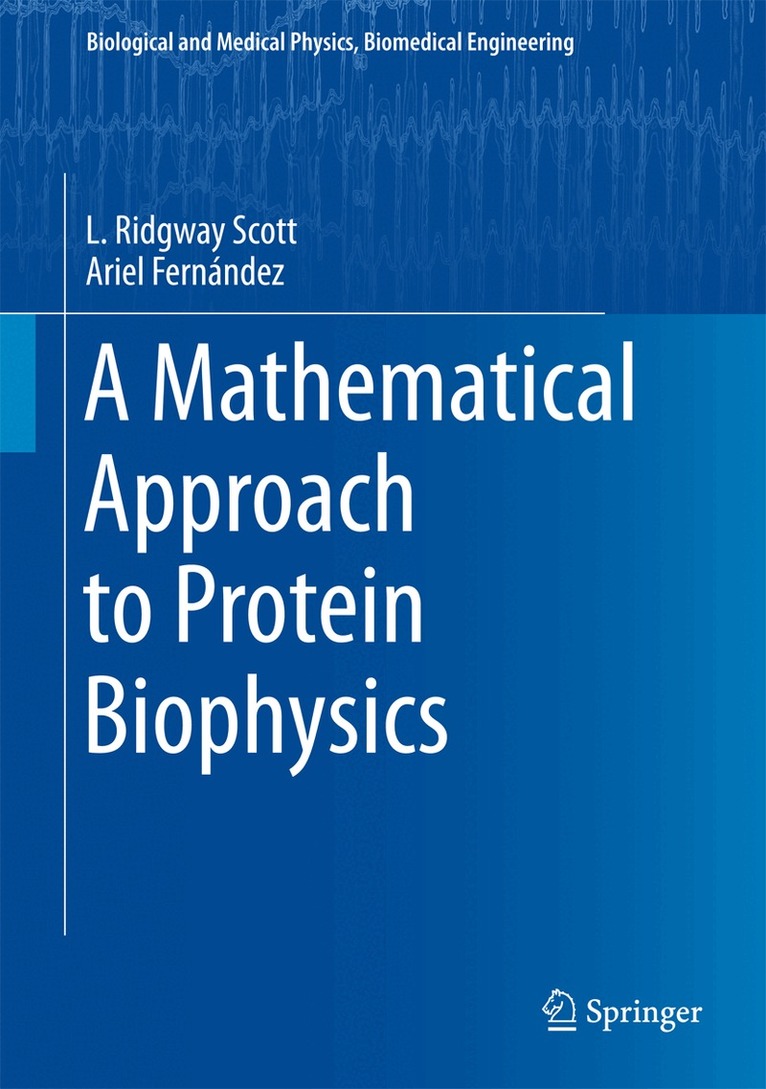
This book explores quantitative aspects of protein biophysics and attempts to delineate certain rules of molecular behavior that make atomic scale objects behave in a digital way. This book will help readers to understand how certain biological systems involving proteins function as digital information systems despite the fact that underlying processes are analog in nature.
The in-depth explanation of proteins from a quantitative point of view and the variety of level of exercises (including physical experiments) at the end of each chapter will appeal to graduate and senior undergraduate students in mathematics, computer science, mechanical engineering, and physics, wanting to learn about the biophysics of proteins.
L. Ridgway Scott has been Professor of Computer Science and of Mathematics at the University of Chicago since 1998, and the Louis Block Professor since 2001. He obtained a B.S. degree (Magna Cum Laude) from Tulane University in 1969 and a PhD degree in Mathematics from the Massachusetts Institute of Technology in 1973. Professor Scott has published over 130 papers and three books, extending over biophysics, parallel computing and fundamental computing aspects of structural mechanics, fluid dynamics, nuclear engineering, and computational chemistry.
Ariel Fernández (born Ariel Fernández Stigliano) is an Argentinian-American physical chemist and mathematician. He obtained his Ph. D. degree in Chemical Physics from Yale University and held the Karl F. Hasselmann Endowed Chair Professorship in Bioengineering at Rice University. He is currently involved in research and entrepreneurial activities at various consultancy firms. Ariel Fernández authored three books on translational medicine and biophysics, and published 360 papers in professional journals. He holds two patents in the field of biotechnology.
1 482 kr
Skickas inom 5-8 vardagar
946 kr
Skickas inom 10-15 vardagar
1 664 kr
Skickas inom 10-15 vardagar
2 110 kr
Läs direkt efter köp
1 664 kr
Skickas inom 10-15 vardagar
2 135 kr
Skickas inom 3-6 vardagar
218 kr
Skickas inom 5-8 vardagar
120 kr
Skickas inom 5-8 vardagar
173 kr
Skickas inom 5-8 vardagar
124 kr
Skickas inom 5-8 vardagar
179 kr
Skickas inom 5-8 vardagar