Ariela Keysar – författare
Visar alla böcker från författaren Ariela Keysar. Handla med fri frakt och snabb leverans.
3 produkter
3 produkter
Inbunden, Engelska, 2022
549 kr
Skickas inom 10-15 vardagar
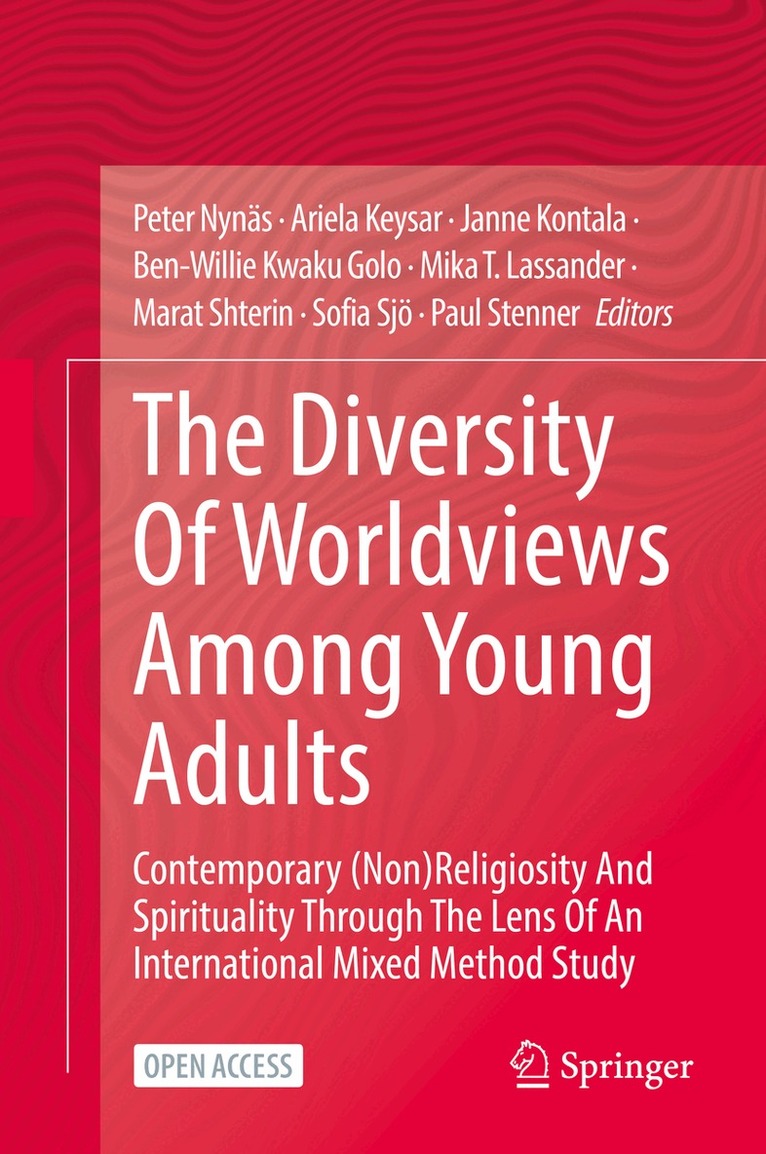
This open access volume features a data-rich portrait of what young adults think about the world. It collects the views of students in higher education from various cultural regions, religious traditions, linguistic groups, and political systems. This will help readers better understand a generation that will soon rise to power and influence.The analysis focuses on 12 countries. These include Canada, China, Finland, Ghana, India, Israel, Peru, Poland, Russia, Sweden, Turkey, and the USA. It employs a mixed-methods approach, invested in the study of an individual's views and values using state-of-the-art methodology, including the innovative Faith Q-sort. This instrument is new to the field and developed for assessing the entanglement of subjective views and personal beliefs. The study also incorporates a comprehensive values survey as well as other survey tools that look into people's social capital, media use, social values alignment, and subjective well-being.Each chapter is co-authored by an international team of scholars with research interest in the particular topic. The rationale for this principle is the need to engage individuals from different cultural backgrounds, scholarly disciplines, and methodological and substantive competences. In the end, this innovative approach presents an informed, empirically grounded analysis of the values and worldviews of the future generation. It sheds an important light on how changes in the religious landscape are intertwined with broad and diffuse processes of socio-economic and global cultural change.
Häftad, Engelska, 2022
440 kr
Skickas inom 10-15 vardagar
This open access volume features a data-rich portrait of what young adults think about the world. It collects the views of students in higher education from various cultural regions, religious traditions, linguistic groups, and political systems. This will help readers better understand a generation that will soon rise to power and influence.The analysis focuses on 12 countries. These include Canada, China, Finland, Ghana, India, Israel, Peru, Poland, Russia, Sweden, Turkey, and the USA. It employs a mixed-methods approach, invested in the study of an individual's views and values using state-of-the-art methodology, including the innovative Faith Q-sort. This instrument is new to the field and developed for assessing the entanglement of subjective views and personal beliefs. The study also incorporates a comprehensive values survey as well as other survey tools that look into people's social capital, media use, social values alignment, and subjective well-being.Each chapter is co-authored by an international team of scholars with research interest in the particular topic. The rationale for this principle is the need to engage individuals from different cultural backgrounds, scholarly disciplines, and methodological and substantive competences. In the end, this innovative approach presents an informed, empirically grounded analysis of the values and worldviews of the future generation. It sheds an important light on how changes in the religious landscape are intertwined with broad and diffuse processes of socio-economic and global cultural change.
Häftad, Engelska, 2000
383 kr
Tillfälligt slut
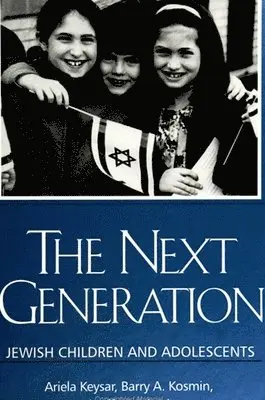
Focusing on the more than one million Jewish children and adolescents living in the United States, this book questions the future of the Jewish community's next generation.The Next Generation offers valuable analyses of the critical issues concerning the entire United States Jewish community. Drawing on the 1990 National Jewish Population Survey (NJPS), the book questions the future of the Jewish community's next generation.Children are the key to the future and continuity of any social, religious or ethnic group. But researchers point to some disturbing trends. A recent study shows that in families with a Jewish and a non-Jewish parent, only 31 percent of children are raised Jewish; only 24 percent of children living in a single-parent household have received any Jewish education; and only about half of all Jewish children today live with two Jewish parents.The authors probe topics that have crucial policy implications for dealing with the new conditions of the American Jewish populace including the demographic and social characteristics of American Jewish children; the effect on children's socialization due to differences in parental religious background; the role of household composition and family structure on the way Jewish children are raised; the impact of children on the Jewishness of their families; and the demographic projects for the younger Jewish population.