Arijit Sen – författare
Visar alla böcker från författaren Arijit Sen. Handla med fri frakt och snabb leverans.
10 produkter
10 produkter
Inbunden, Engelska, 2014
885 kr
Skickas inom 5-8 vardagar
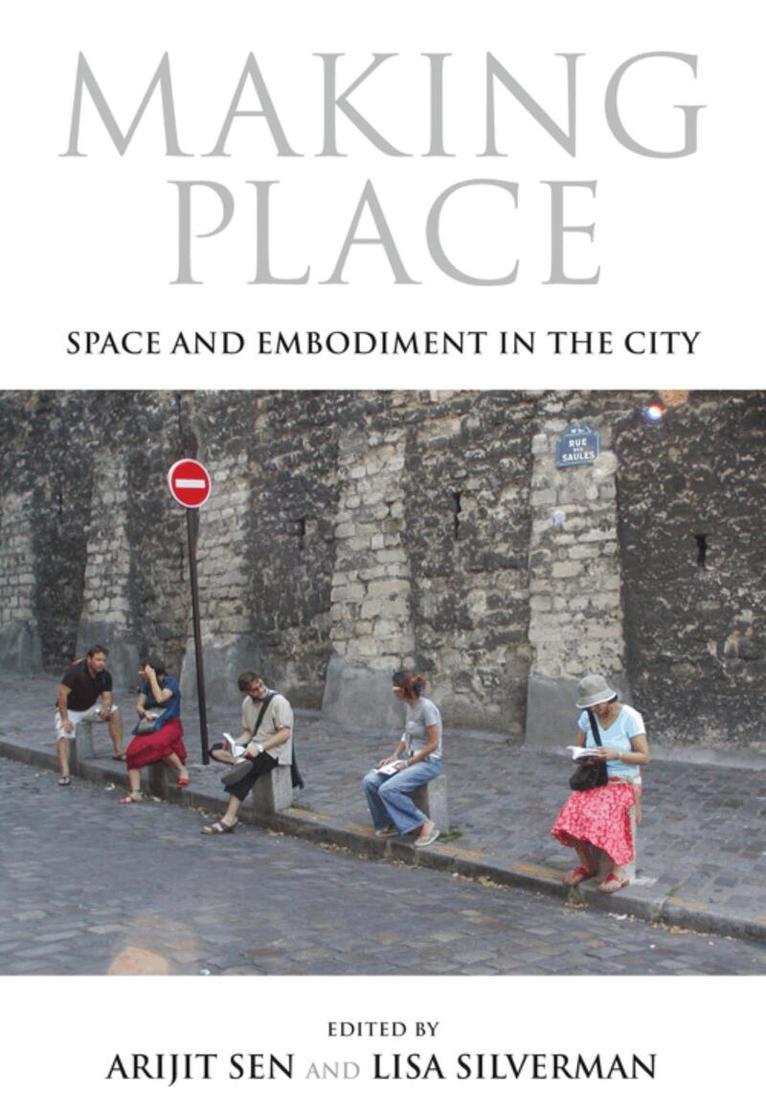
Space and place have become central to analysis of culture and history in the humanities and social sciences. Making Place examines how people engage the material and social worlds of the urban environment via the rhythms of everyday life and how bodily responses are implicated in the making and experiencing of place. The contributors introduce the concept of spatial ethnography, a new methodological approach that incorporates both material and abstract perspectives in the study of people and place, and encourages consideration of the various levels—from the personal to the planetary—at which spatial change occurs. The book's case studies come from Costa Rica, Colombia, India, Austria, Italy, the United Kingdom, and the United States.
Häftad, Engelska, 2014
322 kr
Skickas inom 5-8 vardagar
Space and place have become central to analysis of culture and history in the humanities and social sciences. Making Place examines how people engage the material and social worlds of the urban environment via the rhythms of everyday life and how bodily responses are implicated in the making and experiencing of place. The contributors introduce the concept of spatial ethnography, a new methodological approach that incorporates both material and abstract perspectives in the study of people and place, and encourages consideration of the various levels—from the personal to the planetary—at which spatial change occurs. The book's case studies come from Costa Rica, Colombia, India, Austria, Italy, the United Kingdom, and the United States.
Häftad, Engelska, 2016
866 kr
Skickas inom 10-15 vardagar
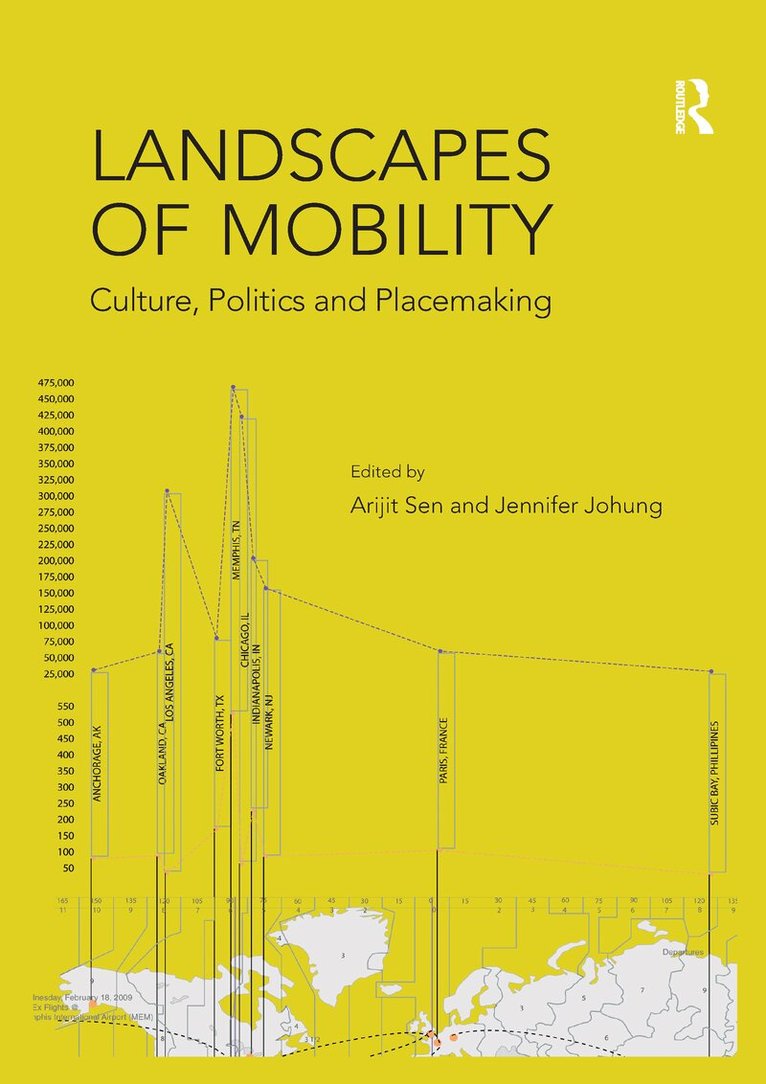
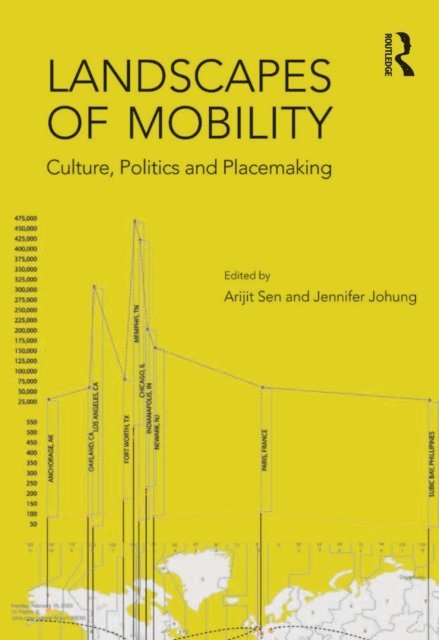
Our world is unquestionably one in which ubiquitous movements of people, goods, technologies, media, money, and ideas produce systems of flows. Comparing case studies from across the world, including those from Benin, the United States, India, Mali, Senegal, Japan, Haiti, and Romania, this book focuses on quotidian landscapes of mobility. Despite their seemingly familiar and innocuous appearances, these spaces exert tremendous control over our behavior and activities. By examining and mapping the politics of place and motion, this book analyzes human beings’ embodied engagements with their built world and provides diverse perspectives on the ideological and political underpinnings of landscapes of mobility. In order to describe landscapes of mobility as a historically, socially, and politically constructed condition, the book is divided into three sections-objects, contacts, and flows. The first section looks at elements that constitute such landscapes, including mobile bodies, buildings, and practices across multiple geographical scales. As these variable landscapes are reconstituted under particular social, economic, ecological, and political conditions, the second section turns to the particular practices that catalyze embodied relations within and across such spaces. Finally, the last section explores how the flows of objects, bodies, interactions, and ecologies are represented, presenting a critical comparison of the means by which relations, processes, and exchanges are captured, depicted, reproduced and re-embodied.
Häftad, Engelska, 2012
425 kr
Skickas inom 5-8 vardagar
Häftad, Engelska, 2014
508 kr
Skickas inom 5-8 vardagar
Häftad, Engelska, 2014
586 kr
Skickas inom 5-8 vardagar
E-bok
Engelska, 20161 022 kr
Läs direkt efter köp
Our world is unquestionably one in which ubiquitous movements of people, goods, technologies, media, money, and ideas produce systems of flows. Comparing case studies from across the world, including those from Benin, the United States, India, Mali, Senegal, Japan, Haiti, and Romania, this book focuses on quotidian landscapes of mobility. Despite their seemingly familiar and innocuous appearances, these spaces exert tremendous control over our behavior and activities. By examining and mapping the politics of place and motion, this book analyzes human beings’ embodied engagements with their built world and provides diverse perspectives on the ideological and political underpinnings of landscapes of mobility. In order to describe landscapes of mobility as a historically, socially, and politically constructed condition, the book is divided into three sections-objects, contacts, and flows. The first section looks at elements that constitute such landscapes, including mobile bodies, buildings, and practices across multiple geographical scales. As these variable landscapes are reconstituted under particular social, economic, ecological, and political conditions, the second section turns to the particular practices that catalyze embodied relations within and across such spaces. Finally, the last section explores how the flows of objects, bodies, interactions, and ecologies are represented, presenting a critical comparison of the means by which relations, processes, and exchanges are captured, depicted, reproduced and re-embodied.
E-bok
PDF, Engelska, 20161 022 kr
Läs direkt efter köp
Our world is unquestionably one in which ubiquitous movements of people, goods, technologies, media, money, and ideas produce systems of flows. Comparing case studies from across the world, including those from Benin, the United States, India, Mali, Senegal, Japan, Haiti, and Romania, this book focuses on quotidian landscapes of mobility. Despite their seemingly familiar and innocuous appearances, these spaces exert tremendous control over our behavior and activities. By examining and mapping the politics of place and motion, this book analyzes human beings’ embodied engagements with their built world and provides diverse perspectives on the ideological and political underpinnings of landscapes of mobility. In order to describe landscapes of mobility as a historically, socially, and politically constructed condition, the book is divided into three sections-objects, contacts, and flows. The first section looks at elements that constitute such landscapes, including mobile bodies, buildings, and practices across multiple geographical scales. As these variable landscapes are reconstituted under particular social, economic, ecological, and political conditions, the second section turns to the particular practices that catalyze embodied relations within and across such spaces. Finally, the last section explores how the flows of objects, bodies, interactions, and ecologies are represented, presenting a critical comparison of the means by which relations, processes, and exchanges are captured, depicted, reproduced and re-embodied.
Häftad, Engelska, 2015
320 kr
Skickas inom 5-8 vardagar
Inbunden, Engelska, 2013
2 482 kr
Skickas inom 10-15 vardagar
Our world is unquestionably one in which ubiquitous movements of people, goods, technologies, media, money, and ideas produce systems of flows. Comparing case studies from across the world, including those from Benin, the United States, India, Mali, Senegal, Japan, Haiti, and Romania, this book focuses on quotidian landscapes of mobility. Despite their seemingly familiar and innocuous appearances, these spaces exert tremendous control over our behavior and activities. By examining and mapping the politics of place and motion, this book analyzes human beings’ embodied engagements with their built world and provides diverse perspectives on the ideological and political underpinnings of landscapes of mobility. In order to describe landscapes of mobility as a historically, socially, and politically constructed condition, the book is divided into three sections-objects, contacts, and flows. The first section looks at elements that constitute such landscapes, including mobile bodies, buildings, and practices across multiple geographical scales. As these variable landscapes are reconstituted under particular social, economic, ecological, and political conditions, the second section turns to the particular practices that catalyze embodied relations within and across such spaces. Finally, the last section explores how the flows of objects, bodies, interactions, and ecologies are represented, presenting a critical comparison of the means by which relations, processes, and exchanges are captured, depicted, reproduced and re-embodied.