Arild Angelsen – författare
Visar alla böcker från författaren Arild Angelsen. Handla med fri frakt och snabb leverans.
5 produkter
Agricultural Technologies and Tropical Deforestation
Av Arild Angelsen, David Kaimowitz m. fl.
Häftad, 2001
1312 kr
Lägg i varukorg
This book has been developed from a workshop on Technological change in agriculture and tropical deforestation organised by the Center for International Forestry Research and held in Costa Rica in March, 1999. It explores how intensification of agriculture affects tropical deforestation using case …
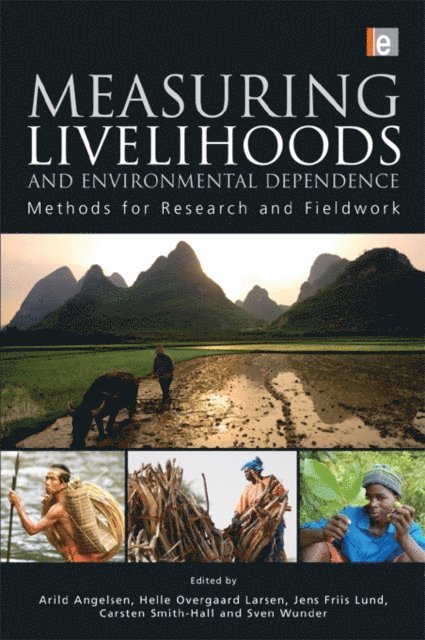
Measuring Livelihoods and Environmental Dependence
Methods for Research and Fieldwork
Av Sven Wunder, Carsten Smith-Hall m. fl.
E-bok, 2012
1152 kr
Lägg i varukorg
Thousands of surveys on rural livelihoods in developing countries are being done every year. Unfortunately, many suffer from weaknesses in methods and problems in implementation. Quantifying households'' dependence on multiple environmental resources (forests, bush, grasslands and rivers) is …
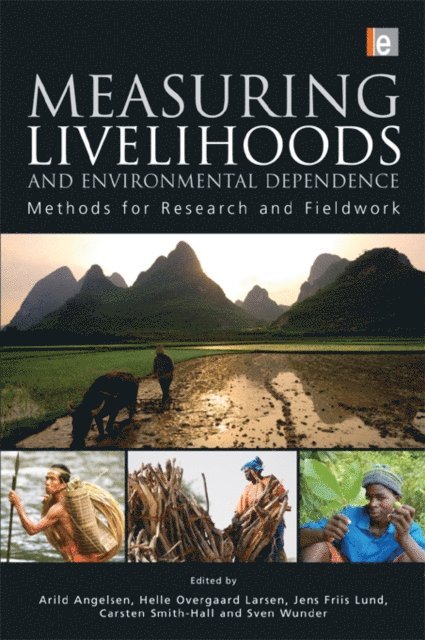
Measuring Livelihoods and Environmental Dependence
Methods for Research and Fieldwork
Av Sven Wunder, Carsten Smith-Hall m. fl.
E-bok, 2012
1152 kr
Lägg i varukorg
Thousands of surveys on rural livelihoods in developing countries are being done every year. Unfortunately, many suffer from weaknesses in methods and problems in implementation. Quantifying households'' dependence on multiple environmental resources (forests, bush, grasslands and rivers) is …
Measuring Livelihoods and Environmental Dependence
Methods for Research and Fieldwork
Av Arild Angelsen, Helle Overgaard Larsen m. fl.
Inbunden, 2011
2578 kr
Lägg i varukorg
Thousands of surveys on rural livelihoods in developing countries are being done every year. Unfortunately, many suffer from weaknesses in methods and problems in implementation. Quantifying households' dependence on multiple environmental resources (forests, bush, grasslands and rivers) is …
Measuring Livelihoods and Environmental Dependence
Methods for Research and Fieldwork
Av Arild Angelsen, Helle Overgaard Larsen m. fl.
Häftad, 2011
1009 kr
Lägg i varukorg
Thousands of surveys on rural livelihoods in developing countries are being done every year. Unfortunately, many suffer from weaknesses in methods and problems in implementation. Quantifying households' dependence on multiple environmental resources (forests, bush, grasslands and rivers) is …