Arnaud Pelletier – författare
Visar alla böcker från författaren . Handla med fri frakt och snabb leverans.
5 produkter
5 produkter
Inbunden, Engelska, 2026
2 436 kr
Skickas inom 10-15 vardagar
This volume explores the relevance, richness, and influence of empiricism in sixteenth- and seventeenth-century European philosophy. It features original essays from leading scholars of early modern empiricism.Early modern philosophy is often divided into the categories of Continental Rationalism and British Empiricism. This volume contends that there is a rich tradition of empiricism in early modern continental Europe. Each chapter provides a case study from the 16th- and 17th-century history of philosophy. These studies range from epistemology to natural philosophy and from the history of scientific institutions to experimental philosophy. The chapters complement historical analyses with methodological and historiographical reflections on notions traditionally associated with empiricism.Continental Empiricism will appeal to scholars and graduate students working in the history of early modern philosophy and the history of science.
E-bok
PDF, Engelska, 2026807 kr
Läs direkt efter köp
This volume explores the relevance, richness, and influence of empiricism in sixteenth- and seventeenth-century European philosophy. It features original essays from leading scholars of early modern empiricism.Early modern philosophy is often divided into the categories of Continental Rationalism and British Empiricism. This volume contends that there is a rich tradition of empiricism in early modern continental Europe. Each chapter provides a case study from the 16th- and 17th-century history of philosophy. These studies range from epistemology to natural philosophy and from the history of scientific institutions to experimental philosophy. The chapters complement historical analyses with methodological and historiographical reflections on notions traditionally associated with empiricism.Continental Empiricism will appeal to scholars and graduate students working in the history of early modern philosophy and the history of science.
E-bok
Engelska, 2026807 kr
Läs direkt efter köp
This volume explores the relevance, richness, and influence of empiricism in sixteenth- and seventeenth-century European philosophy. It features original essays from leading scholars of early modern empiricism.Early modern philosophy is often divided into the categories of Continental Rationalism and British Empiricism. This volume contends that there is a rich tradition of empiricism in early modern continental Europe. Each chapter provides a case study from the 16th- and 17th-century history of philosophy. These studies range from epistemology to natural philosophy and from the history of scientific institutions to experimental philosophy. The chapters complement historical analyses with methodological and historiographical reflections on notions traditionally associated with empiricism.Continental Empiricism will appeal to scholars and graduate students working in the history of early modern philosophy and the history of science.
E-bok
PDF, Engelska, 2015458 kr
Läs direkt efter köp
What is reality? Is it what appears to me, or what appears to most, or even what appears to some minds? Or should it rather be characterised as that which resists, as that which does not depend on me, or as that which exists anyway? And is the sense of "e;what is real"e; actually grasped by such idealist and realist conceptions? German philosopher Gottfried Wilhelm Leibniz (1646-1716) addressed the different aspects of this difficult issue through sustained and constant attention. By examining these aspects, the contributions gathered in this volume follow a dual purpose. First, they intend to reflect the diversity of the objects that triggered Leibniz's thoughts. In particular, they provide new insights into Leibniz's understanding of not only the reality of dreams, the properties and relations of things, the soul, and mathematical objects, but also the reality of space and time or the theological problem of the Eucharist. Second, they intend to overcome the overly unilateral debate between the idealist and realist readings of Leibniz's last metaphysics that have pervaded interpretations over the past 30 years.
E-bok
PDF, Engelska, 2016643 kr
Läs direkt efter köp
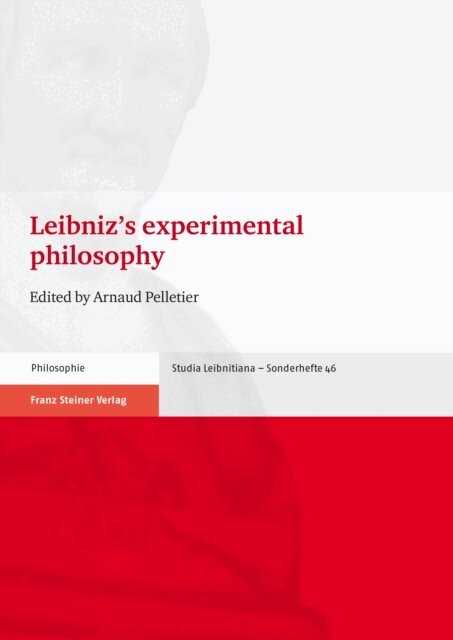
The philosophy of Leibniz is often considered as an intellectualism. Speculation is said to take precedence over experience in it. Against this persistent misunderstanding, Leibniz holds that experience plays a constitutive role in all areas of knowledge, even in mathematics and even in metaphysics. For metaphysics itself shall rely on common experiences and empirical observations. In this sense, one can speak of a true experimental philosophy in Leibniz, which does not reduce itself to a mere explanation of natural phenomena through deduction and induction - which was the understanding of 'experimental philosophy' when Newton coined the term. On the contrary, Leibniz's experimental philosophy seeks to overcome the vacuity of the modest empiricists and the boldness of the so-called 'experimental philosophers'. Without being exhaustive, this volume brings together contributions on the various facets of this experimental philosophy - and on the various aspects of experience itself - from considerations in metaphysics and natural philosophy to Leibniz's project of an encyclopaedia of all knowledge.