Arne Gron – författare
1 697 kr
Läs direkt efter köp
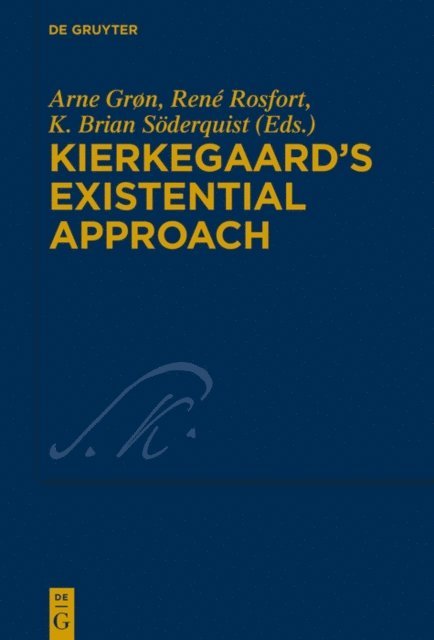
Recently there has been a growing interest not only in existentialism, but also in existential questions, as well as key figures in existential thinking. Yet despite this renewed interest, a systematic reconsideration of Kierkegaard’s existential approach is missing. This anthology is the first in a series of three that will attempt to fill this lacuna.
The 13 chapters of the first anthology deal with various aspects of Kierkegaard''s existential approach. Its reception will be examined in the works of influential philsophers such as Heidegger, Gadamer, and Habermas, as well as in lesser known philosophers from the interwar period, such as Jean Wahl, Lev Shestov, and Benjamin Fondane. Other chapters reconsider central notions, such as "anxiety", "existence", "imagination", and "despair". Finally, some chapters deal with Kierkegaard''s relevance for central issues in contemporary philosophy, including "naturalism", "self-constitution", and "bioethics".
This book is of relevance not only to researchers working in Kierkegaard Studies, but to anyone with an interest in existentialism and existential thinking.
1 697 kr
Läs direkt efter köp
Recently there has been a growing interest not only in existentialism, but also in existential questions, as well as key figures in existential thinking. Yet despite this renewed interest, a systematic reconsideration of Kierkegaard’s existential approach is missing. This anthology is the first in a series of three that will attempt to fill this lacuna.
The 13 chapters of the first anthology deal with various aspects of Kierkegaard''s existential approach. Its reception will be examined in the works of influential philsophers such as Heidegger, Gadamer, and Habermas, as well as in lesser known philosophers from the interwar period, such as Jean Wahl, Lev Shestov, and Benjamin Fondane. Other chapters reconsider central notions, such as "anxiety", "existence", "imagination", and "despair". Finally, some chapters deal with Kierkegaard''s relevance for central issues in contemporary philosophy, including "naturalism", "self-constitution", and "bioethics".
This book is of relevance not only to researchers working in Kierkegaard Studies, but to anyone with an interest in existentialism and existential thinking.
1 864 kr
Läs direkt efter köp
Arne Grøn’s reading of Søren Kierkegaard’s authorship revolves around existential challenges of human identity. The 35 essays that constitute this book are written over three decades and are characterized by combining careful attention to the augmentative detail of Kierkegaard’s text with a constant focus on issues in contemporary philosophy. Contrary to many approaches to Kierkegaard’s authorship, Grøn does not read Kierkegaard in opposition to Hegel. The work of the Danish thinker is read as a critical development of Hegelian phenomenology with particular attention to existential aspects of human experience. Anxiety and despair are the primary existential phenomena that Kierkegaard examines throughout his authorship, and Grøn uses these negative phenomena to argue for the basically ethical aim of Kierkegaard’s work. In Grøn’s reading, Kierkegaard conceives human selfhood not merely as relational, but also a process of becoming the self that one is through the otherness of self-experience, that is, the body, the world, other people, and God. This book should be of interest to philosophers, theologians, literary studies scholars, and anyone with an interest not only in Kierkegaard, but also in human identity.
1 864 kr
Läs direkt efter köp
Arne Grøn’s reading of Søren Kierkegaard’s authorship revolves around existential challenges of human identity. The 35 essays that constitute this book are written over three decades and are characterized by combining careful attention to the augmentative detail of Kierkegaard’s text with a constant focus on issues in contemporary philosophy. Contrary to many approaches to Kierkegaard’s authorship, Grøn does not read Kierkegaard in opposition to Hegel. The work of the Danish thinker is read as a critical development of Hegelian phenomenology with particular attention to existential aspects of human experience. Anxiety and despair are the primary existential phenomena that Kierkegaard examines throughout his authorship, and Grøn uses these negative phenomena to argue for the basically ethical aim of Kierkegaard’s work. In Grøn’s reading, Kierkegaard conceives human selfhood not merely as relational, but also a process of becoming the self that one is through the otherness of self-experience, that is, the body, the world, other people, and God. This book should be of interest to philosophers, theologians, literary studies scholars, and anyone with an interest not only in Kierkegaard, but also in human identity.