Arne Nordmark – författare
Visar alla böcker från författaren Arne Nordmark. Handla med fri frakt och snabb leverans.
3 produkter
3 produkter
Inbunden, Engelska, 2024
1 515 kr
Skickas inom 10-15 vardagar
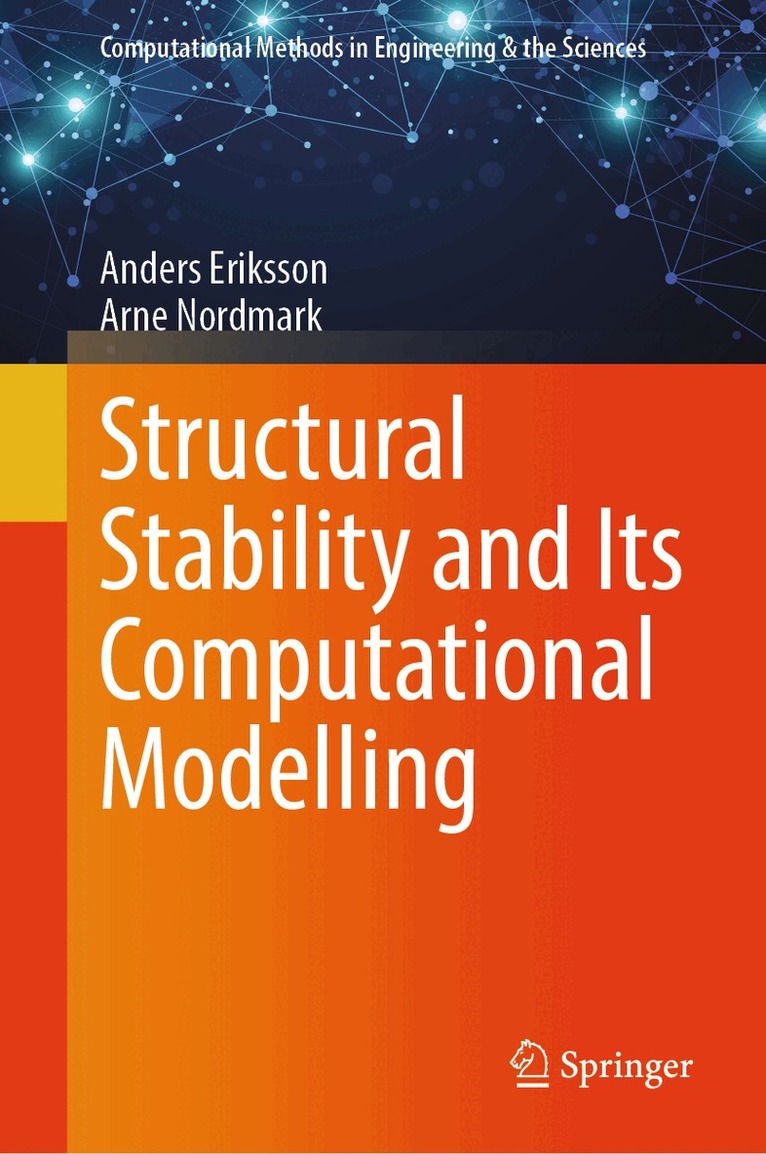
The volume showcases how basic formulation and solution methods can be used for an improved understanding of stability-affected structures. It also highlights the numerical treatment of the resulting equations, demonstrating and quantifying many aspects of structural stability not available to engineers by the traditional methods. The elaborated theoretical background is also used to show how methods included in commercial software can give misleading conclusions. The book will be of interest to researchers and professionals working in computational modelling of structures. The book includes exercises and projects, appended to each chapter, which further extends its usability as a text book in classroom teaching and for professional courses.
E-bok
Engelska, 20241 416 kr
Läs direkt efter köp
The volume showcases how basic formulation and solution methods can be used for an improved understanding of stability-affected structures. It also highlights the numerical treatment of the resulting equations, demonstrating and quantifying many aspects of structural stability not available to engineers by the traditional methods. The elaborated theoretical background is also used to show how methods included in commercial software can give misleading conclusions. The book will be of interest to researchers and professionals working in computational modelling of structures. The book includes exercises and projects, appended to each chapter, which further extends its usability as a text book in classroom teaching and for professional courses.
Häftad, Engelska, 2025
1 084 kr
Skickas inom 10-15 vardagar
The volume showcases how basic formulation and solution methods can be used for an improved understanding of stability-affected structures. It also highlights the numerical treatment of the resulting equations, demonstrating and quantifying many aspects of structural stability not available to engineers by the traditional methods. The elaborated theoretical background is also used to show how methods included in commercial software can give misleading conclusions. The book will be of interest to researchers and professionals working in computational modelling of structures. The book includes exercises and projects, appended to each chapter, which further extends its usability as a text book in classroom teaching and for professional courses.