Arne Tronsmo – författare
Visar alla böcker från författaren Arne Tronsmo. Handla med fri frakt och snabb leverans.
6 produkter
6 produkter
Häftad, Engelska, 2020
755 kr
Skickas
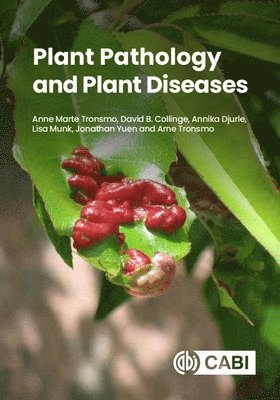
This textbook provides a comprehensive introduction to all aspects of plant diseases, including pathogens, plant-pathogen interactions, their management, and future perspectives. Plant diseases limit potential crop production and are responsible for considerable losses in agriculture, horticulture and forestry. Our global food production systems are under increasing pressure from global trade, climate change and urbanization. If we could alleviate the losses due to plant diseases, we would be able to produce roughly 20% more food - enough to feed the predicted world population in 2050. Co-authored by a group of international teachers of plant pathology who have collaborated for many years, this book gives expert and seamless coverage. Plant Pathology and Plant Diseases: Addresses major advances in plant-pathogen interactions, classification of plant pathogens, and the methods of managing or controlling disease Is relevant for a global audience; it covers many examples of diseases with an impact worldwide but with an emphasis on disease of particular importance in a temperate context Features over 400 striking figures and colour photographs It is suitable for graduate students and advanced undergraduates studying plant pathology, biology, agriculture and horticulture.
Inbunden, Engelska, 1996
1 621 kr
Skickas inom 10-15 vardagar
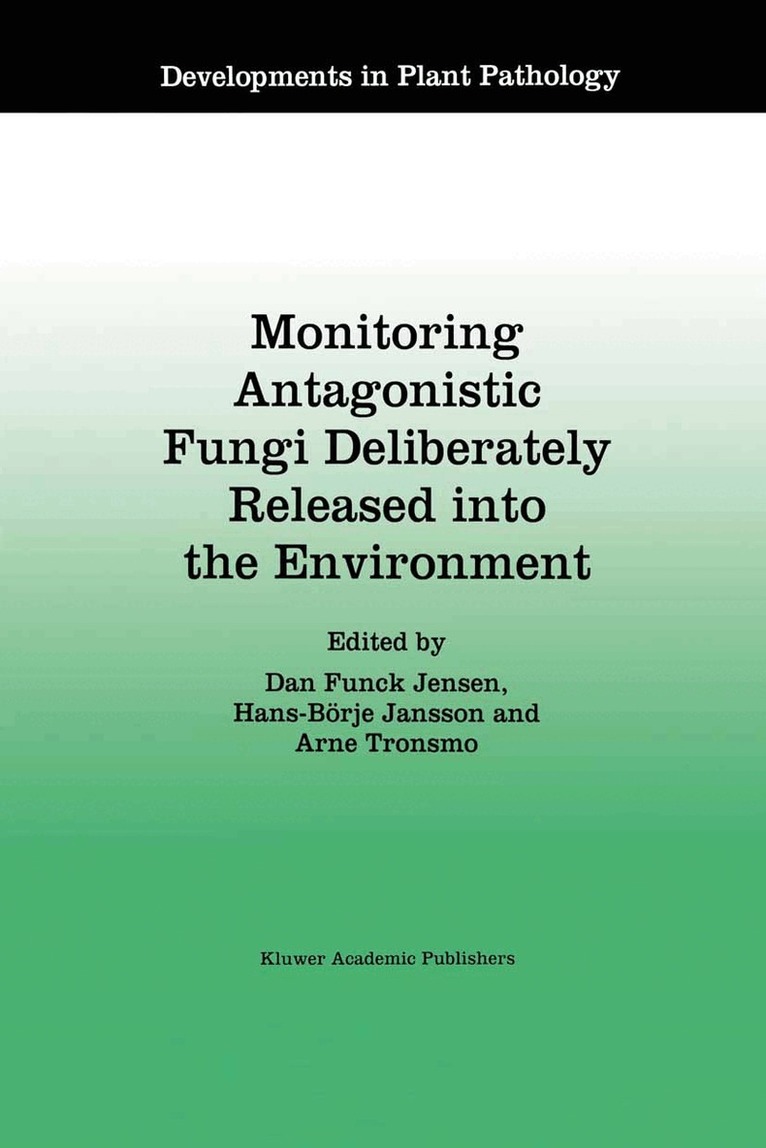
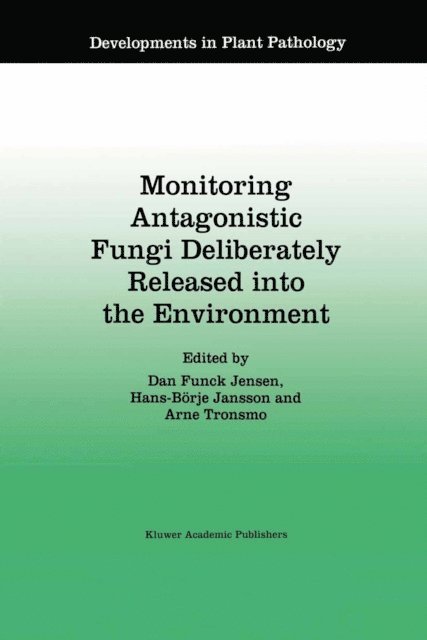
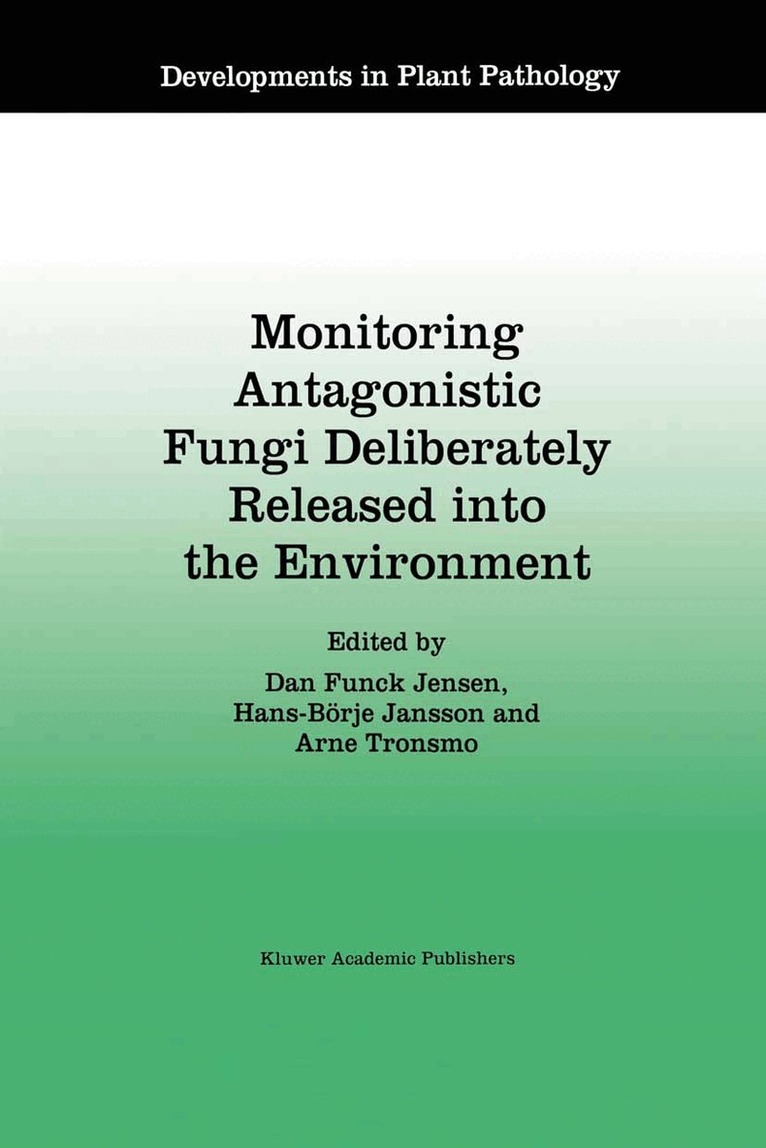
Micro-organisms, including those genetically modified (GMOs), are increasingly being released deliberately into the environment for different purposes. One major interest is the use of antagonistic organisms for biological control of pests and plant diseases. Both in the development of biocontrol agents and their later risk assessment and product approval, there is a need for methods that facilitate monitoring of such introduced microorganisms. This book addresses the various approaches for monitoring introduced fungi and the current status of techniques which may be relevant to use are described. Such techniques include marker genes and other DNA-based techniques, serology using polyclonals or monoclonals, the use of enzymes or secondary metabolite profiles, and "electronic noses" as well as more traditional methods like dilution plating.
E-bok
PDF, Engelska, 2020834 kr
Läs direkt efter köp
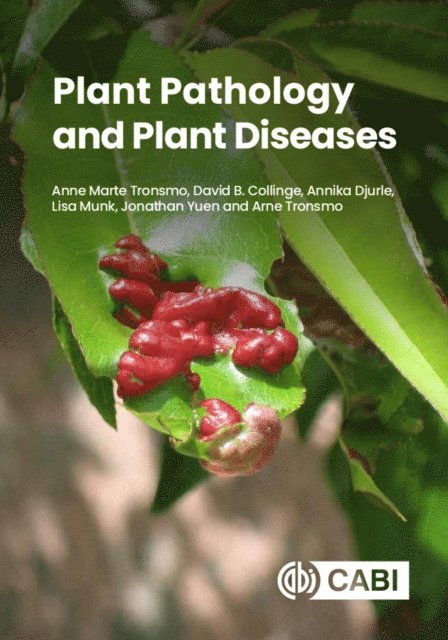
This textbook provides a comprehensive introduction to all aspects of plant diseases, including pathogens, plant-pathogen interactions, their management, and future perspectives. Plant diseases limit potential crop production and are responsible for considerable losses in agriculture, horticulture and forestry. Our global food production systems are under increasing pressure from global trade, climate change and urbanization. If we could alleviate the losses due to plant diseases, we would be able to produce roughly 20% more food - enough to feed the predicted world population in 2050. Co-authored by a group of international teachers of plant pathology who have collaborated for many years, this book gives expert and seamless coverage. Plant Pathology and Plant Diseases: Addresses major advances in plant-pathogen interactions, classification of plant pathogens, and the methods of managing or controlling disease Is relevant for a global audience; it covers many examples of diseases with an impact worldwide but with an emphasis on disease of particular importance in a temperate context Features over 400 striking figures and colour photographs It is suitable for graduate students and advanced undergraduates studying plant pathology, biology, agriculture and horticulture.
E-bok
Engelska, 2020834 kr
Läs direkt efter köp
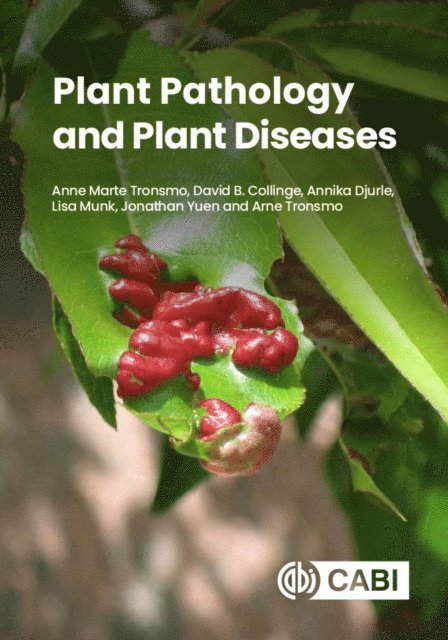
This textbook provides a comprehensive introduction to all aspects of plant diseases, including pathogens, plant-pathogen interactions, their management, and future perspectives. Plant diseases limit potential crop production and are responsible for considerable losses in agriculture, horticulture and forestry. Our global food production systems are under increasing pressure from global trade, climate change and urbanization. If we could alleviate the losses due to plant diseases, we would be able to produce roughly 20% more food - enough to feed the predicted world population in 2050. Co-authored by a group of international teachers of plant pathology who have collaborated for many years, this book gives expert and seamless coverage. Plant Pathology and Plant Diseases: Addresses major advances in plant-pathogen interactions, classification of plant pathogens, and the methods of managing or controlling disease Is relevant for a global audience; it covers many examples of diseases with an impact worldwide but with an emphasis on disease of particular importance in a temperate context Features over 400 striking figures and colour photographs It is suitable for graduate students and advanced undergraduates studying plant pathology, biology, agriculture and horticulture.
E-bok
PDF, Engelska, 20121 977 kr
Läs direkt efter köp
Microorganisms, including those genetically modified (GMOs), are increasingly being released deliberately into the environment for different purposes. One major interest is the use of antagonistic organisms for biological control of pests and plant diseases. Both in the development of biocontrol agents and their later risk assessment and product approval, there is a need for methods that facilitate monitoring of such introduced microorganisms. This book particularly addresses the various approaches for monitoring introduced fungi and the current status of techniques which may be relevant to use are described. Such techniques include marker genes and other DNA-based techniques, serology using polyclonals or monoclonals, the use of enzymes or secondary metabolite profiles, and `electronic noses'' as well as more traditional methods like dilution plating.
Häftad, Engelska, 2011
1 605 kr
Skickas inom 10-15 vardagar
Microorganisms, including those genetically modified (GMOs), are increasingly being released deliberately into the environment for different purposes. One major interest is the use of antagonistic organisms for biological control of pests and plant diseases. Both in the development of biocontrol agents and their later risk assessment and product approval, there is a need for methods that facilitate monitoring of such introduced microorganisms. This book particularly addresses the various approaches for monitoring introduced fungi and the current status of techniques which may be relevant to use are described. Such techniques include marker genes and other DNA-based techniques, serology using polyclonals or monoclonals, the use of enzymes or secondary metabolite profiles, and `electronic noses' as well as more traditional methods like dilution plating.