Arno Scharl – författare
Visar alla böcker från författaren Arno Scharl. Handla med fri frakt och snabb leverans.
9 produkter
9 produkter
E-bok
PDF, Engelska, 2012629 kr
Läs direkt efter köp
Evolutionary Web Development examines the evolution of Web information systems, paying particular attention to the emergent attributes of electronic markets. It identifies four categories of architecture and demonstrates their virtues and limitations: static, interactive, adaptive, and agent-mediated systems.Advanced systems require the developer to truly understand the needs and preferences of customers. As well as such personal attributes, the availability of empirical data about the structure and content of Web information systems is a precondition for their effective assessment. Arno Scharl presents an automated and scalable approach to Web assessment. He emphasizes the role of feedback in an iterative cycle of design, implementation, usage, and analysis.
E-bok
PDF, Engelska, 20132 049 kr
Läs direkt efter köp
This book brings together high quality articles exploring the design, implementation, management, funding, promotion and evaluation of networked information systems that advocate sustainability and the protection of natural ecosystems. Case studies of deployed and planned information systems complement theoretical work on the methodological, technological and organizational foundations of environmental online communication.
Engelska, 2013
625 kr
Skickas inom 5-8 vardagar
Inbunden, Engelska, 2007
1 123 kr
Skickas inom 10-15 vardagar
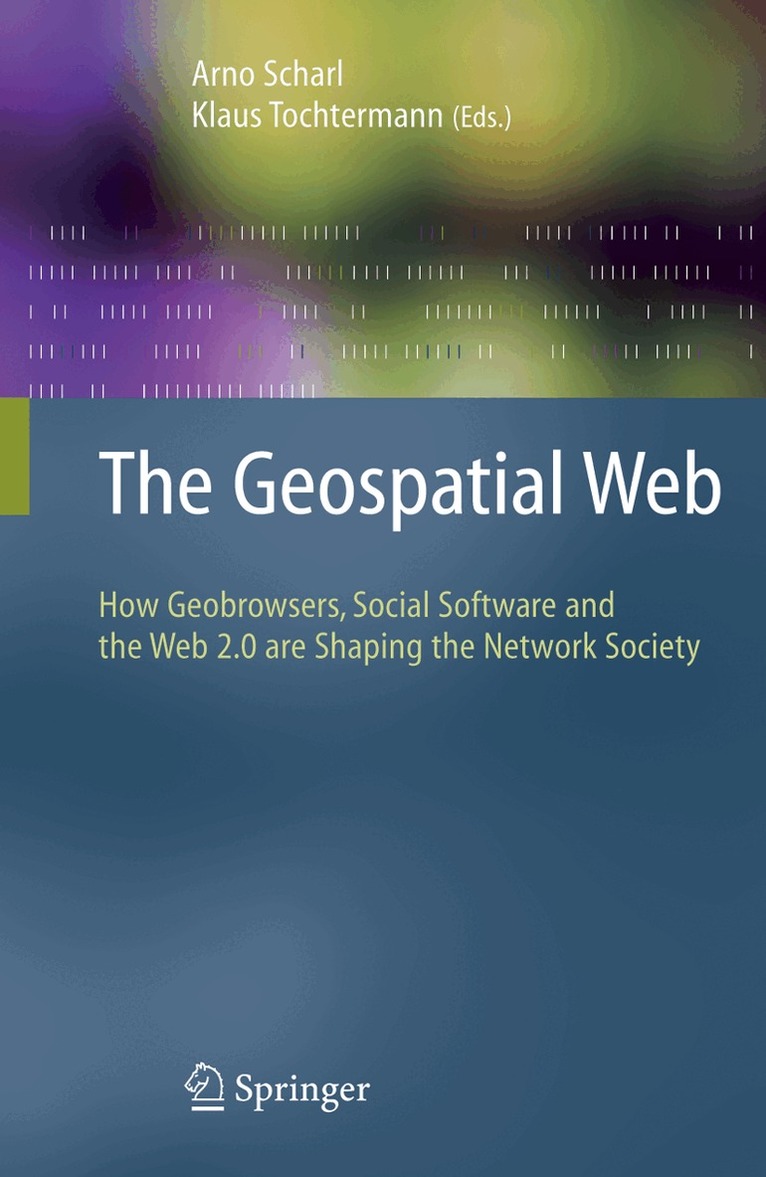
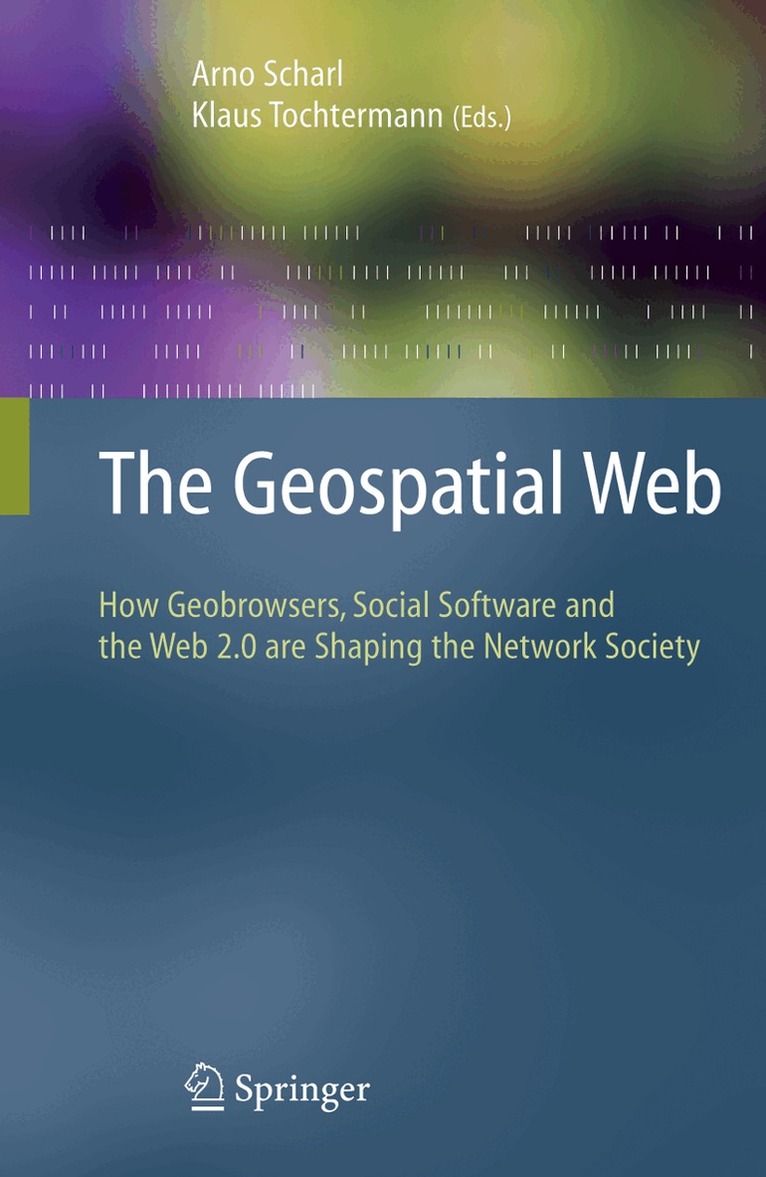
The most important attribute of geospatial platforms is their unique potential to aggregate a multitude of public and private geographic data sets, providing access to data from government agencies, industry and the general public. NASA and other organizations have a wealth of planetary science data – representing the output from thousands of satellites in earth-orbit, and from dozens of costly missions to other planets. Benefits derived from both the data and visual interfaces to access the data represent a significant return on investment for the public. Integrating geospatial data with semantic and collaborative Web technology multiplies the public benefits and represents the main focus of this book. The user interfaces of geobrowsers are designed for the layperson, giving conv- ient access to all kinds of geographically referenced information. Geobrowsers hide the technical details related to finding, accessing and retrieving such information. The daunting challenge of the Geospatial Web is to seamlessly integrate and display vastly different information modes. Nowadays, it is not enough to simply display a map of some region; additional dynamic information modes need to be displayed and put into context – from weather sensor readings and live aerial video feeds to daily news updates, photo collections and video archives.
E-bok
PDF, Engelska, 20091 367 kr
Läs direkt efter köp
The most important attribute of geospatial platforms is their unique potential to aggregate a multitude of public and private geographic data sets, providing access to data from government agencies, industry and the general public. NASA and other organizations have a wealth of planetary science data – representing the output from thousands of satellites in earth-orbit, and from dozens of costly missions to other planets. Benefits derived from both the data and visual interfaces to access the data represent a significant return on investment for the public. Integrating geospatial data with semantic and collaborative Web technology multiplies the public benefits and represents the main focus of this book. The user interfaces of geobrowsers are designed for the layperson, giving conv- ient access to all kinds of geographically referenced information. Geobrowsers hide the technical details related to finding, accessing and retrieving such information. The daunting challenge of the Geospatial Web is to seamlessly integrate and display vastly different information modes. Nowadays, it is not enough to simply display a map of some region; additional dynamic information modes need to be displayed and put into context – from weather sensor readings and live aerial video feeds to daily news updates, photo collections and video archives.
Häftad, Engelska, 2010
1 091 kr
Skickas inom 10-15 vardagar
The most important attribute of geospatial platforms is their unique potential to aggregate a multitude of public and private geographic data sets, providing access to data from government agencies, industry and the general public. NASA and other organizations have a wealth of planetary science data – representing the output from thousands of satellites in earth-orbit, and from dozens of costly missions to other planets. Benefits derived from both the data and visual interfaces to access the data represent a significant return on investment for the public. Integrating geospatial data with semantic and collaborative Web technology multiplies the public benefits and represents the main focus of this book. The user interfaces of geobrowsers are designed for the layperson, giving conv- ient access to all kinds of geographically referenced information. Geobrowsers hide the technical details related to finding, accessing and retrieving such information. The daunting challenge of the Geospatial Web is to seamlessly integrate and display vastly different information modes. Nowadays, it is not enough to simply display a map of some region; additional dynamic information modes need to be displayed and put into context – from weather sensor readings and live aerial video feeds to daily news updates, photo collections and video archives.
Häftad, Engelska, 2010
1 633 kr
Skickas inom 10-15 vardagar
This book brings together high quality articles exploring the design, implementation, management, funding, promotion and evaluation of networked information systems that advocate sustainability and the protection of natural ecosystems. Case studies of deployed and planned information systems complement theoretical work on the methodological, technological and organizational foundations of environmental online communication.
Häftad, Engelska, 2000
565 kr
Skickas inom 10-15 vardagar
Evolutionary Web Development examines the evolution of Web information systems, paying particular attention to the emergent attributes of electronic markets. It identifies four categories of architecture and demonstrates their virtues and limitations: static, interactive, adaptive, and agent-mediated systems.Advanced systems require the developer to truly understand the needs and preferences of customers. As well as such personal attributes, the availability of empirical data about the structure and content of Web information systems is a precondition for their effective assessment. Arno Scharl presents an automated and scalable approach to Web assessment. He emphasizes the role of feedback in an iterative cycle of design, implementation, usage, and analysis.
Inbunden, Engelska, 2004
1 633 kr
Skickas inom 10-15 vardagar
This book brings together high quality articles exploring the design, implementation, management, funding, promotion and evaluation of networked information systems that advocate sustainability and the protection of natural ecosystems. Case studies of deployed and planned information systems complement theoretical work on the methodological, technological and organizational foundations of environmental online communication.