Arnold M. Cooper – författare
657 kr
Skickas inom 10-15 vardagar
735 kr
Läs direkt efter köp
Peter Fonagy Winner of the 2010 Sigourney Award!
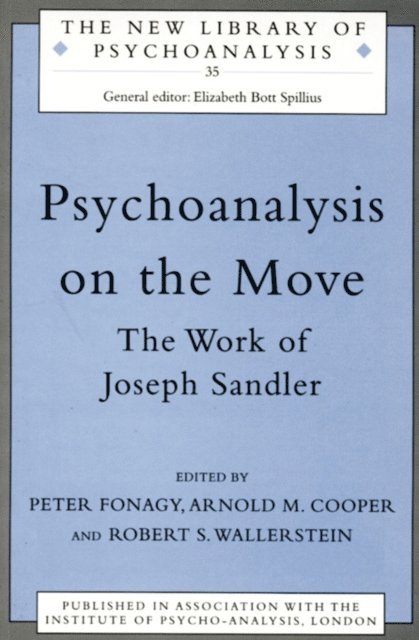
Joseph Sandler has been an important influence in psychoanalysis throughout the world during the latter part of the twentieth century, contributing to changing views on both psychoanalytic theory and technique. He has also been a bridging force in psychoanalysis, helping to close the gap between American ego psychologists, and British Kleinian and object relations theorists.
Psychoanalysis on the Move provides a comprehensive and accessible overview of Sandler''s contribution to the development of psychoanalysis. The contributors trace the development of the main themes and achievements of Sandler''s work, in particular his focus on combining psychoanalytic theory and clinical practice.
Timely and important, Psychoanalysis on the Move should make interesting reading for psychoanalysts, psychotherapists, and all those who wish to know more about one of the most creative figures in psychoanalysis of the past few decades.
735 kr
Läs direkt efter köp
Peter Fonagy Winner of the 2010 Sigourney Award!
Joseph Sandler has been an important influence in psychoanalysis throughout the world during the latter part of the twentieth century, contributing to changing views on both psychoanalytic theory and technique. He has also been a bridging force in psychoanalysis, helping to close the gap between American ego psychologists, and British Kleinian and object relations theorists.
Psychoanalysis on the Move provides a comprehensive and accessible overview of Sandler''s contribution to the development of psychoanalysis. The contributors trace the development of the main themes and achievements of Sandler''s work, in particular his focus on combining psychoanalytic theory and clinical practice.
Timely and important, Psychoanalysis on the Move should make interesting reading for psychoanalysts, psychotherapists, and all those who wish to know more about one of the most creative figures in psychoanalysis of the past few decades.
693 kr
Läs direkt efter köp
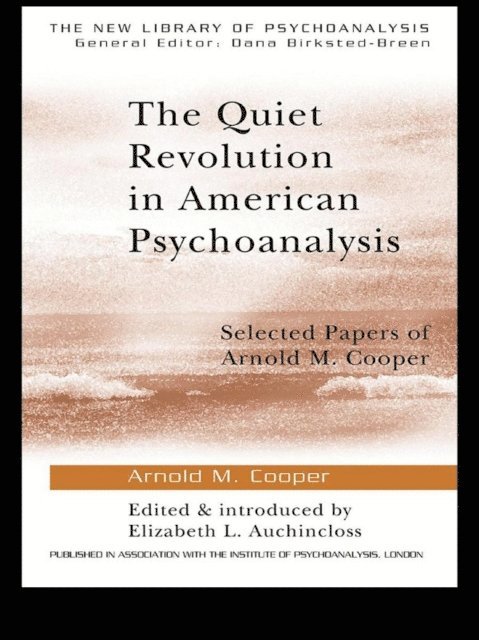
This book brings together for the first time in one volume selected papers by one of the leading contemporary intellectual figures in the field of psychoanalysis, Arnold M. Cooper M.D.
Cooper has addressed every aspect of American psychoanalytic life: theory, clinical work, education, research, the interface with neighboring disciplines, and the institutional life of the profession. In these papers, he both documents and critiques what he calls a ''Quiet Revolution'' following the death of Freud, in the way psychoanalysis is conceived: as a science, as a theory of mental life, as a treatment, as a profession.
Throughout his professional life, the process of change has fascinated Cooper. His own contributions to psychoanalytic clinical theory have changed our understanding of work with patients to include a greater appreciation of narcissistic and pre-oedipal themes in development and of the human encounter embedded in the psychoanalytic situation. His progressive leadership in our educational and professional organizations has done much to promote change toward greater self-examination and tolerance of new ideas, and indeed, to create the conditions that make change possible.
Above all, Cooper''s unique ability to observe and reflect upon the process of change, recorded here in papers selected from over 150 written in the years between 1947 and 2002, has helped make Cooper the guide to whom psychoanalysts repeatedly turn to understand not only where, but even what, psychoanalysis is.
693 kr
Läs direkt efter köp
This book brings together for the first time in one volume selected papers by one of the leading contemporary intellectual figures in the field of psychoanalysis, Arnold M. Cooper M.D.
Cooper has addressed every aspect of American psychoanalytic life: theory, clinical work, education, research, the interface with neighboring disciplines, and the institutional life of the profession. In these papers, he both documents and critiques what he calls a ''Quiet Revolution'' following the death of Freud, in the way psychoanalysis is conceived: as a science, as a theory of mental life, as a treatment, as a profession.
Throughout his professional life, the process of change has fascinated Cooper. His own contributions to psychoanalytic clinical theory have changed our understanding of work with patients to include a greater appreciation of narcissistic and pre-oedipal themes in development and of the human encounter embedded in the psychoanalytic situation. His progressive leadership in our educational and professional organizations has done much to promote change toward greater self-examination and tolerance of new ideas, and indeed, to create the conditions that make change possible.
Above all, Cooper''s unique ability to observe and reflect upon the process of change, recorded here in papers selected from over 150 written in the years between 1947 and 2002, has helped make Cooper the guide to whom psychoanalysts repeatedly turn to understand not only where, but even what, psychoanalysis is.
2 116 kr
Skickas inom 10-15 vardagar
585 kr
Skickas inom 10-15 vardagar
1 237 kr
Skickas inom 5-8 vardagar
1 351 kr
Läs direkt efter köp
This book is a unique and superb gateway to current psychoanalytic thinking. Thirty of America''s foremost psychoanalysts -- leaders in defining the current pluralistic state of the profession -- have each presented what they consider to be their most significant contribution to the field. No mere anthology, these are the key writings that underlie current discussions of psychoanalytic theory and technique.
The chapters cover contemporary ideas of intersubjectivity, object relations theory, self psychology, relational psychoanalysis, hermeneutics, clinical technique, changing concepts of unconscious, empirical research, infant observation, gender and sexuality, and more. While the differences in point of view are profound, there is also a striking coherence on some core issues. Each of the contributions features an introduction by the volume editor and a note by the author explaining the rationale for its selection. The brilliant introduction by Peter Fonagy provides an overview and places each author in the context of contemporary psychoanalysis.
A list of the authors may convey the astonishing breadth of this volume:Brenner, Bromberg, Busch, Chodorow, Cooper, Emde, Friedman, Gabbard, Goldberg, Greenberg, Grossman, Hoffman, Jacobs, Kantrowitz, Kernberg, Levenson, Luborsky, Michels, Ogden, Ornstein, Person, Pine, Renik, Schafer, Schwaber, Shapiro, Smith, Stern, Stolorow, Wallerstein
This is a "best of the best" volume -- cutting-edge writing, highly accessible and studded with vivid clinical illustrations. Anyone wishing to acquire a comprehensive, authoritative, readily accessible -- even entertaining -- guide to American psychoanalytic thinking will find their goal fulfilled in this monumental collection.