Arnold Robbins – författare
194 kr
Skickas inom 5-8 vardagar
432 kr
Skickas inom 7-10 vardagar
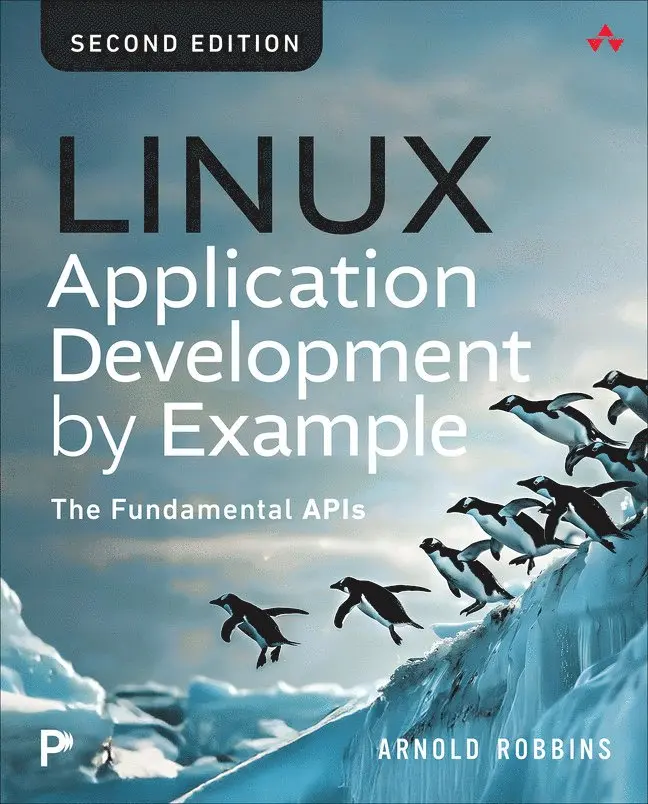
Unlock the secrets of Linux system programming and take your coding skills to the next level
Do you use Linux, but not really understand it? Have you ever wondered how ls -l knows everything it does? Could you explain to a coworker why ls and find can be external commands but cd and umask must be built into the shell?The answers to these questions, and more, are in Linux Application Development by Example, Second Edition! This book tells you exactly what you need to know--no more and no less--about the fundamental Linux system programming APIs.
Following the latest POSIX standard, author Arnold Robbins explains how the basic file, process, IPC and networking APIs work. When possible, he demonstrates the use of the APIs with code drawn from real programs (V7 Unix, BSD Unix, and GNU), and when that's not possible, he provides small, clearly documented and annotated, standalone example programs of his own. All code presented in the book is available for download, so you can compile, run, and modify the programs yourself.
Robbins focuses on both high-level principles and "under the hood" techniques. Along the way, he carefully addresses real-world issues like performance, portability, and robustness.
Each chapter closes with exercises, ranging from coding problems to thought experiments, to help you cement your understanding of the material covered, and all chapters have been thoroughly revised and updated for this edition, along with two chapters new in this edition.
Memory management File I/O File metadata Processes, Users and groups Sorting and searching Argument parsing Extended interfaces Signals Internationalization Basic Networking Debugging And more!Just learning to program? Switching from Windows or macOS? Already developing with Linux but interested in exploring the system call interface further? No matter which, quickly and directly, this book will help you master the fundamentals needed to build serious Linux software.
"It's rare that I read a programming book and find myself enjoying it. I enjoyed going through this manuscript, to the point where I would be surprised that a couple hours would go by while I was absorbed in the topics.... It deserves to sit on my shelf alongside other classics."--Matthew Helmke, Linux author and consultant
With a Foreword by Chet Ramey, maintainer of the Bash shell
Register your book for convenient access to downloads, updates, and/or corrections as they become available. See inside book for details.
156 kr
Skickas inom 5-8 vardagar
378 kr
Skickas inom 5-8 vardagar
156 kr
Skickas inom 5-8 vardagar
341 kr
Skickas inom 5-8 vardagar
339 kr
Läs direkt efter köp
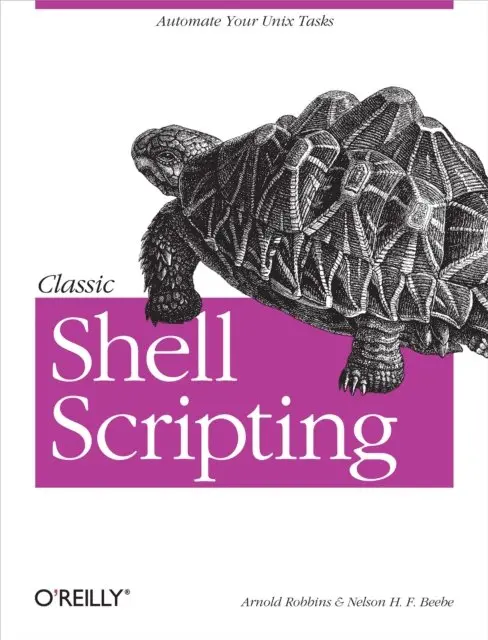
Shell scripting skills never go out of style. It''s the shell that unlocks the real potential of Unix. Shell scripting is essential for Unix users and system administrators-a way to quickly harness and customize the full power of any Unix system. With shell scripts, you can combine the fundamental Unix text and file processing commands to crunch data and automate repetitive tasks. But beneath this simple promise lies a treacherous ocean of variations in Unix commands and standards. Classic Shell Scripting is written to help you reliably navigate these tricky waters.Writing shell scripts requires more than just a knowledge of the shell language, it also requires familiarity with the individual Unix programs: why each one is there, how to use them by themselves, and in combination with the other programs. The authors are intimately familiar with the tips and tricks that can be used to create excellent scripts, as well as the traps that can make your best effort a bad shell script. With Classic Shell Scripting you''ll avoid hours of wasted effort. You''ll learn not only write useful shell scripts, but how to do it properly and portably.The ability to program and customize the shell quickly, reliably, and portably to get the best out of any individual system is an important skill for anyone operating and maintaining Unix or Linux systems. Classic Shell Scripting gives you everything you need to master these essential skills.
104 kr
Läs direkt efter köp
In this quick reference, you''ll find everything you need to know about the bash shell. Whether you print it out or read it on the screen, this PDF gives you the answers to the annoying questions that always come up when you''re writing shell scripts: What characters do you need to quote? How do you get variable substitution to do exactly what you want? How do you use arrays? It''s also helpful for interactive use.If you''re a Unix user or programmer, or if you''re using bash on Windows, you''ll find this quick reference indispensable.
100 kr
Läs direkt efter köp
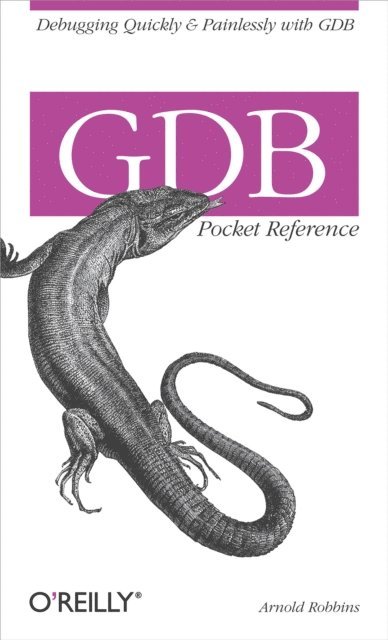
Many Linux and Unix developers are familiar with the GNU debugger (GBD), the invaluable open source tool for testing, fixing, and retesting software. And since GDB can be ported to Windows, Microsoft developers and others who use this platform can also take advantage of this amazing free software that allows you to see exactly what''s going on inside of a program as it''s executing. This new pocket guide gives you a convenient quick reference for using the debugger with several different programming languages, including C, C++, Java, Fortran and Assembly.The GNU debugger is the most useful tool during the testing phase of the software development cycle because it helps you catch bugs in the act. You can see what a program was doing at the moment it crashed, and then readily pinpoint and correct problem code. With the GDB Pocket Reference on hand, the process is quick and painless. The book covers the essentials of using GBD is a testing environment, including how to specify a target for debugging and how to make a program stop on specified conditions.This handy guide also provides details on using the debugger to examine the stack, source files and data to find the cause of program failure-and then explains ways to use GBD to make quick changes to the program for further testing and debugging.The ability to spot a bug in real time with GDB can save you hours of frustration, and having a quick way to refer to GBD''s essential functions is key to making the process work. Once you get your hands on the GDB Pocket Reference, you''ll never let go!
96 kr
Läs direkt efter köp
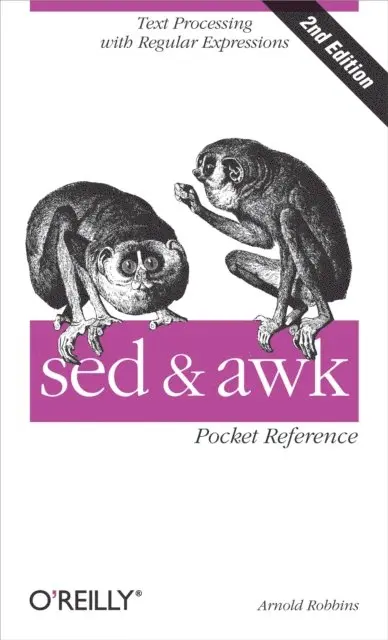
For people who create and modify text files, sed and awk are power tools for editing. sed, awk, and regular expressions allow programmers and system administrators to automate editing tasks that need to be performed on one or more files, to simplify the task of performing the same edits on multiple files, and to write conversion programs.The sed & awk Pocket Reference is a companion volume to sed & awk, Second Edition, Unix in a Nutshell, Third Edition, and Effective awk Programming, Third Edition. This new edition has expanded coverage of gawk (GNU awk), and includes sections on:
An overview of sed and awk?s command line syntaxAlphabetical summaries of commands, including nawk and gawkProfiling with pgawkCoprocesses and sockets with gawkInternationalization with gawkA listing of resources for sed and awk usersThis small book is a handy reference guide to the information presented in the larger volumes. It presents a concise summary of regular expressions and pattern matching, and summaries of sed and awk.Arnold Robbins, an Atlanta native now happily living in Israel, is a professional programmer and technical author and coauthor of various O''Reilly Unix titles. He has been working with Unix systems since 1980, and currently maintains gawk and its documentation.82 kr
Läs direkt efter köp
For many users, working in the UNIX environment means using vi, a full-screen text editor available on most UNIX systems. Even those who know vi often make use of only a small number of its features.The vi Editor Pocket Reference is a companion volume to O''Reilly''s updated sixth edition of Learning the vi Editor, a complete guide to text editing with vi. New topics in Learning the vi Editor include multi-screen editing and coverage of four vi clones: vim,elvis, nvi, and vile.This small book is a handy reference guide to the information in the larger volume, presenting movement and editing commands, the command-line options, and other elements of the vi editor in an easy-to-use tabular format.
332 kr
Läs direkt efter köp
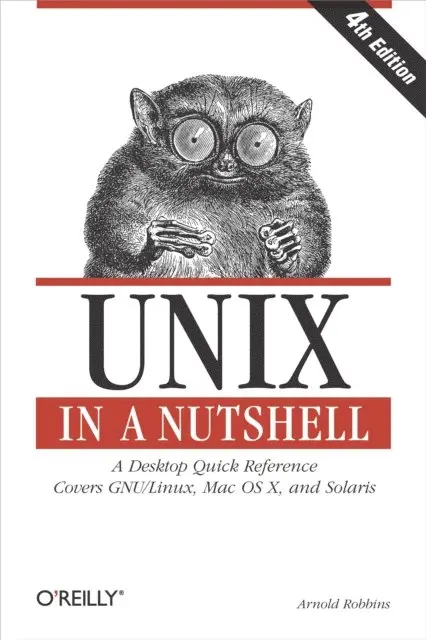
As an open operating system, Unix can be improved on by anyone and everyone: individuals, companies, universities, and more. As a result, the very nature of Unix has been altered over the years by numerous extensions formulated in an assortment of versions. Today, Unix encompasses everything from Sun''s Solaris to Apple''s Mac OS X and more varieties of Linux than you can easily name.
The latest edition of this bestselling reference brings Unix into the 21st century. It''s been reworked to keep current with the broader state of Unix in today''s world and highlight the strengths of this operating system in all its various flavors.
Detailing all Unix commands and options, the informative guide provides generous descriptions and examples that put those commands in context. Here are some of the new features you''ll find in Unix in a Nutshell, Fourth Edition:
Solaris 10, the latest version of the SVR4-based operating system, GNU/Linux, and Mac OS XBash shell (along with the 1988 and 1993 versions of ksh)tsch shell (instead of the original Berkeley csh)Package management programs, used for program installation on popular GNU/Linux systems, Solaris and Mac OS XGNU Emacs Version 21Introduction to source code management systemsConcurrent versions systemSubversion version control systemGDB debuggerAs Unix has progressed, certain commands that were once critical have fallen into disuse. To that end, the book has also dropped material that is no longer relevant, keeping it taut and current.
If you''re a Unix user or programmer, you''ll recognize the value of this complete, up-to-date Unix reference. With chapter overviews, specific examples, and detailed command.
390 kr
Läs direkt efter köp
Over the last few years, Linux has grown both as an operating system and a tool for personal and business use. Simultaneously becoming more user friendly and more powerful as a back-end system, Linux has achieved new plateaus: the newer filesystems have solidified, new commands and tools have appeared and become standard, and the desktop--including new desktop environments--have proved to be viable, stable, and readily accessible to even those who don''t consider themselves computer gurus.
Whether you''re using Linux for personal software projects, for a small office or home office (often termed the SOHO environment), to provide services to a small group of colleagues, or to administer a site responsible for millions of email and web connections each day, you need quick access to information on a wide range of tools. This book covers all aspects of administering and making effective use of Linux systems. Among its topics are booting, package management, and revision control. But foremost in Linux in a Nutshell are the utilities and commands that make Linux one of the most powerful and flexible systems available.
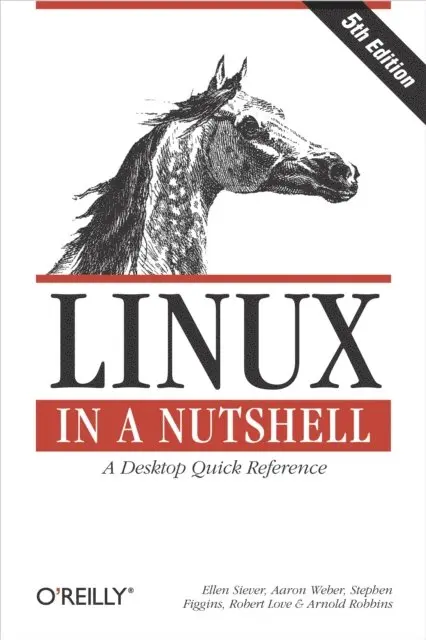
Now in its fifth edition, Linux in a Nutshell brings users up-to-date with the current state of Linux. Considered by many to be the most complete and authoritative command reference for Linux available, the book covers all substantial user, programming, administration, and networking commands for the most common Linux distributions.
Comprehensive but concise, the fifth edition has been updated to cover new features of major Linux distributions. Configuration information for the rapidly growing commercial network services and community update services is one of the subjects covered for the first time.
But that''s just the beginning. The book covers editors, shells, and LILO and GRUB boot options. There''s also coverage of Apache, Samba, Postfix, sendmail, CVS, Subversion, Emacs, vi, sed, gawk, and much more. Everything that system administrators, developers, and power users need to know about Linux is referenced here, and they will turn to this book again and again.
82 kr
Läs direkt efter köp
For people who create and modify text files, sed and awk are power tools for editing. sed, awk, and regular expressions allow programmers and system administrators to automate editing tasks that need to be performed on one or more files, to simplify the task of performing the same edits on multiple files, and to write conversion programs.The sed & awk Pocket Reference is a companion volume to sed & awk, Second Edition, Unix in a Nutshell, Third Edition, and Effective awk Programming, Third Edition. This new edition has expanded coverage of gawk (GNU awk), and includes sections on:
An overview of sed and awk?s command line syntaxAlphabetical summaries of commands, including nawk and gawkProfiling with pgawkCoprocesses and sockets with gawkInternationalization with gawkA listing of resources for sed and awk usersThis small book is a handy reference guide to the information presented in the larger volumes. It presents a concise summary of regular expressions and pattern matching, and summaries of sed and awk.Arnold Robbins, an Atlanta native now happily living in Israel, is a professional programmer and technical author and coauthor of various O''Reilly Unix titles. He has been working with Unix systems since 1980, and currently maintains gawk and its documentation.82 kr
Läs direkt efter köp
For many users, working in the UNIX environment means using vi, a full-screen text editor available on most UNIX systems. Even those who know vi often make use of only a small number of its features.The vi Editor Pocket Reference is a companion volume to O''Reilly''s updated sixth edition of Learning the vi Editor, a complete guide to text editing with vi. New topics in Learning the vi Editor include multi-screen editing and coverage of four vi clones: vim,elvis, nvi, and vile.This small book is a handy reference guide to the information in the larger volume, presenting movement and editing commands, the command-line options, and other elements of the vi editor in an easy-to-use tabular format.
85 kr
Läs direkt efter köp
Many Linux and Unix developers are familiar with the GNU debugger (GBD), the invaluable open source tool for testing, fixing, and retesting software. And since GDB can be ported to Windows, Microsoft developers and others who use this platform can also take advantage of this amazing free software that allows you to see exactly what''s going on inside of a program as it''s executing. This new pocket guide gives you a convenient quick reference for using the debugger with several different programming languages, including C, C++, Java, Fortran and Assembly.The GNU debugger is the most useful tool during the testing phase of the software development cycle because it helps you catch bugs in the act. You can see what a program was doing at the moment it crashed, and then readily pinpoint and correct problem code. With the GDB Pocket Reference on hand, the process is quick and painless. The book covers the essentials of using GBD is a testing environment, including how to specify a target for debugging and how to make a program stop on specified conditions.This handy guide also provides details on using the debugger to examine the stack, source files and data to find the cause of program failure-and then explains ways to use GBD to make quick changes to the program for further testing and debugging.The ability to spot a bug in real time with GDB can save you hours of frustration, and having a quick way to refer to GBD''s essential functions is key to making the process work. Once you get your hands on the GDB Pocket Reference, you''ll never let go!
329 kr
Läs direkt efter köp
Shell scripting skills never go out of style. It''s the shell that unlocks the real potential of Unix. Shell scripting is essential for Unix users and system administrators-a way to quickly harness and customize the full power of any Unix system. With shell scripts, you can combine the fundamental Unix text and file processing commands to crunch data and automate repetitive tasks. But beneath this simple promise lies a treacherous ocean of variations in Unix commands and standards. Classic Shell Scripting is written to help you reliably navigate these tricky waters.Writing shell scripts requires more than just a knowledge of the shell language, it also requires familiarity with the individual Unix programs: why each one is there, how to use them by themselves, and in combination with the other programs. The authors are intimately familiar with the tips and tricks that can be used to create excellent scripts, as well as the traps that can make your best effort a bad shell script. With Classic Shell Scripting you''ll avoid hours of wasted effort. You''ll learn not only write useful shell scripts, but how to do it properly and portably.The ability to program and customize the shell quickly, reliably, and portably to get the best out of any individual system is an important skill for anyone operating and maintaining Unix or Linux systems. Classic Shell Scripting gives you everything you need to master these essential skills.
390 kr
Läs direkt efter köp
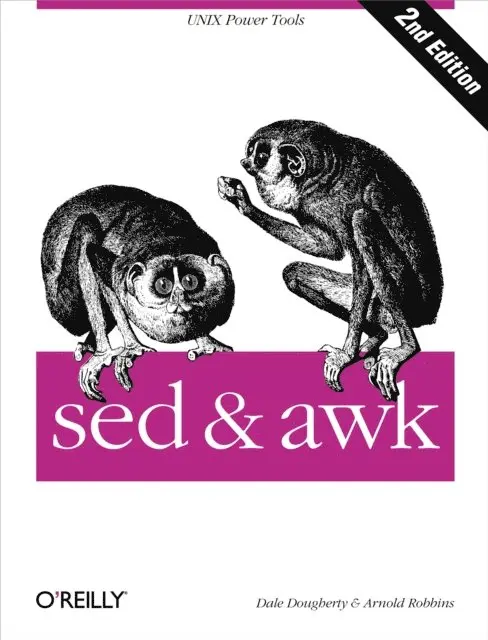
sed & awk describes two text processing programs that are mainstays of the UNIX programmer''s toolbox.sed is a "stream editor" for editing streams of text that might be too large to edit as a single file, or that might be generated on the fly as part of a larger data processing step. The most common operation done with sed is substitution, replacing one block of text with another.awk is a complete programming language. Unlike many conventional languages, awk is "data driven" -- you specify what kind of data you are interested in and the operations to be performed when that data is found. awk does many things for you, including automatically opening and closing data files, reading records, breaking the records up into fields, and counting the records. While awk provides the features of most conventional programming languages, it also includes some unconventional features, such as extended regular expression matching and associative arrays. sed & awk describes both programs in detail and includes a chapter of example sed and awk scripts.This edition covers features of sed and awk that are mandated by the POSIX standard. This most notably affects awk, where POSIX standardized a new variable, CONVFMT, and new functions, toupper() and tolower(). The CONVFMT variable specifies the conversion format to use when converting numbers to strings (awk used to use OFMT for this purpose). The toupper() and tolower() functions each take a (presumably mixed case) string argument and return a new version of the string with all letters translated to the corresponding case.In addition, this edition covers GNU sed, newly available since the first edition. It also updates the first edition coverage of Bell Labs nawk and GNU awk (gawk), covers mawk, an additional freely available implementation of awk, and briefly discusses three commercial versions of awk, MKS awk, Thompson Automation awk (tawk), and Videosoft (VSAwk).
141 kr
Läs direkt efter köp
Many Unix, Linux, and Mac OS X geeks enjoy using the powerful, platform-agnostic text editors vi and Vim, but there are far too many commands for anyone to remember. Author Arnold Robbins has chosen the most valuable commands for vi, Vim, and vi''s main clonesâ??vile, elvis, and nviâ??and packed them into this easy-to-browse pocket reference. You''ll find commands for all kinds of editing tasks, such as programming, modifying system files, and writing and marking up articles.
This second edition includes:
Command-line optionsvi commands and set optionsInput mode shortcutsSubstitution and regular expressionsex commands and optionsInitialization and recoveryEnhanced tags and tag stacksA greatly expanded section on Vim commands and optionsAdditional features in vile, elvis, and nviInternet resources for viA full index146 kr
Läs direkt efter köp
Many Unix, Linux, and Mac OS X geeks enjoy using the powerful, platform-agnostic text editors vi and Vim, but there are far too many commands for anyone to remember. Author Arnold Robbins has chosen the most valuable commands for vi, Vim, and vi''s main clonesâ??vile, elvis, and nviâ??and packed them into this easy-to-browse pocket reference. You''ll find commands for all kinds of editing tasks, such as programming, modifying system files, and writing and marking up articles.
This second edition includes:
Command-line optionsvi commands and set optionsInput mode shortcutsSubstitution and regular expressionsex commands and optionsInitialization and recoveryEnhanced tags and tag stacksA greatly expanded section on Vim commands and optionsAdditional features in vile, elvis, and nviInternet resources for viA full index362 kr
Läs direkt efter köp
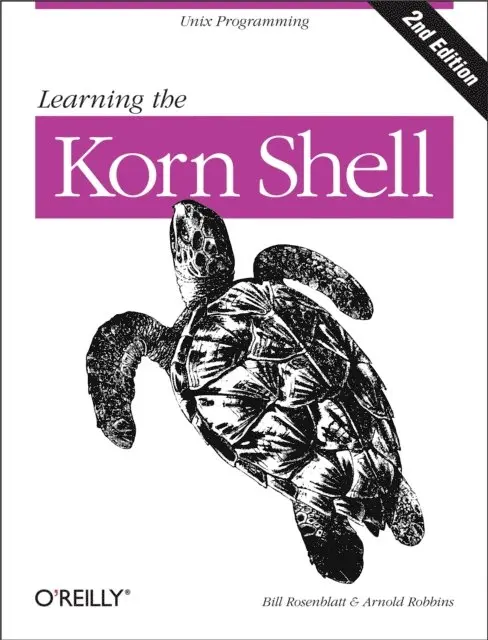
The Korn shell is an interactive command and scripting language for accessing Unix® and other computer systems. As a complete and high-level programming language in itself, it''s been a favorite since it was developed in the mid 1980s by David G. Korn at AT&T Bell Laboratories. Knowing how to use it is an essential skill for serious Unix users. Learning the Korn Shell shows you how to use the Korn shell as a user interface and as a programming environment.Writing applications is often easier and quicker with Korn than with other high-level languages. Because of this, the Korn shell is the most often used shell in commercial environments and among inexperienced users. There are two other widely used shells, the Bourne shell and the C shell. The Korn shell, or ksh, has the best features of both, plus many new features of its own. ksh can do much to enhance productivity and the quality of a user''s work, both in interacting with the system, and in programming. The new version, ksh93, has the functionality of other scripting languages such as awk, icon, Perl, rexx, and tcl.Learning the Korn Shell is the key to gaining control of the Korn shell and becoming adept at using it as an interactive command and scripting language. Prior programming experience is not required in order to understand the chapters on basic shell programming. Readers will learn how to write many applications more easily and quickly than with other high-level languages. In addition, readers will also learn about Unix utilities and the way the Unix operating system works in general. The authors maintain that you shouldn''t have to be an internals expert to use and program the shell effectively.The second edition covers all the features of the current version of the Korn shell, including many new features not in earlier versions of ksh93, making it the most up-to-date reference available on the Korn shell. It compares the current version of the Korn shell to several other Bourne-compatible shells, including several Unix emulation environments for MS-DOS and Windows. In addition, it describes how to download and build ksh93 from source code.A solid offering for many years, this newly revised title inherits a long tradition of trust among computer professionals who want to learn or refine an essential skill.
375 kr
Läs direkt efter köp
The Korn shell is an interactive command and scripting language for accessing Unix® and other computer systems. As a complete and high-level programming language in itself, it''s been a favorite since it was developed in the mid 1980s by David G. Korn at AT&T Bell Laboratories. Knowing how to use it is an essential skill for serious Unix users. Learning the Korn Shell shows you how to use the Korn shell as a user interface and as a programming environment.Writing applications is often easier and quicker with Korn than with other high-level languages. Because of this, the Korn shell is the most often used shell in commercial environments and among inexperienced users. There are two other widely used shells, the Bourne shell and the C shell. The Korn shell, or ksh, has the best features of both, plus many new features of its own. ksh can do much to enhance productivity and the quality of a user''s work, both in interacting with the system, and in programming. The new version, ksh93, has the functionality of other scripting languages such as awk, icon, Perl, rexx, and tcl.Learning the Korn Shell is the key to gaining control of the Korn shell and becoming adept at using it as an interactive command and scripting language. Prior programming experience is not required in order to understand the chapters on basic shell programming. Readers will learn how to write many applications more easily and quickly than with other high-level languages. In addition, readers will also learn about Unix utilities and the way the Unix operating system works in general. The authors maintain that you shouldn''t have to be an internals expert to use and program the shell effectively.The second edition covers all the features of the current version of the Korn shell, including many new features not in earlier versions of ksh93, making it the most up-to-date reference available on the Korn shell. It compares the current version of the Korn shell to several other Bourne-compatible shells, including several Unix emulation environments for MS-DOS and Windows. In addition, it describes how to download and build ksh93 from source code.A solid offering for many years, this newly revised title inherits a long tradition of trust among computer professionals who want to learn or refine an essential skill.
443 kr
Läs direkt efter köp
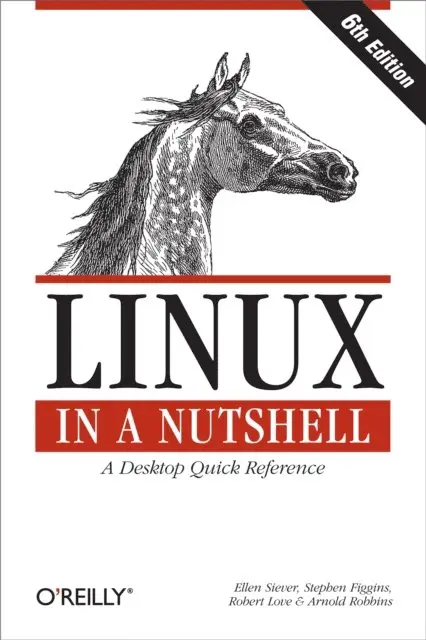
Everything you need to know about Linux is in this book. Written by Stephen Figgins, Ellen Siever, Robert Love, and Arnold Robbins -- people with years of active participation in the Linux community -- Linux in a Nutshell, Sixth Edition, thoroughly covers programming tools, system and network administration tools, the shell, editors, and LILO and GRUB boot loaders. This updated edition offers a tighter focus on Linux system essentials, as well as more coverage of new capabilities such as virtualization, wireless network management, and revision control with git. It also highlights the most important options for using the vast number of Linux commands. You''ll find many helpful new tips and techniques in this reference, whether you''re new to this operating system or have been using it for years.
Get the Linux commands for system administration and network managementUse hundreds of the most important shell commands available on LinuxUnderstand the Bash shell command-line interpreterSearch and process text with regular expressionsManage your servers via virtualization with Xen and VMwareUse the Emacs text editor and development environment, as well as the vi, ex, and vim text-manipulation toolsProcess text files with the sed editor and the gawk programming languageManage source code with Subversion and git283 kr
Läs direkt efter köp
As an open operating system, Unix can be improved on by anyone and everyone: individuals, companies, universities, and more. As a result, the very nature of Unix has been altered over the years by numerous extensions formulated in an assortment of versions. Today, Unix encompasses everything from Sun''s Solaris to Apple''s Mac OS X and more varieties of Linux than you can easily name.
The latest edition of this bestselling reference brings Unix into the 21st century. It''s been reworked to keep current with the broader state of Unix in today''s world and highlight the strengths of this operating system in all its various flavors.
Detailing all Unix commands and options, the informative guide provides generous descriptions and examples that put those commands in context. Here are some of the new features you''ll find in Unix in a Nutshell, Fourth Edition:
Solaris 10, the latest version of the SVR4-based operating system, GNU/Linux, and Mac OS XBash shell (along with the 1988 and 1993 versions of ksh)tsch shell (instead of the original Berkeley csh)Package management programs, used for program installation on popular GNU/Linux systems, Solaris and Mac OS XGNU Emacs Version 21Introduction to source code management systemsConcurrent versions systemSubversion version control systemGDB debuggerAs Unix has progressed, certain commands that were once critical have fallen into disuse. To that end, the book has also dropped material that is no longer relevant, keeping it taut and current.
If you''re a Unix user or programmer, you''ll recognize the value of this complete, up-to-date Unix reference. With chapter overviews, specific examples, and detailed command.
428 kr
Läs direkt efter köp
Everything you need to know about Linux is in this book. Written by Stephen Figgins, Ellen Siever, Robert Love, and Arnold Robbins -- people with years of active participation in the Linux community -- Linux in a Nutshell, Sixth Edition, thoroughly covers programming tools, system and network administration tools, the shell, editors, and LILO and GRUB boot loaders. This updated edition offers a tighter focus on Linux system essentials, as well as more coverage of new capabilities such as virtualization, wireless network management, and revision control with git. It also highlights the most important options for using the vast number of Linux commands. You''ll find many helpful new tips and techniques in this reference, whether you''re new to this operating system or have been using it for years.
Get the Linux commands for system administration and network managementUse hundreds of the most important shell commands available on LinuxUnderstand the Bash shell command-line interpreterSearch and process text with regular expressionsManage your servers via virtualization with Xen and VMwareUse the Emacs text editor and development environment, as well as the vi, ex, and vim text-manipulation toolsProcess text files with the sed editor and the gawk programming languageManage source code with Subversion and git193 kr
Skickas inom 5-8 vardagar
376 kr
Läs direkt efter köp
sed & awk describes two text processing programs that are mainstays of the UNIX programmer''s toolbox.sed is a "stream editor" for editing streams of text that might be too large to edit as a single file, or that might be generated on the fly as part of a larger data processing step. The most common operation done with sed is substitution, replacing one block of text with another.awk is a complete programming language. Unlike many conventional languages, awk is "data driven" -- you specify what kind of data you are interested in and the operations to be performed when that data is found. awk does many things for you, including automatically opening and closing data files, reading records, breaking the records up into fields, and counting the records. While awk provides the features of most conventional programming languages, it also includes some unconventional features, such as extended regular expression matching and associative arrays. sed & awk describes both programs in detail and includes a chapter of example sed and awk scripts.This edition covers features of sed and awk that are mandated by the POSIX standard. This most notably affects awk, where POSIX standardized a new variable, CONVFMT, and new functions, toupper() and tolower(). The CONVFMT variable specifies the conversion format to use when converting numbers to strings (awk used to use OFMT for this purpose). The toupper() and tolower() functions each take a (presumably mixed case) string argument and return a new version of the string with all letters translated to the corresponding case.In addition, this edition covers GNU sed, newly available since the first edition. It also updates the first edition coverage of Bell Labs nawk and GNU awk (gawk), covers mawk, an additional freely available implementation of awk, and briefly discusses three commercial versions of awk, MKS awk, Thompson Automation awk (tawk), and Videosoft (VSAwk).
341 kr
Skickas inom 5-8 vardagar
413 kr
Läs direkt efter köp
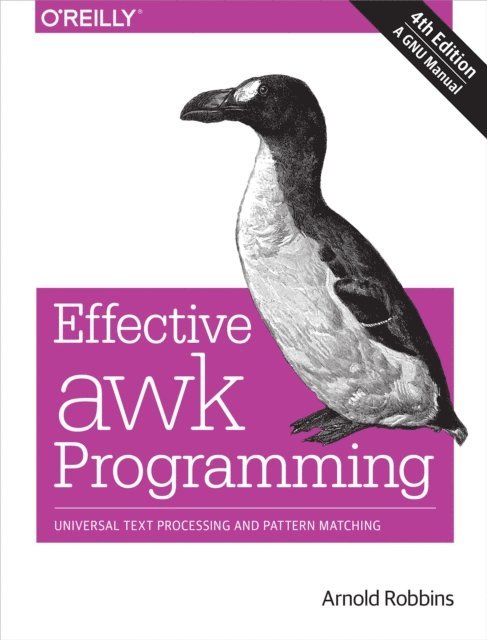
When processing text files, the awk language is ideal for handling data extraction, reporting, and data-reformatting jobs. This practical guide serves as both a reference and tutorial for POSIX-standard awk and for the GNU implementation, called gawk. This book is useful for novices and awk experts alike.
In this thoroughly revised edition, author and gawk lead developer Arnold Robbins describes the awk language and gawk program in detail, shows you how to use awk and gawk for problem solving, and then dives into specific features of gawk. System administrators, programmers, webmasters, and other power users will find everything they need to know about awk and gawk. You will learn how to:
Format text and use regular expressions in awk and gawkProcess data using awk''s operators and built-in functionsManage data relationships using associative arraysDefine your own functions"Think in awk" with two full chapters of sample functions and programsTake advantage of gawk''s many advanced featuresDebug awk programs with the gawk built-in debuggerExtend gawk by writing new functions in C or C++This book is published under the terms of the GNU Free Documentation License. You have the freedom to copy and modify this GNU manual.
Royalties from the sales of this book go to the Free Software Foundation and to the author.
428 kr
Läs direkt efter köp
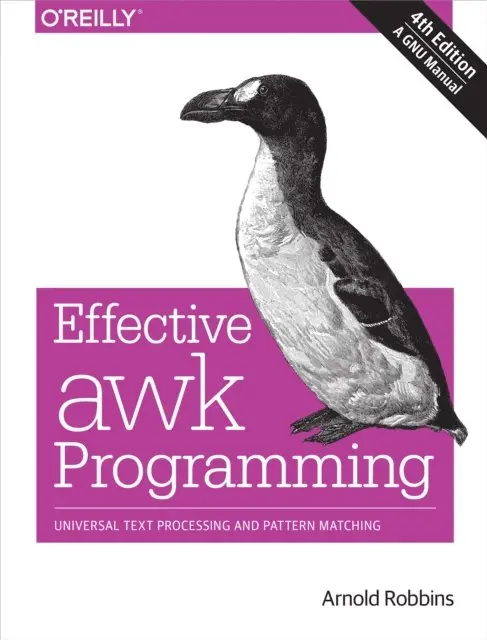
When processing text files, the awk language is ideal for handling data extraction, reporting, and data-reformatting jobs. This practical guide serves as both a reference and tutorial for POSIX-standard awk and for the GNU implementation, called gawk. This book is useful for novices and awk experts alike.
In this thoroughly revised edition, author and gawk lead developer Arnold Robbins describes the awk language and gawk program in detail, shows you how to use awk and gawk for problem solving, and then dives into specific features of gawk. System administrators, programmers, webmasters, and other power users will find everything they need to know about awk and gawk. You will learn how to:
Format text and use regular expressions in awk and gawkProcess data using awk''s operators and built-in functionsManage data relationships using associative arraysDefine your own functions"Think in awk" with two full chapters of sample functions and programsTake advantage of gawk''s many advanced featuresDebug awk programs with the gawk built-in debuggerExtend gawk by writing new functions in C or C++This book is published under the terms of the GNU Free Documentation License. You have the freedom to copy and modify this GNU manual.
Royalties from the sales of this book go to the Free Software Foundation and to the author.