Arpad von Klimo – författare
Visar alla böcker från författaren Arpad von Klimo. Handla med fri frakt och snabb leverans.
9 produkter
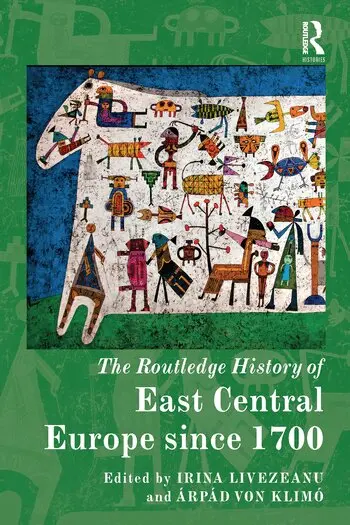
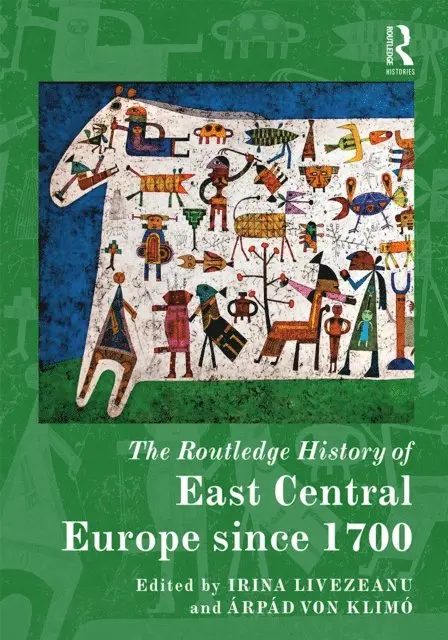
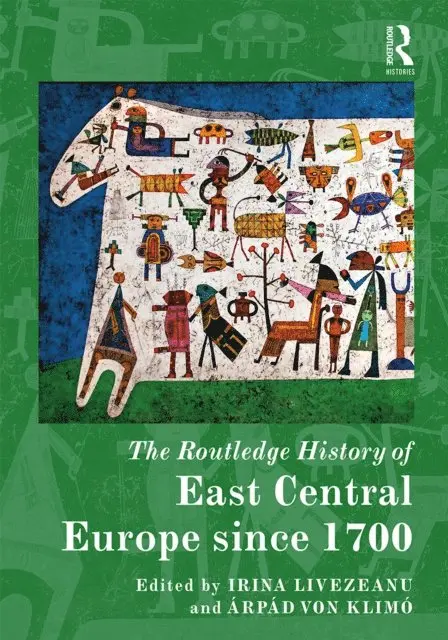
Routledge History of East Central Europe since 1700
Av Irina Livezeanu, Arpad von Klimo
Häftad, 2020
787 kr
Lägg i varukorg
Covering territory from Russia in the east to Germany and Austria in the west, The Routledge History of East Central Europe since 1700 explores the origins and evolution of modernity in this turbulent region. This book applies fresh critical approaches to major historical controversies and debates, …
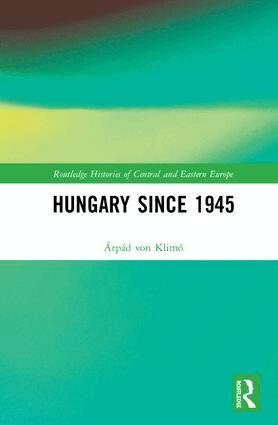
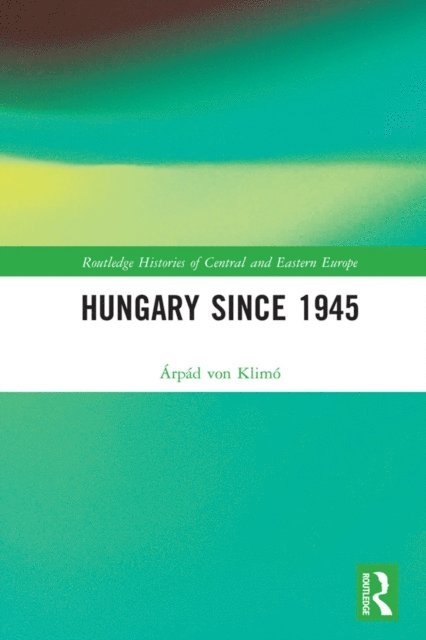
Hungary since 1945
Häftad, 2019
727 kr
Lägg i varukorg
Lying on the political fault line between East and West for the past seventy-five years, the significance of Hungary in geopolitical terms has far outweighed the modest size of its population. This book charts the main events of these tumultuous decades including the 1956 Uprising, the end of …
Routledge History of East Central Europe since 1700
Av Irina Livezeanu, Arpad von Klimo
Inbunden, 2017
3904 kr
Lägg i varukorg
Covering territory from Russia in the east to Germany and Austria in the west, The Routledge History of East Central Europe since 1700 explores the origins and evolution of modernity in this turbulent region. This book applies fresh critical approaches to major historical controversies and debates, …
Remembering Cold Days
The 1942 Massacre of Novi Sad and Hungarian Politics and Society, 1942-1989
Häftad, 2018
705 kr
Lägg i varukorg
Between three and four thousand civilians, primarily Serbian and Jewish, were murdered in the Novi Sad massacre of 1942. Hungarian soldiers and gendarmes carried out the crime in the city and surrounding areas, in territory Hungary occupied after the German attack on Yugoslavia. The perpetrators …
Hungary since 1945
Inbunden, 2018
2585 kr
Lägg i varukorg
Lying on the political fault line between East and West for the past seventy-five years, the significance of Hungary in geopolitical terms has far outweighed the modest size of its population. This book charts the main events of these tumultuous decades including the 1956 Uprising, the end of …
Hungary since 1945
E-bok, 2017
838 kr
Lägg i varukorg
Lying on the political fault line between East and West for the past seventy-five years, the significance of Hungary in geopolitical terms has far outweighed the modest size of its population. This book charts the main events of these tumultuous decades including the 1956 Uprising, the end of …
Hungary since 1945
E-bok, 2017
838 kr
Lägg i varukorg
Lying on the political fault line between East and West for the past seventy-five years, the significance of Hungary in geopolitical terms has far outweighed the modest size of its population. This book charts the main events of these tumultuous decades including the 1956 Uprising, the end of …
Routledge History of East Central Europe since 1700
Av Arpad von Klimo, Irina Livezeanu
E-bok, 2017
927 kr
Lägg i varukorg
Covering territory from Russia in the east to Germany and Austria in the west, The Routledge History of East Central Europe since 1700 explores the origins and evolution of modernity in this turbulent region. This book applies fresh critical approaches to major historical controversies and debates, …
Routledge History of East Central Europe since 1700
Av Arpad von Klimo, Irina Livezeanu
E-bok, 2017
927 kr
Lägg i varukorg
Covering territory from Russia in the east to Germany and Austria in the west, The Routledge History of East Central Europe since 1700 explores the origins and evolution of modernity in this turbulent region. This book applies fresh critical approaches to major historical controversies and debates, …