Arthur Herman – författare
Visar alla böcker från författaren Arthur Herman. Handla med fri frakt och snabb leverans.
23 produkter
23 produkter
Häftad, Engelska, 2007
308 kr
Skickas inom 5-8 vardagar
Historian Arthur Herman traces the roots of declinism and shows how major thinkers, past and present, have contributed to its development as a coherent ideology of cultural pessimism.From Nazism to the Sixties counterculture, from Britain's Fabian socialists to America's multiculturalists, and from Dracula and Freud to Robert Bly and Madonna, this work examines the idea of decline in Western history and sets out to explain how the conviction of civilization's inevitable end has become a fixed part of the modern Western imagination. Through a series of biographical portraits spanning the 19th and 20th centuries, the author traces the roots of declinism and aims to show how major thinkers of the past and present, including Nietzsche, DuBois, Sartre, and Foucault, have contributed to its development as a coherent ideology of cultural pessimism.
Häftad, Engelska, 2014
235 kr
Skickas
Häftad, Engelska, 2022
253 kr
Skickas inom 3-6 vardagar
Häftad, Engelska, 2005
183 kr
Skickas inom 5-8 vardagar
E-bok
Engelska, 2017114 kr
Läs direkt efter köp
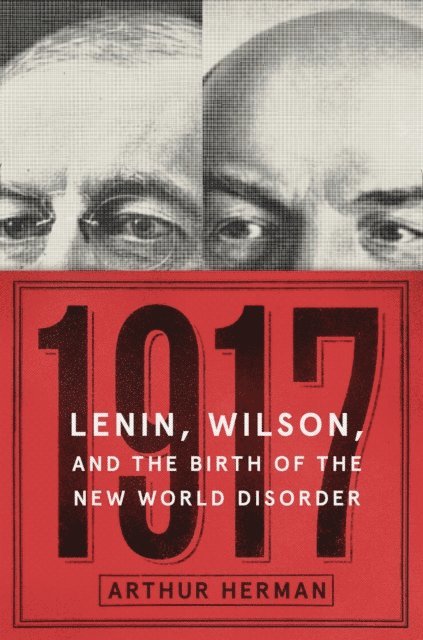
In this dual biography, New York Times bestselling author Arthur Herman brilliantly reveals how Lenin and Wilson rewrote the rules of modern geopolitics. In April 1917, Woodrow Wilson—champion of American democracy but also of segregation, advocate for free trade and a new world order based on freedom and justice—thrust the United States into the First World War in order to make the “world safe for democracy”—only to see his dreams for a liberal international system dissolve into chaos, bloodshed, and betrayal. That October, Vladimir Lenin—communist revolutionary and advocate for class war and “dictatorship of the proletariat”—would overthrow Russia’s earlier democratic revolution that had toppled the powerful czar, all in the name of liberating humanity—and instead would set up the most repressive totalitarian regime in history, the Soviet Union. Prior to and through the end of World War I, countries marched into war only to advance or protect their national interests. After World War I, countries began going to war over ideas. Together Lenin and Wilson unleashed the disruptive ideologies that would sweep the globe, from nationalism and globalism to Communism and terrorism, and that continue to shape our world today. Our new world disorder is the legacy left by Wilson and Lenin, and their visions of the perfectibility of man. More than a century later, we still sit on the powder keg they first set the detonator to, through war and revolution.“Deeply researched and engagingly written, this is a gripping account of great battles won and lost, of a triumphant war followed by a failed peace, and of clashing ideologies that shaped a century.” —Robert Kagan
Häftad, Engelska, 2017
348 kr
Skickas inom 3-6 vardagar
Häftad, Engelska, 2009
160 kr
Skickas
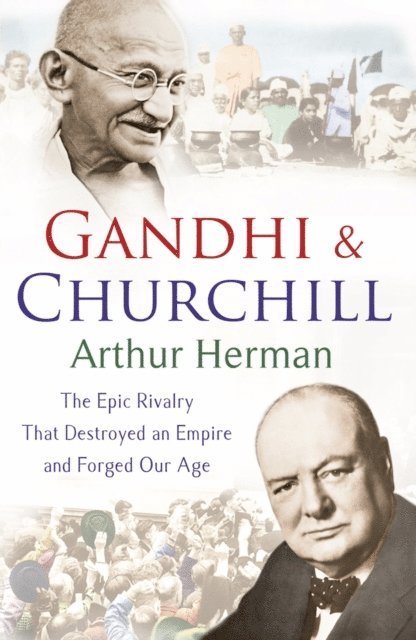
Mohandas Gandhi and Winston Churchill: India's moral leader and Great Britain's greatest Prime Minister. Born five years and seven thousand miles apart, they became embodiments of the nations they led. Both became living icons, idolized and admired around the world. Today, they remain enduring models of leadership in a democratic society.Yet the truth was Churchill and Gandhi were bitter enemies throughout their lives. This book reveals, for the first time, how that rivalry shaped the twentieth century and beyond. For more than forty years, from 1906 to 1948, Gandhi and Churchill were locked in a tense struggle for the hearts and minds of the British public, and of world opinion. Although they met only once, their titanic contest of wills would decide the fate of nations, continents, peoples, and ultimately an Empire.Here is a sweeping epic with a fascinating supporting cast, and a brilliant narrative parable of two men whose great successes were always haunted by personal failure - and whose final moments of triumph were overshadowed by the loss of what they held most dear.
E-bok
Engelska, 2007211 kr
Läs direkt efter köp
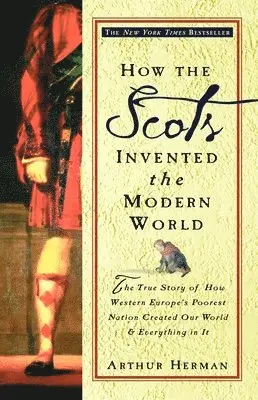
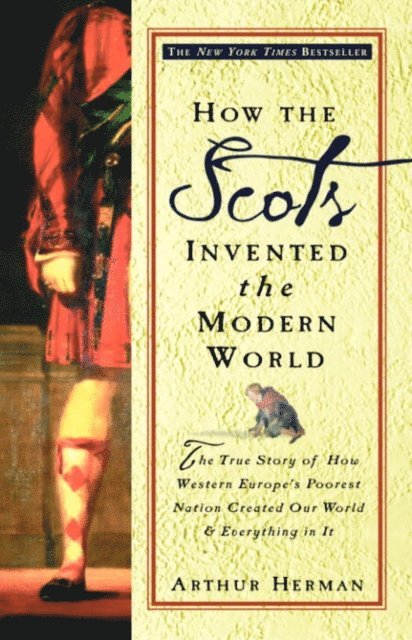
Who formed the first modern nation?Who created the first literate society?Who invented our modern ideas of democracy and free market capitalism?The Scots.Mention of Scotland and the Scots usually conjures up images of kilts, bagpipes, Scotch whisky, and golf. But as historian and author Arthur Herman demonstrates, in the eighteenth and nineteenth centuries Scotland earned the respect of the rest of the world for its crucial contributions to science, philosophy, literature, education, medicine, commerce, and politics—contributions that have formed and nurtured the modern West ever since.Arthur Herman has charted a fascinating journey across the centuries of Scottish history. He lucidly summarizes the ideas, discoveries, and achievements that made this small country facing on the North Atlantic an inspiration and driving force in world history. Here is the untold story of how John Knox and the Church of Scotland laid the foundation for our modern idea of democracy; how the Scottish Enlightenment helped to inspire both the American Revolution and the U.S. Constitution; and how thousands of Scottish immigrants left their homes to create the American frontier, the Australian outback, and the British Empire in India and Hong Kong.How the Scots Invented the Modern World reveals how Scottish genius for creating the basic ideas and institutions of modern life stamped the lives of a series of remarkable historical figures, from James Watt and Adam Smith to Andrew Carnegie and Arthur Conan Doyle, and how Scottish heroes continue to inspire our contemporary culture, from William “Braveheart” Wallace to James Bond.Victorian historian John Anthony Froude once proclaimed, “No people so few in number have scored so deep a mark in the world’s history as the Scots have done.” And no one who has taken this incredible historical trek, from the Highland glens and the factories and slums of Glasgow to the California Gold Rush and the search for the source of the Nile, will ever view Scotland and the Scots—or the modern West—in the same way again. For this is a story not just about Scotland: it is an exciting account of the origins of the modern world and its consequences.“The point of this book is that being Scottish turns out to be more than just a matter of nationality or place of origin or clan or even culture. It is also a state of mind, a way of viewing the world and our place in it. . . . This is the story of how the Scots created the basic idea of modernity. It will show how that idea transformed their own culture and society in the eighteenth century, and how they carried it with them wherever they went. Obviously, the Scots did not do everything by themselves: other nations—Germans, French, English, Italians, Russians, and many others—have their place in the making of the modern world. But it is the Scots more than anyone else who have created the lens through which we see the final product. When we gaze out on a contemporary world shaped by technology, capitalism, and modern democracy, and struggle to find our place as individuals in it, we are in effect viewing the world as the Scots did. . . . The story of Scotland in the eighteenth and nineteenth centuries is one of hard-earned triumph and heart-rending tragedy, spilled blood and ruined lives, as well as of great achievement.”—FROM THE PREFACEFrom the Hardcover edition.
Inbunden, Engelska, 2019
2 179 kr
Skickas inom 10-15 vardagar
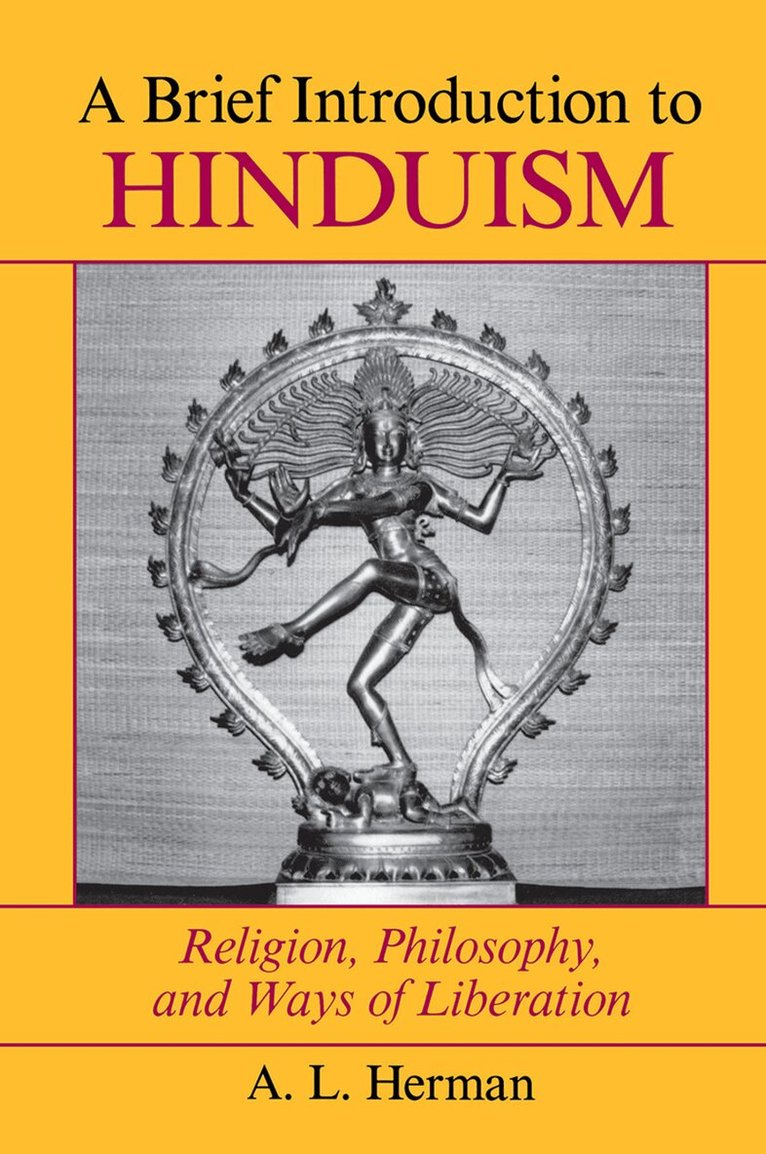
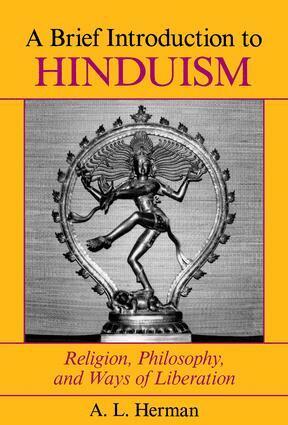
In this lucid and incisive account of Hinduism, A. L. Herman introduces the reader to one of the great belief systems of our time. Professor Herman identifies three distinct Hindu traditions and treats both their historical roots?as far back as 2500.
E-bok
PDF, Engelska, 2018784 kr
Läs direkt efter köp
“I have read Arthur Herman’s Introduction to Hinduism with considerable interest and pleasure. It is bold and innovative, clearly written, well organized, and quite provocative.” —Eliot Deutsch University of Ha wail at Manoa
E-bok
Engelska, 2018784 kr
Läs direkt efter köp
“I have read Arthur Herman’s Introduction to Hinduism with considerable interest and pleasure. It is bold and innovative, clearly written, well organized, and quite provocative.” —Eliot Deutsch University of Ha wail at Manoa
E-bok
Engelska, 2013137 kr
Läs direkt efter köp
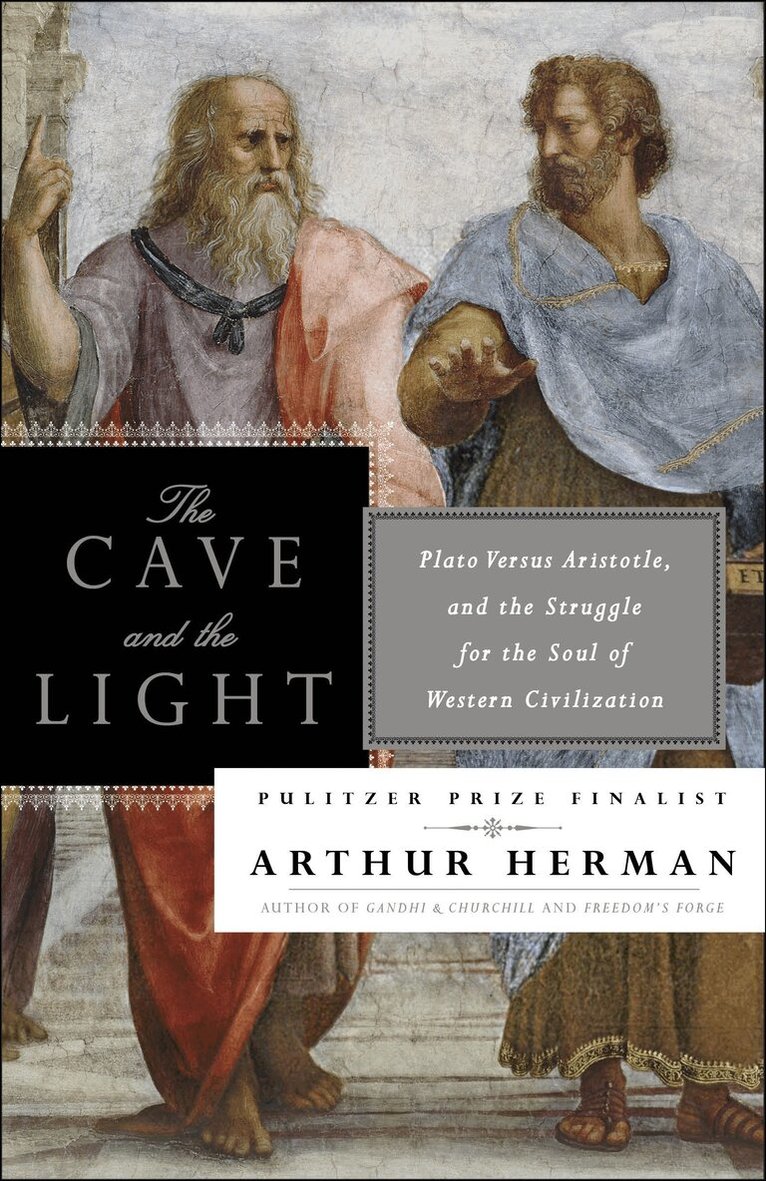
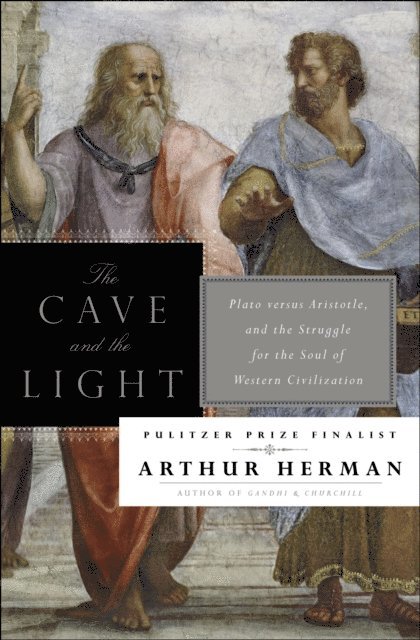
Arthur Herman has now written the definitive sequel to his New York Times bestseller, How the Scots Invented the Modern World, and extends the themes of the book—which sold half a million copies worldwide—back to the ancient Greeks and forward to the age of the Internet. The Cave and the Light is a magisterial account of how the two greatest thinkers of the ancient world, Plato and Aristotle, laid the foundations of Western culture—and how their rivalry shaped the essential features of our culture down to the present day. Plato came from a wealthy, connected Athenian family and lived a comfortable upper-class lifestyle until he met an odd little man named Socrates, who showed him a new world of ideas and ideals. Socrates taught Plato that a man must use reason to attain wisdom, and that the life of a lover of wisdom, a philosopher, was the pinnacle of achievement. Plato dedicated himself to living that ideal and went on to create a school, his famed Academy, to teach others the path to enlightenment through contemplation. However, the same Academy that spread Plato’s teachings also fostered his greatest rival. Born to a family of Greek physicians, Aristotle had learned early on the value of observation and hands-on experience. Rather than rely on pure contemplation, he insisted that the truest path to knowledge is through empirical discovery and exploration of the world around us. Aristotle, Plato’s most brilliant pupil, thus settled on a philosophy very different from his instructor’s and launched a rivalry with profound effects on Western culture. The two men disagreed on the fundamental purpose of the philosophy. For Plato, the image of the cave summed up man’s destined path, emerging from the darkness of material existence to the light of a higher and more spiritual truth. Aristotle thought otherwise. Instead of rising above mundane reality, he insisted, the philosopher’s job is to explain how the real world works, and how we can find our place in it. Aristotle set up a school in Athens to rival Plato’s Academy: the Lyceum. The competition that ensued between the two schools, and between Plato and Aristotle, set the world on an intellectual adventure that lasted through the Middle Ages and Renaissance and that still continues today. From Martin Luther (who named Aristotle the third great enemy of true religion, after the devil and the Pope) to Karl Marx (whose utopian views rival Plato’s), heroes and villains of history have been inspired and incensed by these two master philosophers—but never outside their influence. Accessible, riveting, and eloquently written, The Cave and the Light provides a stunning new perspective on the Western world, certain to open eyes and stir debate.Praise for The Cave and the Light “A sweeping intellectual history viewed through two ancient Greek lenses . . . breezy and enthusiastic but resting on a sturdy rock of research.”—Kirkus Reviews “Examining mathematics, politics, theology, and architecture, the book demonstrates the continuing relevance of the ancient world.”—Publishers Weekly “A fabulous way to understand over two millennia of history, all in one book.”—Library Journal “Entertaining and often illuminating.”—The Wall Street JournalFrom the Hardcover edition.
Häftad, Engelska, 2002
229 kr
Skickas inom 3-6 vardagar
E-bok
Engelska, 2012211 kr
Läs direkt efter köp
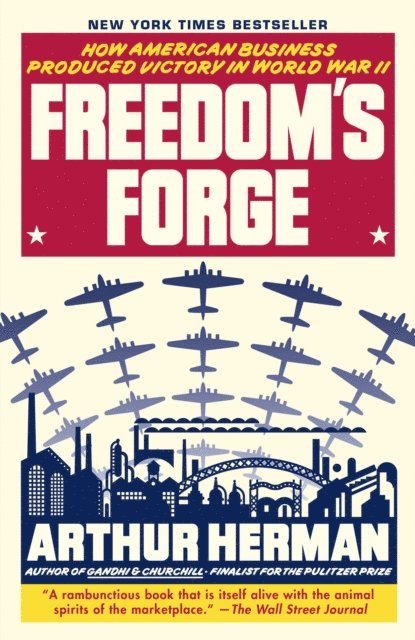
NEW YORK TIMES BESTSELLER • SELECTED BY THE ECONOMIST AS ONE OF THE BEST BOOKS OF THE YEARRemarkable as it may seem today, there once was a time when the president of the United States could pick up the phone and ask the president of General Motors to resign his position and take the reins of a great national enterprise. And the CEO would oblige, no questions asked, because it was his patriotic duty. In Freedom’s Forge, bestselling author Arthur Herman takes us back to that time, revealing how two extraordinary American businessmen—automobile magnate William Knudsen and shipbuilder Henry J. Kaiser—helped corral, cajole, and inspire business leaders across the country to mobilize the “arsenal of democracy” that propelled the Allies to victory in World War II. “Knudsen? I want to see you in Washington. I want you to work on some production matters.” With those words, President Franklin D. Roosevelt enlisted “Big Bill” Knudsen, a Danish immigrant who had risen through the ranks of the auto industry to become president of General Motors, to drop his plans for market domination and join the U.S. Army. Commissioned a lieutenant general, Knudsen assembled a crack team of industrial innovators, persuading them one by one to leave their lucrative private sector positions and join him in Washington, D.C. Dubbed the “dollar-a-year men,” these dedicated patriots quickly took charge of America’s moribund war production effort. Henry J. Kaiser was a maverick California industrialist famed for his innovative business techniques and his can-do management style. He, too, joined the cause. His Liberty ships became World War II icons—and the Kaiser name became so admired that FDR briefly considered making him his vice president in 1944. Together, Knudsen and Kaiser created a wartime production behemoth. Drafting top talent from companies like Chrysler, Republic Steel, Boeing, Lockheed, GE, and Frigidaire, they turned auto plants into aircraft factories and civilian assembly lines into fountains of munitions, giving Americans fighting in Europe and Asia the tools they needed to defeat the Axis. In four short years they transformed America’s army from a hollow shell into a truly global force, laying the foundations for a new industrial America—and for the country’s rise as an economic as well as military superpower. Featuring behind-the-scenes portraits of FDR, George Marshall, Henry Stimson, Harry Hopkins, Jimmy Doolittle, and Curtis LeMay, as well as scores of largely forgotten heroes and heroines of the wartime industrial effort, Freedom’s Forge is the American story writ large. It vividly re-creates American industry’s finest hour, when the nation’s business elites put aside their pursuit of profits and set about saving the world.Praise for Freedom’s Forge “A rambunctious book that is itself alive with the animal spirits of the marketplace.”—The Wall Street Journal “A rarely told industrial saga, rich with particulars of the growing pains and eventual triumphs of American industry . . . Arthur Herman has set out to right an injustice: the loss, down history’s memory hole, of the epic achievements of American business in helping the United States and its allies win World War II.”—The New York Times Book Review “Magnificent . . . It’s not often that a historian comes up with a fresh approach to an absolutely critical element of the Allied victory in World War II, but Pulitzer finalist Herman . . . has done just that.”—Kirkus Reviews (starred review)From the Hardcover edition.
Häftad, Engelska, 2013
231 kr
Skickas inom 7-10 vardagar
E-bok
Engelska, 2016217 kr
Läs direkt efter köp
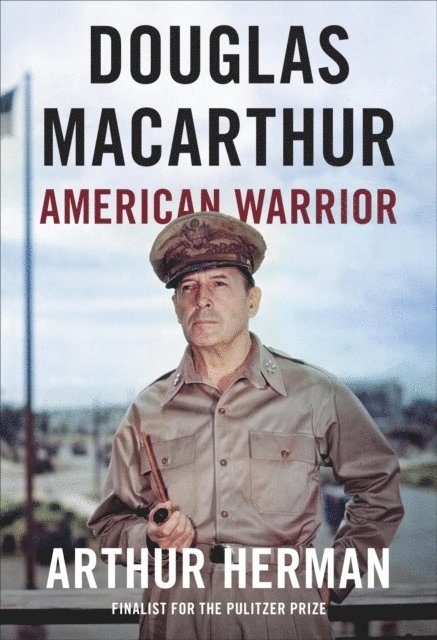
A new, definitive life of an American icon, the visionary general who led American forces through three wars and foresaw his nation’s great geopolitical shift toward the Pacific Rim—from the Pulitzer Prize finalist and bestselling author of Gandhi & Churchill Douglas MacArthur was arguably the last American public figure to be worshipped unreservedly as a national hero, the last military figure to conjure up the romantic stirrings once evoked by George Armstrong Custer and Robert E. Lee. But he was also one of America’s most divisive figures, a man whose entire career was steeped in controversy. Was he an avatar or an anachronism, a brilliant strategist or a vainglorious mountebank? Drawing on a wealth of new sources, Arthur Herman delivers a powerhouse biography that peels back the layers of myth—both good and bad—and exposes the marrow of the man beneath. MacArthur’s life spans the emergence of the United States Army as a global fighting force. Its history is to a great degree his story. The son of a Civil War hero, he led American troops in three monumental conflicts—World War I, World War II, and the Korean War. Born four years after Little Bighorn, he died just as American forces began deploying in Vietnam. Herman’s magisterial book spans the full arc of MacArthur’s journey, from his elevation to major general at thirty-eight through his tenure as superintendent of West Point, field marshal of the Philippines, supreme ruler of postwar Japan, and beyond. More than any previous biographer, Herman shows how MacArthur’s strategic vision helped shape several decades of U.S. foreign policy. Alone among his peers, he foresaw the shift away from Europe, becoming the prophet of America’s destiny in the Pacific Rim. Here, too, is a vivid portrait of a man whose grandiose vision of his own destiny won him enemies as well as acolytes. MacArthur was one of the first military heroes to cultivate his own public persona—the swashbuckling commander outfitted with Ray-Ban sunglasses, riding crop, and corncob pipe. Repeatedly spared from being killed in battle—his soldiers nicknamed him “Bullet Proof”—he had a strong sense of divine mission. “Mac” was a man possessed, in the words of one of his contemporaries, of a “supreme and almost mystical faith that he could not fail.” Yet when he did, it was on an epic scale. His willingness to defy both civilian and military authority was, Herman shows, a lifelong trait—and it would become his undoing. Tellingly, MacArthur once observed, “Sometimes it is the order one disobeys that makes one famous.” To capture the life of such an outsize figure in one volume is no small achievement. With Douglas MacArthur, Arthur Herman has set a new standard for untangling the legacy of this American legend.Praise for Douglas MacArthur“This is revisionist history at its best and, hopefully, will reopen a debate about the judgment of history and MacArthur’s place in history.”—New York Journal of Books“Unfailingly evocative . . . close to an epic . . . More than a biography, it is a tale of a time in the past almost impossible to contemplate today as having taken place, with MacArthur himself as a figure perhaps too remote to understand, but all the more important to encounter.”—The New Criterion“With Douglas MacArthur: American Warrior, the prolific and talented historian Arthur Herman has delivered an expertly rendered, compulsively readable account that does full justice to MacArthur’s monumental achievements without slighting his equally monumental flaws.”—CommentaryFrom the Hardcover edition.
Häftad, Engelska, 1991
693 kr
Skickas inom 10-15 vardagar
"“I have read Arthur Herman’s Introduction to Hinduism with considerable interest and pleasure. It is bold and innovative, clearly written, well organized, and quite provocative.” —Eliot Deutsch University of Ha wail at Manoa "
E-bok
Engelska, 2021108 kr
Läs direkt efter köp
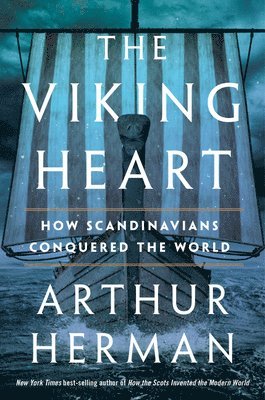
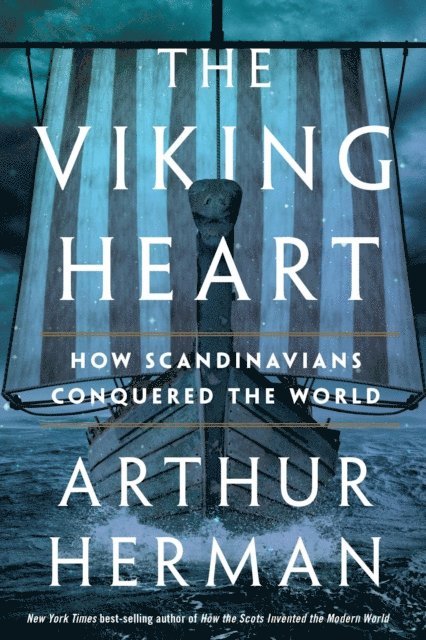
';An absorbing and humane account . . . Mr. Herman is at pains to remind us that the Viking world was never just a stage for mayhem. It was, he says, ';about daring to reach for more than the universe had gifted you, no matter the odds and the obstacles.' In short: We might all take our own life's cue from the Viking heart.'The Wall Street JournalFrom a New York Times best-selling historian and Pulitzer Prize finalist, a sweeping epic of how the Vikings and their descendants have shaped history and America Scandinavia has always been a world apart. For millennia Norwegians, Danes, Finns, and Swedes lived a remote and rugged existence among the fjords and peaks of the land of the midnight sun. But when they finally left their homeland in search of opportunity, these wanderersincluding the most famous, the Vikingswould reshape Europe and beyond. Their ingenuity, daring, resiliency, and loyalty to family and community would propel them to the gates of Rome, the steppes of Russia, the courts of Constantinople, and the castles of England and Ireland. But nowhere would they leave a deeper mark than across the Atlantic, where the Vikings'legacy would become the American Dream.In The Viking Heart, Arthur Herman melds a compelling historical narrative with cutting-edge archaeological and DNA research to trace the epic story of this remarkable and diverse people. He shows how the Scandinavian experience has universal meaning, and how we can still be inspired by their indomitable spirit.
E-bok
Engelska, 2010129 kr
Läs direkt efter köp
Mohandas Gandhi and Winston Churchill: India's moral leader and Great Britain's greatest Prime Minister. Born five years and seven thousand miles apart, they became embodiments of the nations they led. Both became living icons, idolized and admired around the world. Today, they remain enduring models of leadership in a democratic society.Yet the truth was Churchill and Gandhi were bitter enemies throughout their lives. This book reveals, for the first time, how that rivalry shaped the twentieth century and beyond. For more than forty years, from 1906 to 1948, Gandhi and Churchill were locked in a tense struggle for the hearts and minds of the British public, and of world opinion. Although they met only once, their titanic contest of wills would decide the fate of nations, continents, peoples, and ultimately an Empire.Here is a sweeping epic with a fascinating supporting cast, and a brilliant narrative parable of two men whose great successes were always haunted by personal failure - and whose final moments of triumph were overshadowed by the loss of what they held most dear.
E-bok
Engelska, 2010142 kr
Läs direkt efter köp
Historian Arthur Herman traces the roots of declinism and shows how major thinkers, past and present, have contributed to its development as a coherent ideology of cultural pessimism.From Nazism to the Sixties counterculture, from Britain''s Fabian socialists to America''s multiculturalists, and from Dracula and Freud to Robert Bly and Madonna, this work examines the idea of decline in Western history and sets out to explain how the conviction of civilization''s inevitable end has become a fixed part of the modern Western imagination. Through a series of biographical portraits spanning the 19th and 20th centuries, the author traces the roots of declinism and aims to show how major thinkers of the past and present, including Nietzsche, DuBois, Sartre, and Foucault, have contributed to its development as a coherent ideology of cultural pessimism.
Häftad, Engelska
602 kr
Skickas inom 3-6 vardagar
Inbunden, Engelska, 2026
355 kr
Skickas inom 3-6 vardagar
Häftad, Engelska, 2003
160 kr
Skickas
'Every Scot should read it. Scotland now has the lively, provocative and positive history it deserves.' Irvine Welsh, GuardianA dramatic and intriguing history of how Scotland produced the institutions, beliefs and human character that have made the West into the most powerful culture in the world.Arthur Herman argues that Scotland's turbulent history, from William Wallace to the Presbyterian Lords of the Covenant, laid the foundations for 'the Scottish miracle'. Within one hundred years, the nation that began the eighteenth century dominated by the harsh and repressive Scottish Kirk had evolved into Europe's most literate society, producing an idea of modernity that has shaped much of civilisation as we know it. He follows the lives and work of thinkers such as Adam Smith and David Hume, writers such as Burns and Boswell, as well as architects, technicians and inventors, and traces their legacy into the twentieth century. Written with wit, erudition and clarity, The Scottish Enlightenment claims the Scots' rightful place in the history of the western world.