Arthur Kordon – författare
Visar alla böcker från författaren Arthur Kordon. Handla med fri frakt och snabb leverans.
8 produkter
8 produkter
E-bok
PDF, Engelska, 2012629 kr
Läs direkt efter köp
Applied Data Mining for Forecasting Using SAS, by Tim Rey, Arthur Kordon, and Chip Wells, introduces and describes approaches for mining large time series data sets. Written for forecasting practitioners, engineers, statisticians, and economists, the book details how to select useful candidate input variables for time series regression models in environments when the number of candidates is large, and identifies the correlation structure between selected candidate inputs and the forecast variable.
E-bok
Engelska, 2012630 kr
Läs direkt efter köp
Applied Data Mining for Forecasting Using SAS, by Tim Rey, Arthur Kordon, and Chip Wells, introduces and describes approaches for mining large time series data sets. Written for forecasting practitioners, engineers, statisticians, and economists, the book details how to select useful candidate input variables for time series regression models in environments when the number of candidates is large, and identifies the correlation structure between selected candidate inputs and the forecast variable.
Inbunden, Engelska, 2016
1 122 kr
Skickas inom 10-15 vardagar
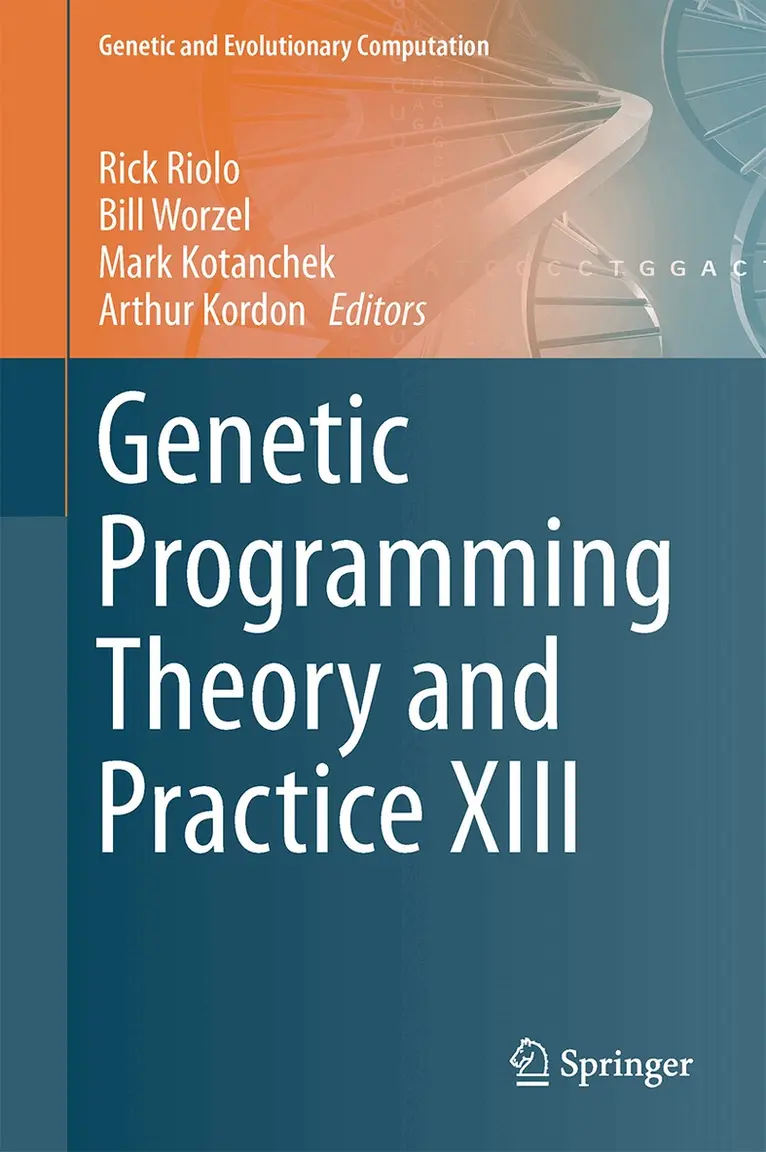
These contributions, written by the foremost international researchers and practitioners of Genetic Programming (GP), explore the synergy between theoretical and empirical results on real-world problems, producing a comprehensive view of the state of the art in GP. Topics in this volume include: multi-objective genetic programming, learning heuristics, Kaizen programming, Evolution of Everything (EvE), lexicase selection, behavioral program synthesis, symbolic regression with noisy training data, graph databases, and multidimensional clustering. It also covers several chapters on best practices and lesson learned from hands-on experience. Additional application areas include financial operations, genetic analysis, and predicting product choice. Readers will discover large-scale, real-world applications of GP to a variety of problem domains via in-depth presentations of the latest and most significant results.
E-bok
PDF, Engelska, 20161 408 kr
Läs direkt efter köp
These contributions, written by the foremost international researchers and practitioners of Genetic Programming (GP), explore the synergy between theoretical and empirical results on real-world problems, producing a comprehensive view of the state of the art in GP. Topics in this volume include: multi-objective genetic programming, learning heuristics, Kaizen programming, Evolution of Everything (EvE), lexicase selection, behavioral program synthesis, symbolic regression with noisy training data, graph databases, and multidimensional clustering. It also covers several chapters on best practices and lesson learned from hands-on experience. Additional application areas include financial operations, genetic analysis, and predicting product choice. Readers will discover large-scale, real-world applications of GP to a variety of problem domains via in-depth presentations of the latest and most significant results.
Häftad, Engelska, 2018
1 122 kr
Skickas inom 10-15 vardagar
These contributions, written by the foremost international researchers and practitioners of Genetic Programming (GP), explore the synergy between theoretical and empirical results on real-world problems, producing a comprehensive view of the state of the art in GP. Topics in this volume include: multi-objective genetic programming, learning heuristics, Kaizen programming, Evolution of Everything (EvE), lexicase selection, behavioral program synthesis, symbolic regression with noisy training data, graph databases, and multidimensional clustering. It also covers several chapters on best practices and lesson learned from hands-on experience. Additional application areas include financial operations, genetic analysis, and predicting product choice. Readers will discover large-scale, real-world applications of GP to a variety of problem domains via in-depth presentations of the latest and most significant results.
Inbunden, Engelska, 2009
1 090 kr
Skickas inom 10-15 vardagar
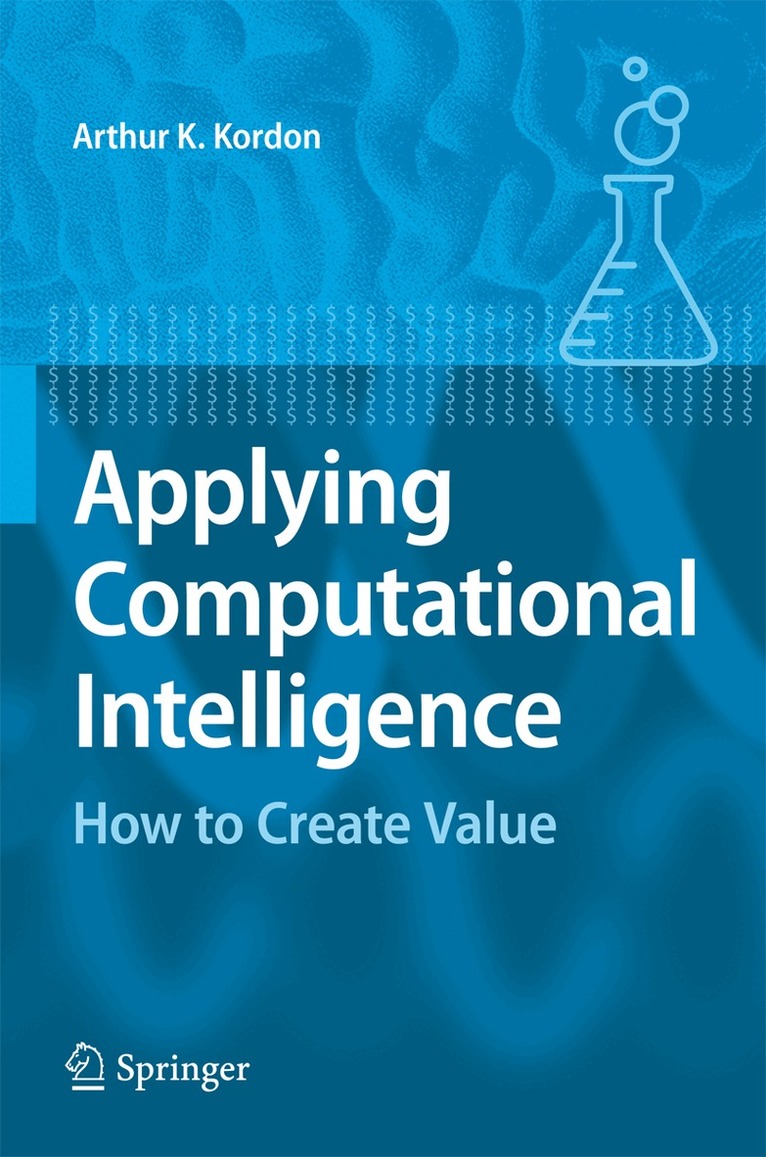
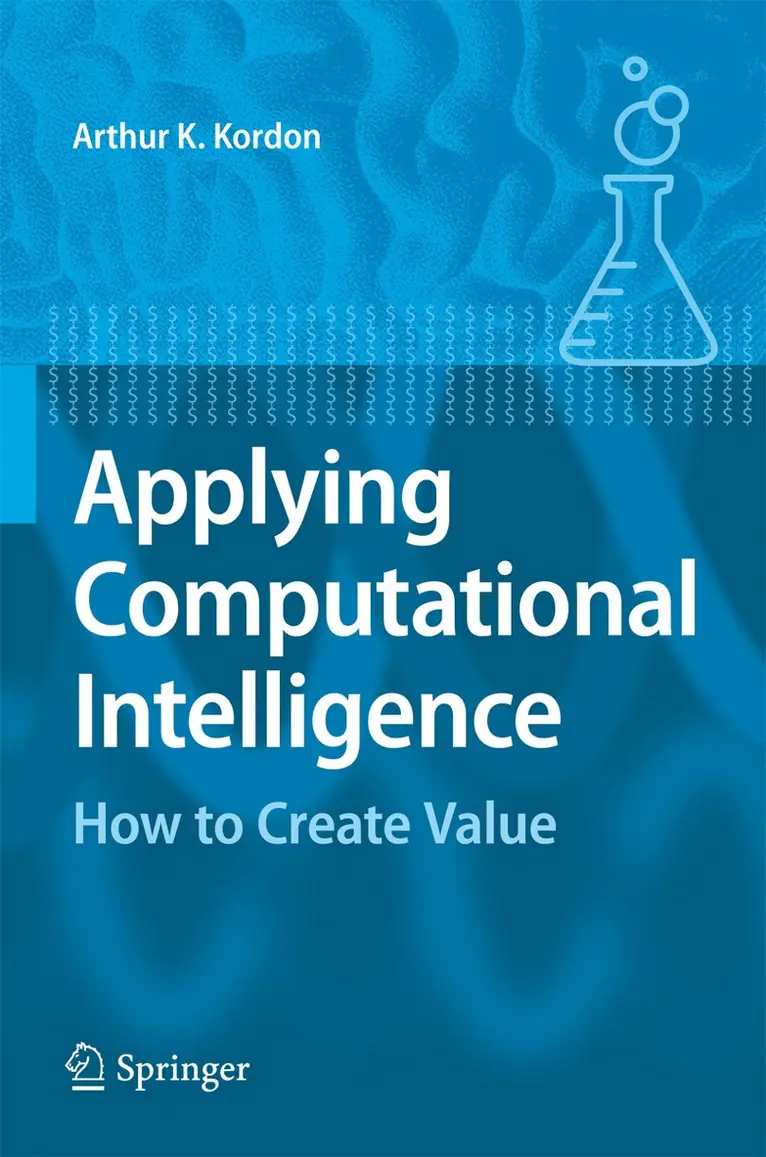
In theory, there is no difference between theory and practice. But, in practice, there is. Jan L. A. van de Snepscheut The ?ow of academic ideas in the area of computational intelligence has penetrated industry with tremendous speed and persistence. Thousands of applications have proved the practical potential of fuzzy logic, neural networks, evolutionary com- tation, swarm intelligence, and intelligent agents even before their theoretical foundation is completely understood. And the popularity is rising. Some software vendors have pronounced the new machine learning gold rush to “Transfer Data into Gold”. New buzzwords like “data mining”, “genetic algorithms”, and “swarm optimization” have enriched the top executives’ vocabulary to make them look more “visionary” for the 21st century. The phrase “fuzzy math” became political jargon after being used by US President George W. Bush in one of the election debates in the campaign in 2000. Even process operators are discussing the perf- mance of neural networks with the same passion as the performance of the Dallas Cowboys. However, for most of the engineers and scientists introducing computational intelligence technologies into practice, looking at the growing number of new approaches, and understanding their theoretical principles and potential for value creation becomes a more and more dif?cult task.
E-bok
PDF, Engelska, 20091 367 kr
Läs direkt efter köp
In theory, there is no difference between theory and practice. But, in practice, there is. Jan L. A. van de Snepscheut The ?ow of academic ideas in the area of computational intelligence has penetrated industry with tremendous speed and persistence. Thousands of applications have proved the practical potential of fuzzy logic, neural networks, evolutionary com- tation, swarm intelligence, and intelligent agents even before their theoretical foundation is completely understood. And the popularity is rising. Some software vendors have pronounced the new machine learning gold rush to “Transfer Data into Gold”. New buzzwords like “data mining”, “genetic algorithms”, and “swarm optimization” have enriched the top executives’ vocabulary to make them look more “visionary” for the 21st century. The phrase “fuzzy math” became political jargon after being used by US President George W. Bush in one of the election debates in the campaign in 2000. Even process operators are discussing the perf- mance of neural networks with the same passion as the performance of the Dallas Cowboys. However, for most of the engineers and scientists introducing computational intelligence technologies into practice, looking at the growing number of new approaches, and understanding their theoretical principles and potential for value creation becomes a more and more dif?cult task.
Häftad, Engelska, 2014
1 154 kr
Skickas inom 10-15 vardagar
In theory, there is no difference between theory and practice. But, in practice, there is. Jan L. A. van de Snepscheut The ?ow of academic ideas in the area of computational intelligence has penetrated industry with tremendous speed and persistence. Thousands of applications have proved the practical potential of fuzzy logic, neural networks, evolutionary com- tation, swarm intelligence, and intelligent agents even before their theoretical foundation is completely understood. And the popularity is rising. Some software vendors have pronounced the new machine learning gold rush to “Transfer Data into Gold”. New buzzwords like “data mining”, “genetic algorithms”, and “swarm optimization” have enriched the top executives’ vocabulary to make them look more “visionary” for the 21st century. The phrase “fuzzy math” became political jargon after being used by US President George W. Bush in one of the election debates in the campaign in 2000. Even process operators are discussing the perf- mance of neural networks with the same passion as the performance of the Dallas Cowboys. However, for most of the engineers and scientists introducing computational intelligence technologies into practice, looking at the growing number of new approaches, and understanding their theoretical principles and potential for value creation becomes a more and more dif?cult task.