Arthur Lesk - Böcker
Visar alla böcker från författaren Arthur Lesk. Handla med fri frakt och snabb leverans.
5 produkter
5 produkter
893 kr
Skickas
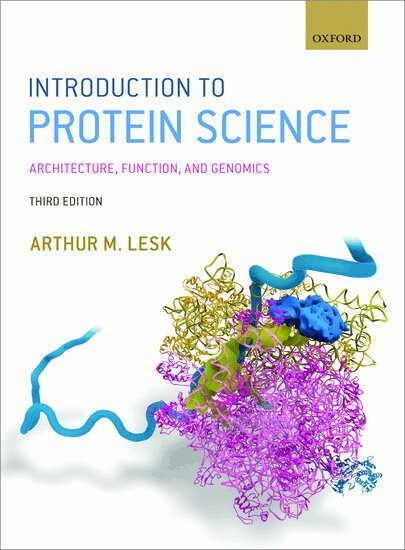
Over the last century, the centrality of proteins to life on earth has become increasingly clear - from forming enzymes acting as catalysts for specific reactions, to crucial molecules such as antibodies in the immune system, and as signalling molecules between cells. In fact, the more they are studied, the more proteins continue to reveal new and exciting functions. Indeed, by studying amino acid sequences and protein structures it is even possible to unravel some of the mysteries of evolution itself.Introduction to Protein Science, 3rd edition provides a rich and broad introduction to this fascinating field by covering not only the structure and function of proteins, but also the methods and experimental techniques used to study them. The practical applications of our knowledge to diverse fields such as biotechnology and medicine are emphasized throughout, to help students appreciate the relevance of the subject to the real world. Active learning is encouraged by the provision of frequent exercises and problems, with further 'weblems' - web-based problems - on the Online Resource Centre.Online Resource CentreThe Online Resource Centre to accompany Introduction to Protein Science features:For students:·Answers to end-of-chapter exercises, and hints to end-of-chapter problems, so students can check their understanding.·Rotating structures from the book to help students visualize proteins in 3D.·Web-based problems for students to complete online.For registered adopters:·Figures from the book in electronic format, ready to download
835 kr
Skickas
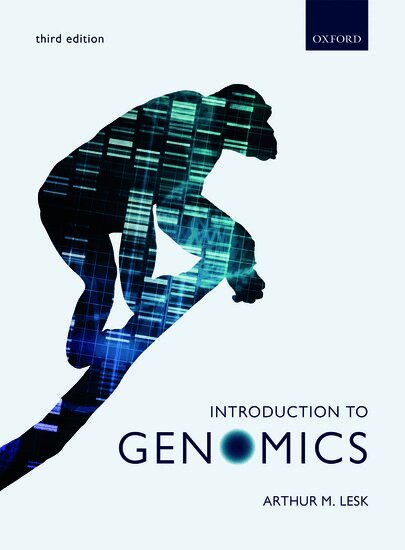
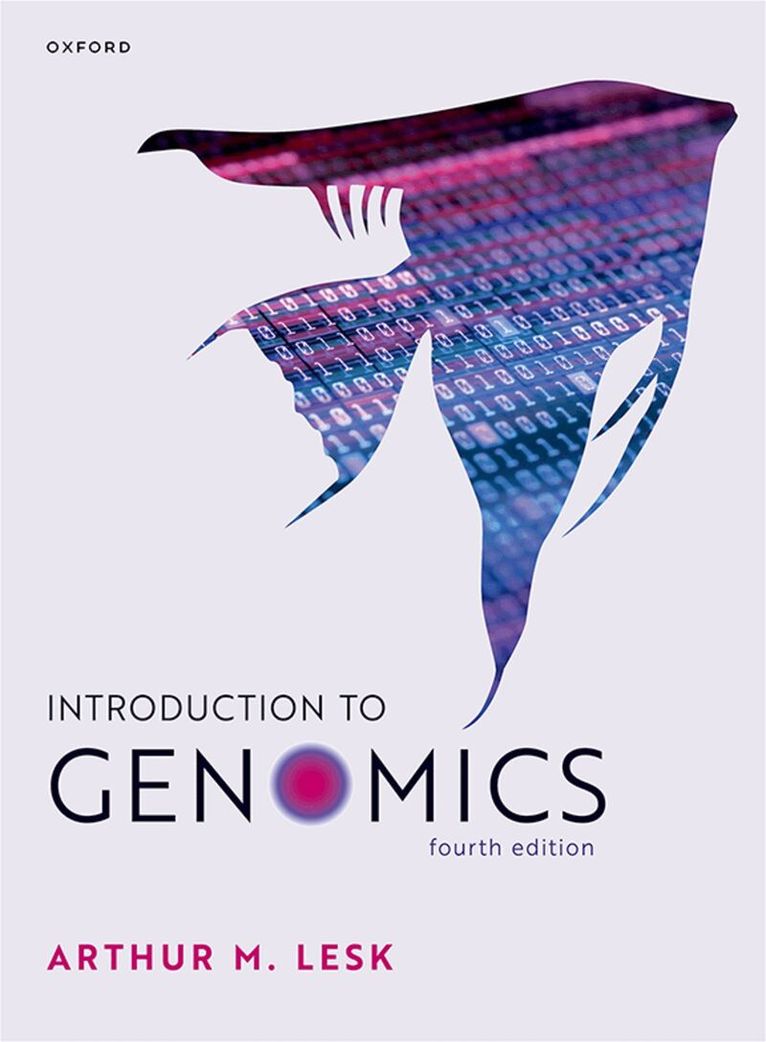
Our genome is the blueprint for our existence: it encodes all the information we need to develop from a single cell into a hugely complicated functional organism. Yet it is more than a static information store: our genome is a dynamic, tightly-regulated collection of genes, which switch on and off in many combinations to give the variety of cells from which our bodies are formed. But how do we identify the genes that make up our genome? How do we determine their function? And how do different genes form the regulatory networks that direct the processes of life? Introduction to Genomics is the most up-to-date and complete textbook for students approaching the subject for the first time. Lesk's engaging writing style brings a narrative to a disparate field of study and offers a fascinating insight into what can be revealed from the study of genomes. The book covers: the similarities and differences between organisms; how different organisms evolved; how the genome is constructed and how it operates; and what our understanding of genomics means in terms of our future health and wellbeing. The Online Resource Centre accompanying Introduction to Genomics features: For students: - Extensive and imaginative weblems (web-based problems) for each chapter designed to give you practice with the tools required for further study and research in the field- Hints and answers to end-of-chapter problems and exercises support your self-directed learning- Guided tour of websites and major archival databanks in genomics offer a wealth of resources to springboard your own research - Journal club: links to related research articles on topics covered in the book are paired with engaging questions to improve your interpretation of the primary literature- Rotating figures allow you to visualize complex structuresFor registered adopters: - Downloadable figures from the book.
739 kr
Skickas inom 5-8 vardagar
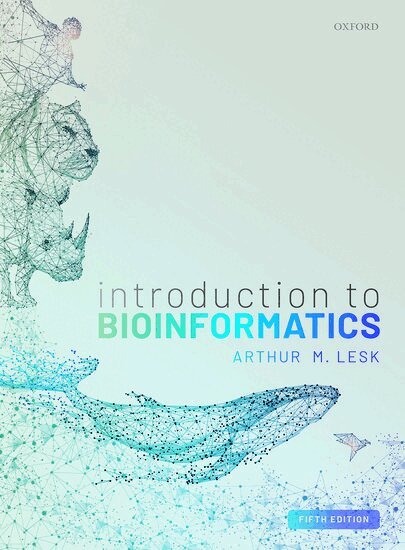
Active, accessible, and assuming no prior knowledge: the ideal text for biologists encountering bioinformatics for the first time.A vast amount of biological information about a wide range of species has become available in recent years as technological advances have significantly reduced the time it takes to sequence a genome or determine a novel protein structure. This text describes how bioinformatics can be used as a powerful set of tools for retrieving and analysing this biological data, and how bioinformatics can be applied to a wide range of disciplines such as molecular biology, medicine, biotechnology, forensic science and anthropology.Fully revised and updated, the fifth edition of Introduction to Bioinformatics contains a host of new material including new content on next generation sequencing, function prediction, sequence assembly, epigenomics, the bioinformatics of gene editing, and the effects of single nucleotide variants.Written primarily for a biological audience without a detailed prior knowledge of programming, this book is the perfect introduction to the field of bioinformatics, providing friendly guidance and advice on how to use various methods and techniques. Furthermore, frequent examples, self-test questions, problems, and exercises are incorporated throughout the text to encourage self-directed learning.
334 kr
Skickas inom 5-8 vardagar
Written primarily for students embarking on an undergraduate bioscience degree, this primer introduces students to the essential topics in protein science clearly and concisely by describing the basic chemical structure of proteins, the factors that stabilize protein structures, protein function, and protein evolution. It begins by placing proteins in their general context in life. They are synthesized as amino-acid sequences encoded in genomes, and fold spontaneously to three-dimensional structures. This is the point where life makes the tremendous leap from the one-dimensional world of genome and amino-acid sequences, to the three-dimensional world of protein structures - indeed, the world which we inhabit. Protein Science prepares readers for later more advanced study of the subject, but will also leave readers who do not go on to such advanced study with a satisfying grasp of the essentials of the subject.Protein Science is supported by online resources and is available for students and institutions to purchase in a variety of formats. The e-book offers a mobile experience and convenient access along with functionality tools, navigation features and links that offer extra learning support: www.oxfordtextbooks.co.uk/ebooks The online resources include:For students:- Self-test questions- Animations of protein structures introduced in the textFor registered adopters of the book:· Figures from the book, available to download
700 kr
Skickas inom 5-8 vardagar
Our genome is the blueprint for our existence: it encodes all the information we need to develop from a single cell into a hugely complicated functional organism. Yet it is more than a static information store: our genome is a dynamic, tightly regulated collection of genes, which switch on and off in many combinations to give the variety of cells from which our bodies are formed. But how do we identify the genes that make up our genome? How do we determine their function? And how do different genes form the regulatory networks that direct the processes of life?Introduction to Genomics is the most up-to-date and complete textbook for students approaching the subject for the first time. Lesk's engaging writing style brings a narrative to a disparate field of study and offers a fascinating insight into what can be revealed from the study of genomes. The book covers: the similarities and differences between organisms; how different organisms evolved; how the genome is constructed and how it operates; and what our understanding of genomics means in terms of our future health and wellbeing.Digital formats and resourcesThe book is available for students and institutions to purchase in a variety of formats, and is supported by online resources:· The e-book offers a mobile-compatible experience and convenient access along with functionality tools, navigation features, and links that offer extra learning support: www.oxfordtextbooks.co.uk/ebooks· Online resources, available for registered adopters, include downloadable figures and tables from the book· E-book and Trove formats are enriched with online resources for students, including extensive and imaginative weblems (web-based problems) for each chapter; hints and answers to end-of-chapter problems and exercises to support self-directed learning; a guided tour of websites and major archival databanks in genomics to springboard further research; Journal Club (links to related research articles on topics covered in the book paired with engaging questions); and rotating figures which allow readers to visualize complex structures.