Arthur W. Gullachsen – författare
Visar alla böcker från författaren Arthur W. Gullachsen. Handla med fri frakt och snabb leverans.
7 produkter
7 produkter
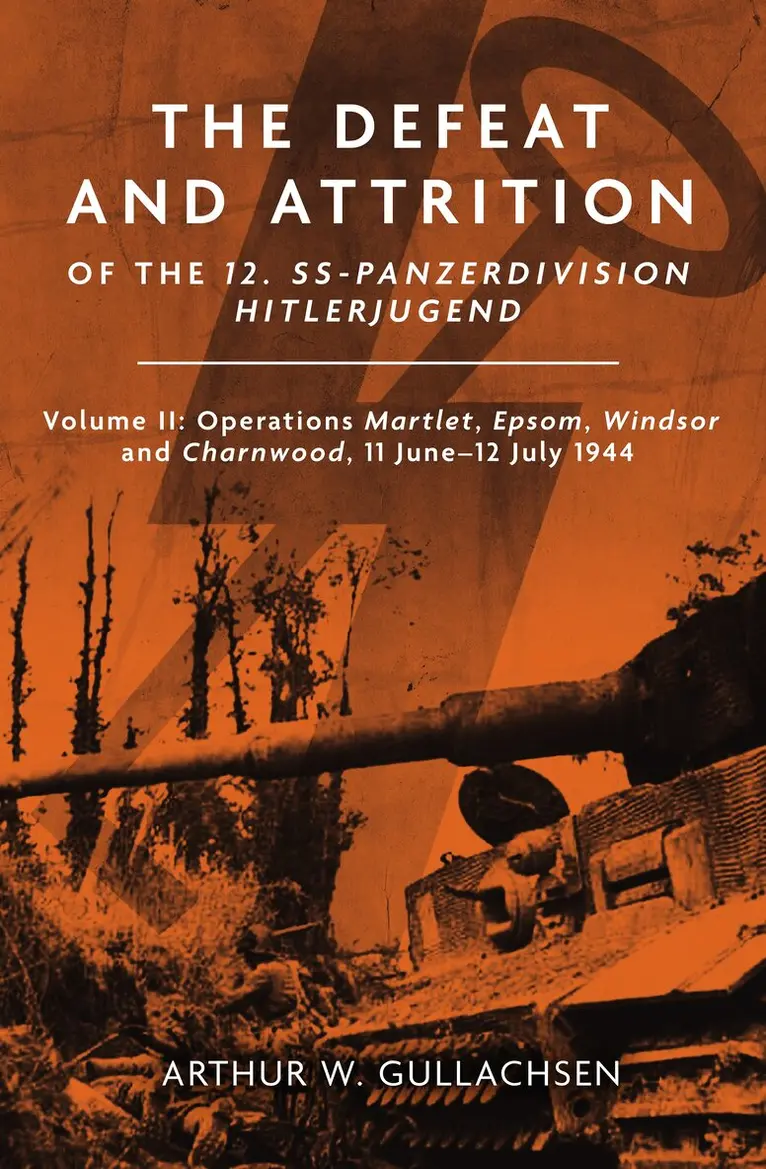
Defeat and Attrition of the 12. SS-Panzer-Division “Hitlerjugend”
Volume II: Operations Martlet, Epsom, Windsor and Charnwood, 11 June–12 July 1944
Inbunden, Engelska, 2025
406 kr
Skickas inom 3-6 vardagar
Following the Normandy landings, Rommel rushed Heeresgruppe B reserves towards the coast in order to crush the bridgehead and drive the Allied forces back into the sea. One of these armored reserves was the newly created 12. SS-Panzer-Division Hitlerjugend. Extremely well equipped and at near full strength by mid-1944 standards, it was seen as an extremely capable formation. As Allied forces flooded inland from the beaches, 12. SS-Panzer-Division attempted to capture and hold the battlefield initiative. However, despite this German armoured division’s best efforts, it would be bludgeoned and driven back in a series of offensive set-piece operations by the British Second Army, supported by massive artillery programs and RAF air strikes. As a result, the division failed to succeed in its new defensive role, and was slowly weakened by attrition, reducing its combat arms regiments to a weakened Kampfgruppe by mid-July. This volume focuses on the fighting between 11 June and 12 July: the Cristot triangle, the Parc de Boislonde, Fontenay-le-Pesnel, Operation Epsom and the main events of the Battle of the Odon, Operation Windsor and the attack on Carpiquet airfield, and finally the massive Anglo-Canadian assault on Caen, Operation Charnwood. A detailed set of appendices will analyze German personnel, equipment, and armored losses during the battles, and losses inflicted on the Allies.
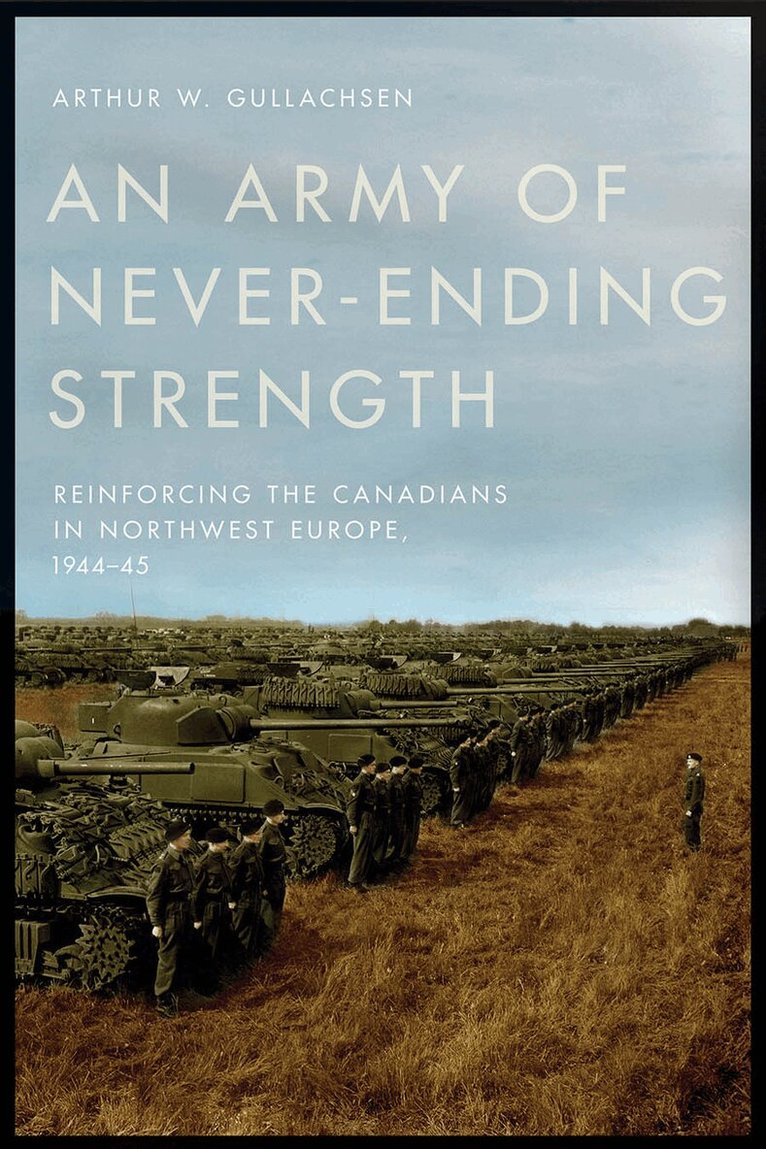
Army of Never-Ending Strength
Reinforcing the Canadians in Northwest Europe, 1944–45
Inbunden, Engelska, 2021
994 kr
Skickas inom 5-8 vardagar
An army may march on its stomach, but it needs more than hot dinners to fight. As Canadians battled through Northwest Europe in the late stages of the Second World War, how did they reinforce their front line? And at what cost?An Army of Never-Ending Strength investigates the operational record of the First Canadian Army during 1944–45 to provide detailed insight into its administrative systems, structure, and troop and equipment levels. In a close analysis of monthly resources, losses, and replacement flow, Captain Arthur W. Gullachsen demonstrates the army's effectiveness at reinforcing its three traditional combat arms. The total fighting power of the infantry, armour, and artillery units was never inhibited for long.An Army of Never-Ending Strength draws a powerful conclusion: the administrative and logistical capability of the Canadian Army created a constant state of overwhelming offensive strength, which made a marked contribution to eventual Allied victory.
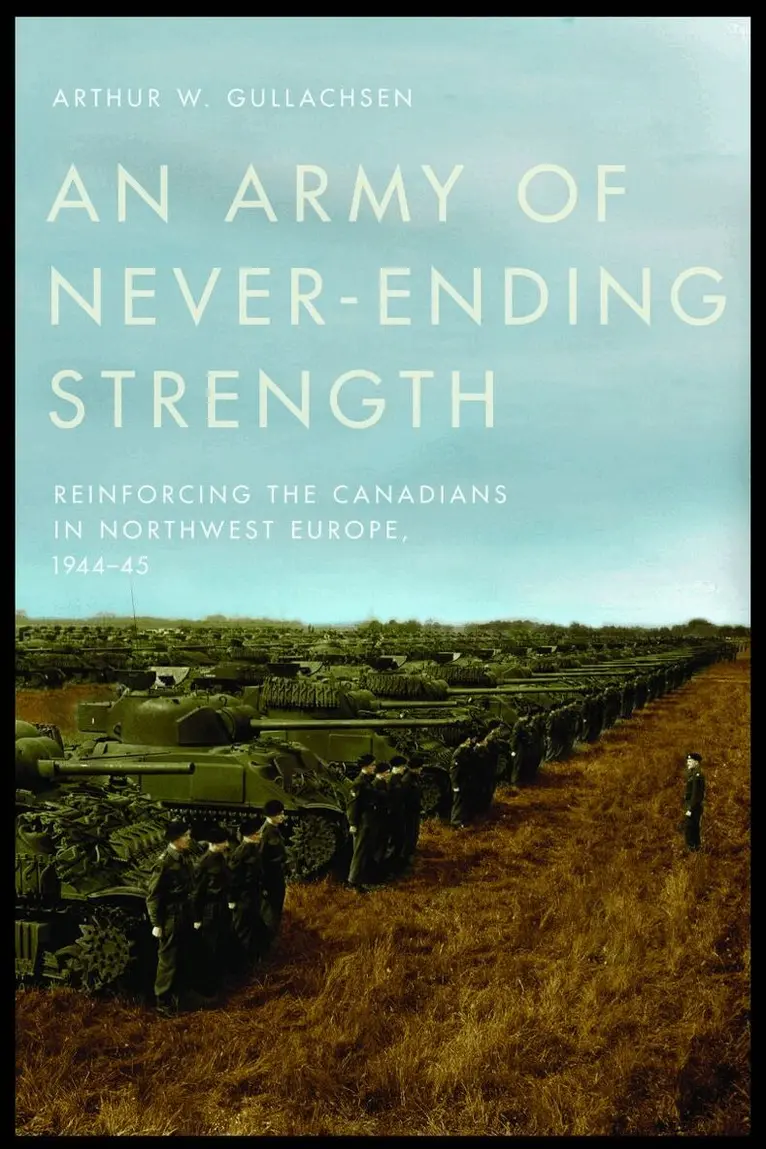
Army of Never-Ending Strength
Reinforcing the Canadians in Northwest Europe, 1944–45
Häftad, Engelska, 2021
377 kr
Skickas inom 5-8 vardagar
An army may march on its stomach, but it needs more than hot dinners to fight. As Canadians battled through Northwest Europe in the late stages of the Second World War, how did they reinforce their front line? And at what cost?An Army of Never-Ending Strength investigates the operational record of the First Canadian Army during 1944–45 to provide detailed insight into its administrative systems, structure, and troop and equipment levels. In a close analysis of monthly resources, losses, and replacement flow, Captain Arthur W. Gullachsen demonstrates the army's effectiveness at reinforcing its three traditional combat arms. The total fighting power of the infantry, armour, and artillery units was never inhibited for long.An Army of Never-Ending Strength draws a powerful conclusion: the administrative and logistical capability of the Canadian Army created a constant state of overwhelming offensive strength, which made a marked contribution to eventual Allied victory.
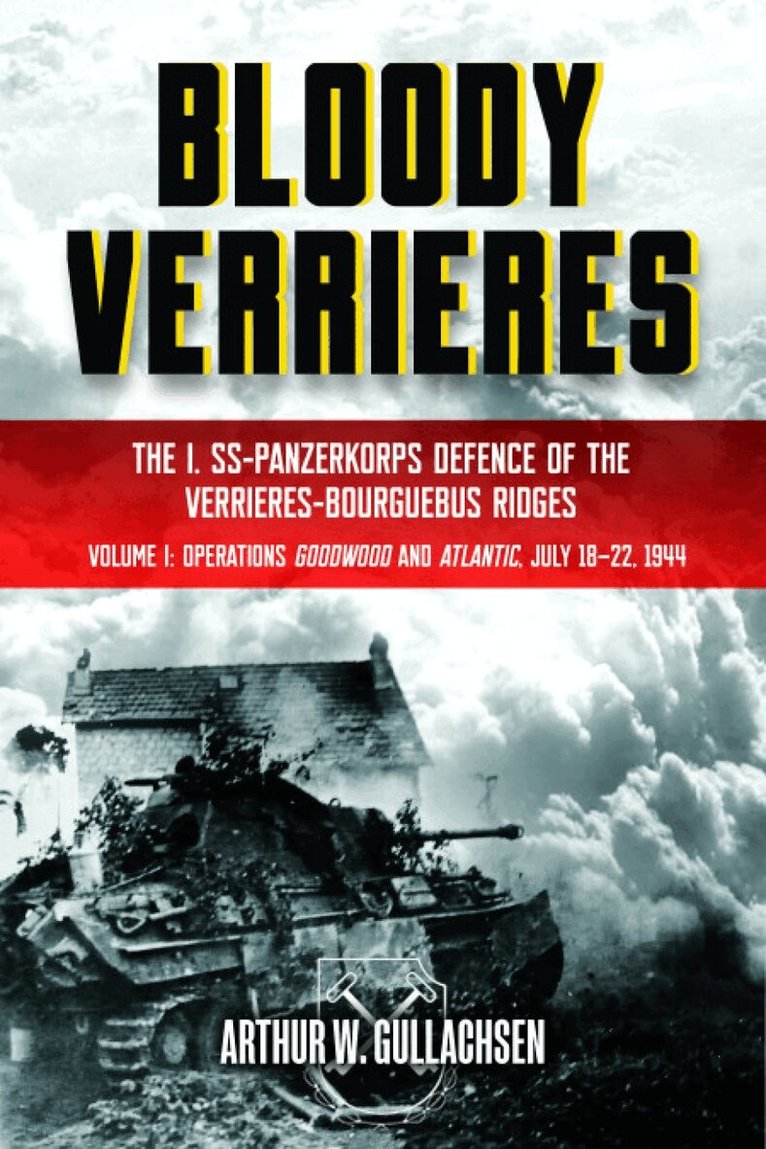
Bloody Verrieres: The I. SS-Panzerkorps' Defence of the Verrières-Bourguebus Ridges
Volume I: Operations Goodwood and Atlantic, 18-22 July 1944
Inbunden, Engelska, 2022
355 kr
Skickas
South of the Norman city of Caen, the twin features of the Verrières and Bourguebus ridges were key stepping stones for the British Second Army in late July 1944 - taking them was crucial if it was to be successful in its attempt to break out of the Normandy bridgehead. To capture this vital ground, Allied forces would have to defeat arguably the strongest German armoured formation in Normandy: the I. SS-Panzerkorps "Leibstandarte." The resulting battles of late July and early August 1944 saw powerful German defensive counterattacks south of Caen inflict tremendous casualties, regain lost ground and at times defeat Anglo-Canadian operations in detail. Viewed by the German leadership as militarily critical, the majority of its armored assets were deployed to dominate this excellent tank country east of the Orne river. These defeats and the experience of meeting an enemy with near-equal resources exposed a flawed Anglo-Canadian offensive tactical doctrine that was overly dependent on the supremacy of its artillery forces. Furthermore, weaknesses in Allied tank technology inhibited their armored forces from fighting a decisive armored battle, forcing Anglo-Canadian infantry and artillery forces to further rely on First World War "Bite and Hold" tactics, massively supported by artillery. Confronted with the full force of the Panzerwaffe, Anglo-Canadian doctrine at times floundered. In response, the Royal Artillery and Royal Canadian Artillery units pummelled the German tankers and grenadiers, but despite their best efforts, ground could not be captured by concentrated artillery fire alone. This is a detailed account of the success of I. SS-Panzerkorps' defensive operations, aimed at holding the Vèrrieres-Bourgebus ridges in late July 1944.
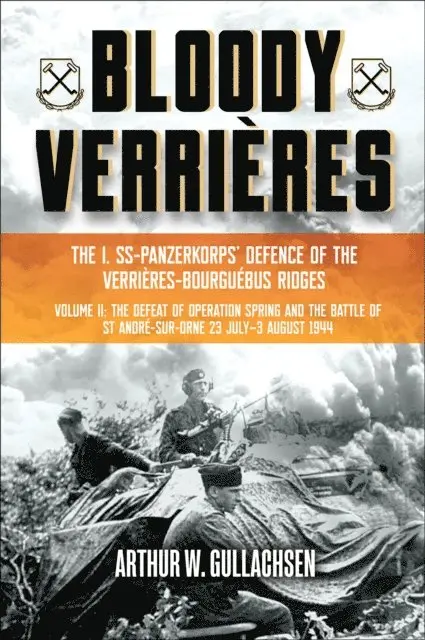
Bloody Verrières. The I. SS-Panzerkorps Defence of the Verrières-Bourguebus Ridges
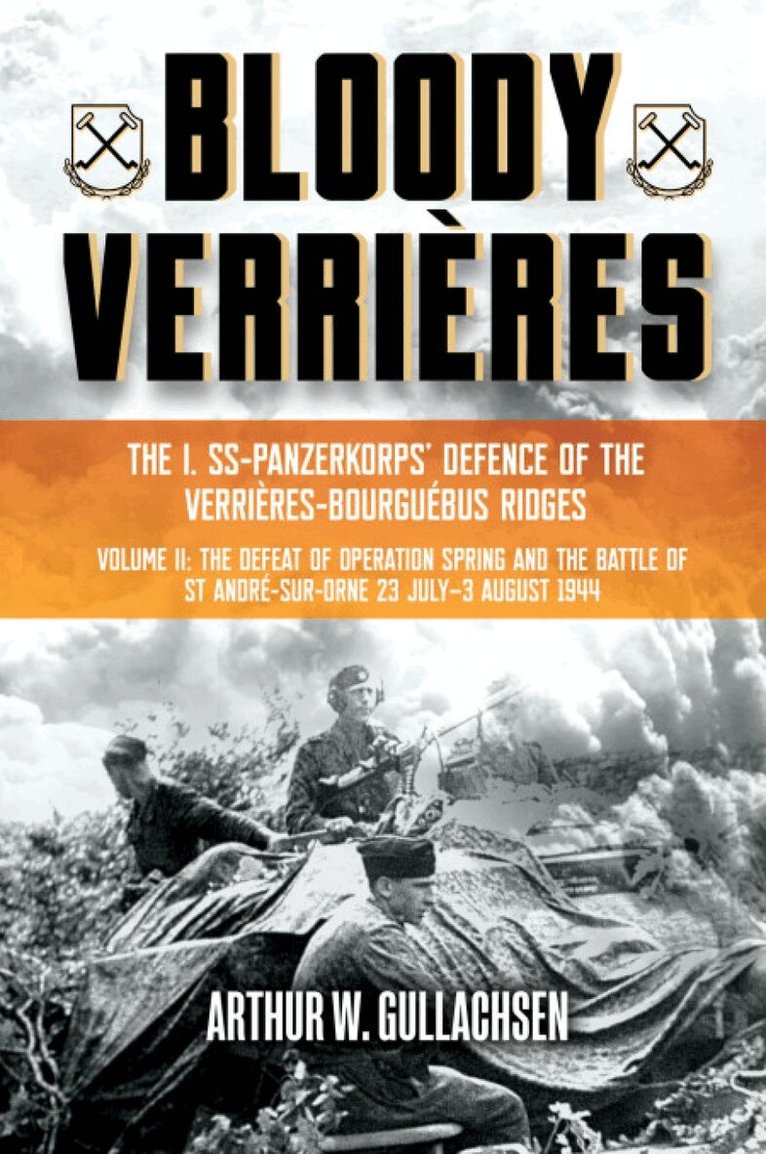
Volume II: The Defeat of Operation Spring and the Battles of Tilly-la-Campagne, 23 July–5 August 1944
Inbunden, Engelska, 2022
412 kr
Skickas
South of the Norman city of Caen, Verrières Ridge was seen a key stepping-stone for the British Second Army if it was to break out of the Normandy bridgehead in late July 1944. Imposing in height and containing perfect terrain for armoured operations, the Germans viewed it as the lynchpin to their defences south of the city of Caen and east of the Orne river. Following the failure of British Operation Goodwood on 18–20 July and the containment of the Canadian Operation Atlantic, further Allied attacks to seize the ridge would have to defeat arguably the strongest German armoured formation in Normandy: The I. SS-Panzerkorps ‘Leibstandarte’. In the second volume of this two-volume work, the fighting of 23 July–3 August is chronicled in detail, specifically the premier Anglo-Canadian operation to capture Verrières Ridge, Operation Spring on 25 July. Designed as an attack to seize the ridge and exploit south with armour, this battle saw the 2nd Canadian Corps attack savaged again by German armoured reserves brought in specifically to defeat another Goodwood. Not satisfied with this defensive victory, German armoured forces would then seek to restore an earlier defensive line further north, attacking to destroy the 2nd Canadian Infantry Division. Largely unknown, these were some of the strongest and most successful German armoured operations to take place in the Normandy campaign.
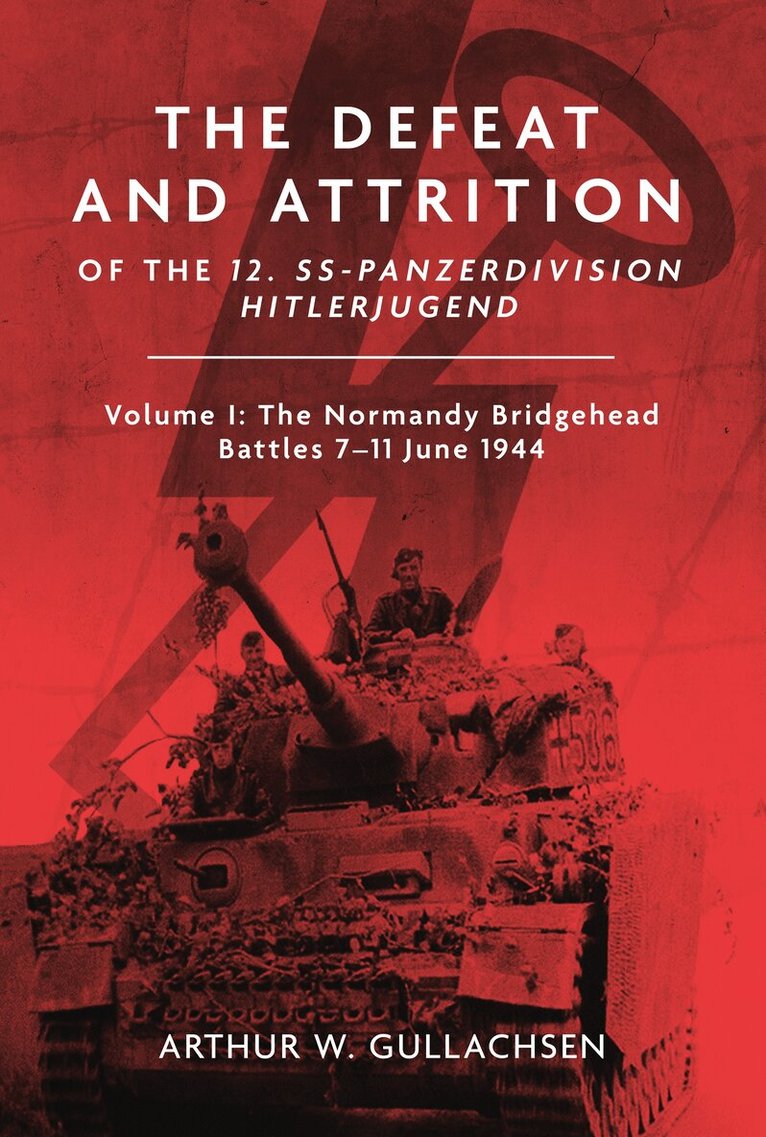
Defeat and Attrition of the 12. SS-Panzerdivision Hitlerjugend
Volume I: The Normandy Bridgehead Battles 7–11 June 1944
Inbunden, Engelska, 2024
367 kr
Skickas
Following the Normandy invasion of 6 June, 1944, Heersgruppe B under German Generalfeldmarschall Erwin Rommel rushed reserves to the newly created bridgehead in order to crush it and drive the Allied forces into the sea. One of these armored reserves was the newly created 12. SS-Panzer-Division Hitlerjugend. Extremely well equipped and at near full strength by mid-1944 standards, it was seen as an extremely capable formation that could defeat any Allied invasion.During this period studied in this volume, 7-11 June 1944, the 12. SS-Panzer-Division attempted to capture and hold the battlefield initiative, and in conjunction with other Panzer-Divisionen, throw what would become the Second British Army into the sea. The main thesis presented will be that despite this division's best efforts, it was defeated by a firm Allied defence that repulsed their offensive operations, eventually robbing the Germans of the initiative in a grinding series of bridgehead battles.This first volume will study combat in the period 7-11 June 1944 in the eastern sector of the Normandy Bridgehead. Chapters will analyze the Anglo-Canadian D-Day assault and the deployment of the division, then analyze in detail the fighting of the Hitlerjugend in the following areas: northern Caen, Putot, Bretteville l'Orgueilleuse, Norrey-en-Bessin, Hill 103, Le-Mesnil-Patry, and finally Rots. Also studied will be contrasting German and Anglo-Canadian tactical doctrine, the influence of tactical airpower, and the war crimes committed by the Hitlerjugend immediately after the invasion.The conclusion will reinforce the thesis presented above and a detailed set of appendices will analyze German personnel, equipment, and armored losses during the battles, and losses inflicted on the Allies. This will be Volume 1 of a planned multi-volume commitment.
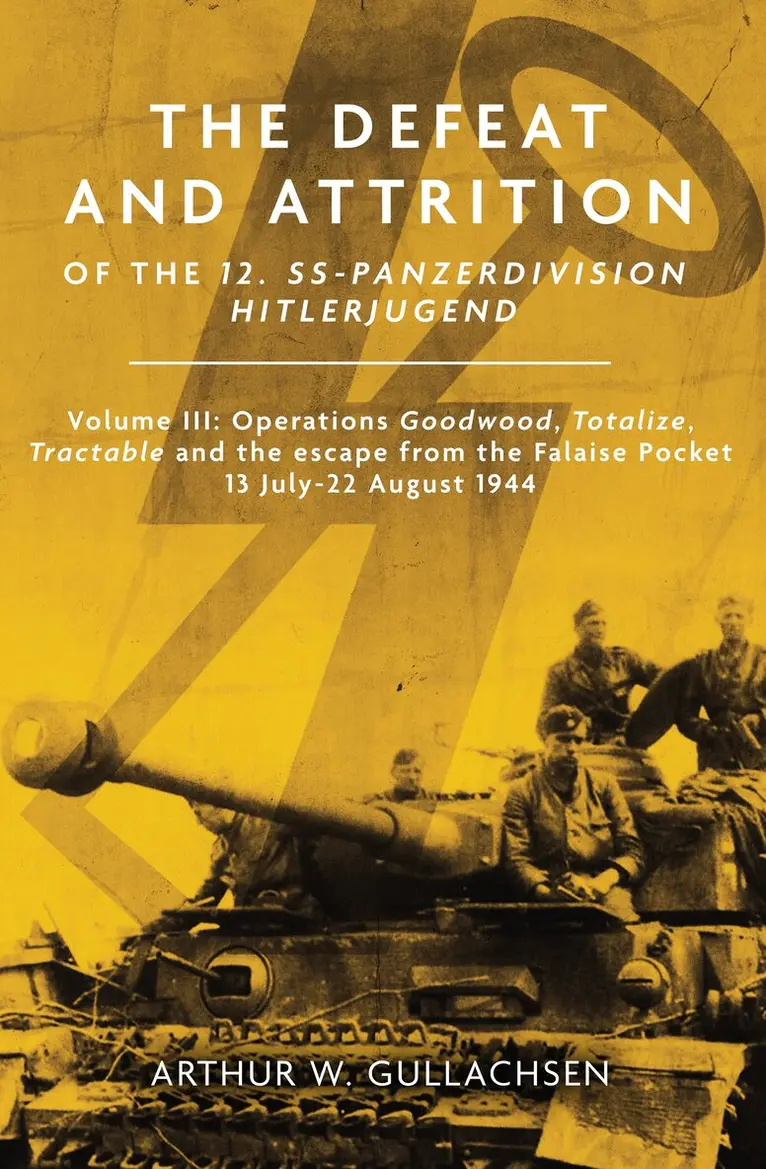
Defeat and Attrition of the 12. SS-Panzerdivision Hitlerjugend
Volume III: Operations Goodwood, Totalize, Tractable and the escape from the Falaise Pocket 13 July–22 August 1944
Inbunden, Engelska, 2027
406 kr
Kommande
This third and final volume in the study of the 12. SS-Panzerdivision Hitlerjugend examines its last battles in Normandy, July-August 1944. Drawing extensively on primary documents, it traces the division’s operations until its near total destruction in the Falaise Pocket.The central argument is that the depleted Hitlerjugend, together with other elements of I. SS-Panzerkorps, successfully delayed the advance of First Canadian Army through skillful defensive action. In doing so, they enabled significant German forces to escape the pocket-but at the cost of shattering the division’s combat strength.The book provides unmatched detail on: Operation Totalize, one of the largest Allied night armoured assaults of the war, and the German response-an area not previously covered in depth; the actions of SS Tiger tank battalions 101 and 102; the fate of Hitlerjugend’s surviving units during the retreat from Falaise; the role of Michael Wittmann, the famed Tiger tank ace, and the controversial circumstances of his death; and Kurt “Panzermeyer” Meyer’s leadership in delaying Anglo-Canadian forces with minimal resources.A comprehensive set of appendices documents German and Allied losses in men and equipment, providing an essential resource for scholars and enthusiasts alike.