Arun Chockalingam - Böcker
Visar alla böcker från författaren Arun Chockalingam. Handla med fri frakt och snabb leverans.
5 produkter
5 produkter
1 452 kr
Skickas inom 7-10 vardagar
Public health is a multidisciplinary field and is practiced in a complex environment. Various cadres like epidemiologists, policymakers, implementors, program managers, economists, social scientists, nutritionists, clinicians, administrators/executives, data or information managers, and others practice public health. However, the understanding and practice of public health vary across the human resource spectrum, further aggravated by the COVID-19 pandemic. Hence, there is a need for standardized and comprehensive guidelines to teach and practice public health especially catering to public health practitioners who are not formally trained in public health and scholars of public health bachelors. Evidence-based public health practice (EBPHP) is one of the important solutions for the ethical and effective implementation of public health interventions. Principles and Application of Evidence-based Public Health Practice helps build the capacity and enhances the quality of services delivered as part of public health practice. It will provide a basic understanding of various determinants (e.g., psycho-social, environmental, and political) of health and public health approaches (from policy to local practice level) applicable to EBPHP. The core areas of public health, namely epidemiology, biostatistics, social sciences/health promotion, health management, health economics, environmental and occupational health, nutrition, and public health research, are covered in this book comprehensively in a manner to cross-learn from each other.Facilitates an in-depth understanding of basic principles of public health practice and its practical application.Includes the basic principles of public health research and ethics.Uses case studies to discuss the public health strategies and approaches to be considered during routine day-to-day practice and a public health emergency.Helps build the capacity of public health practitioners with a futuristic view, including technology-based and precision public health practice.
1 632 kr
Skickas inom 10-15 vardagar
Understanding the pathophysiology; cellular mechanisms of disease progression; different risk factors for cardiovascular disease; dietary effects on cardiovascular health and cultural differences are as important as dealing with the economic burden of cardiovascular mortality and morbidity. "Frontiers in Cardiovascular Health" discusses the factors that lead to cardiovascular death and strategies for their prevention from molecule to population.
1 632 kr
Skickas inom 10-15 vardagar
The Frontiers in Cardiovascular Health varies between and within nations, depend ing upon the level at which the battle is fought for better cardiovascular health. According to the 1997 World Health Report, 15 million deaths (i. e. 30% of the total number of deaths) were attributable to cardiovascular diseases and this number is on the rise. The projection for the year 2020 is quite alarming with an expected cardiovascular mortality reaching 50 million. Much of this burden is projected to occur in developing countries, more specifically in the most populous countries of the world, namely China and India. These countries are already burdened with infectious and parasitic diseases and are trying to eradicate such diseases. With increasing life expectancies people all over the world, especially in developing coun tries, are exposed to degenerative atherosclerosis resulting in increased cardiovascu lar mortality and morbidity. In developing countries, resources available for health care are very limited. For example many of the African countries spend less than $10 per person per year on his/her entire health care let alone cardiovascular health. The average health care budget for nearly two thirds of the global population is well below $100 per year, on a per capita basis. Therefore, in developing countries health promotion and primary prevention are the frontiers by necessity. Improving awareness and health education is not only a matter of choice but is an absolute necessity.
1 840 kr
Skickas inom 10-15 vardagar
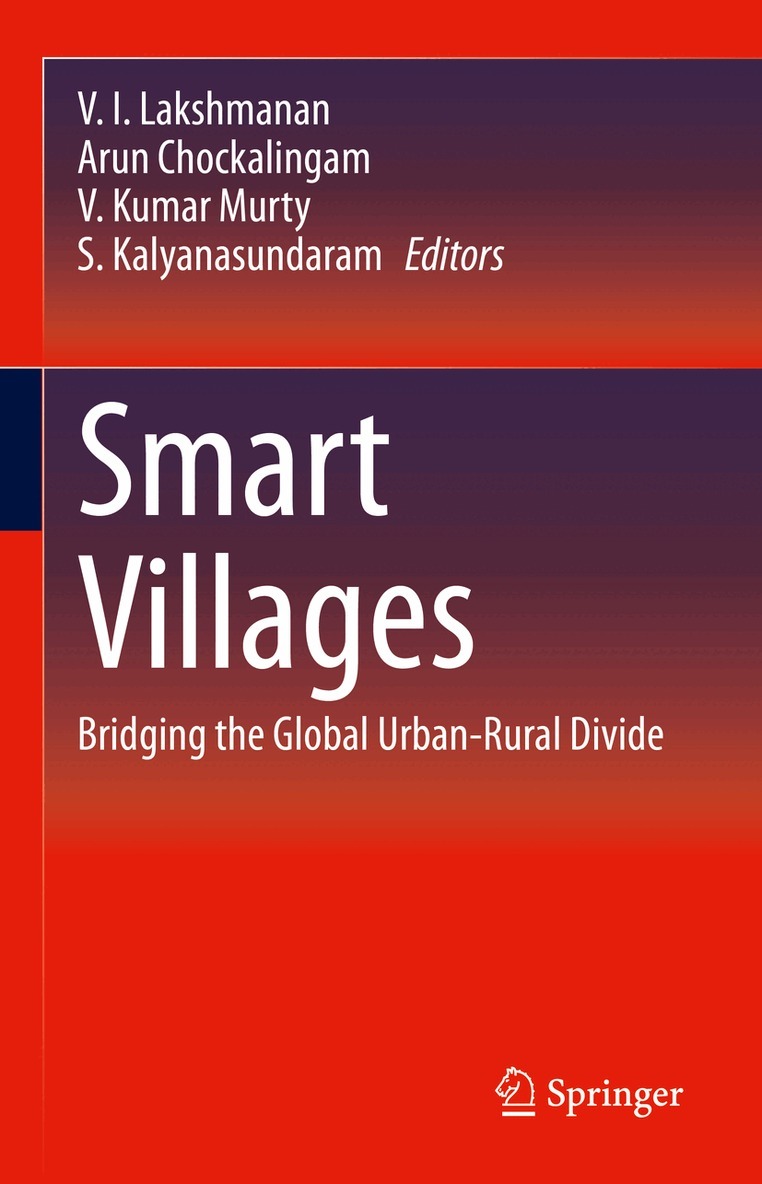
This book brings together technical expertise, best practices, case studies and ground-level application of the ideas for empowering the rural population of the world to live economically prosperous, environmentally sustainable, and socially progressive lives, on par or comparable with the quality of life enjoyed by the global urban population. The idea of Smart Villages takes on greater urgency in light of the investments made in this millennium on “Smart Cities”, taking advantage of the technological advances, particularly in digital connectivity. These investments have and will continue to expand the urban-rural divide, unless similar investments are made in the villages as well. The book provides a much-needed guide for a holistic development of a Smart Village, by defining the need, developing the framework, and describing the delivery, complete with successful case studies. Contributors to the book, from Canada, USA, Africa and India bring years of academic, industry andgovernmental experience, including organization of several Smart Village conferences. The knowledge base in the book will be of great value to anyone interested in or active in rural planning, including governmental and non-governmental organizations, industrial solution providers, public healthcare professionals, public policy professionals and students, as well as rural communities around the world. Consolidates all the aspects of creating/developing a Smart Village;Delivers an effective tool-kit for practitioners in the area of Smart Villages;Provides a policy-based framework for the development of an ideal Smart Village;Illustrates, through case studies, the fulfillment of key requirements of a Smart Village;Brings together experts from around the world to share their vision of a Smart Village;Highlights the importance of balancing development with social/gender equity and cultural traditions.
1 313 kr
Skickas inom 10-15 vardagar
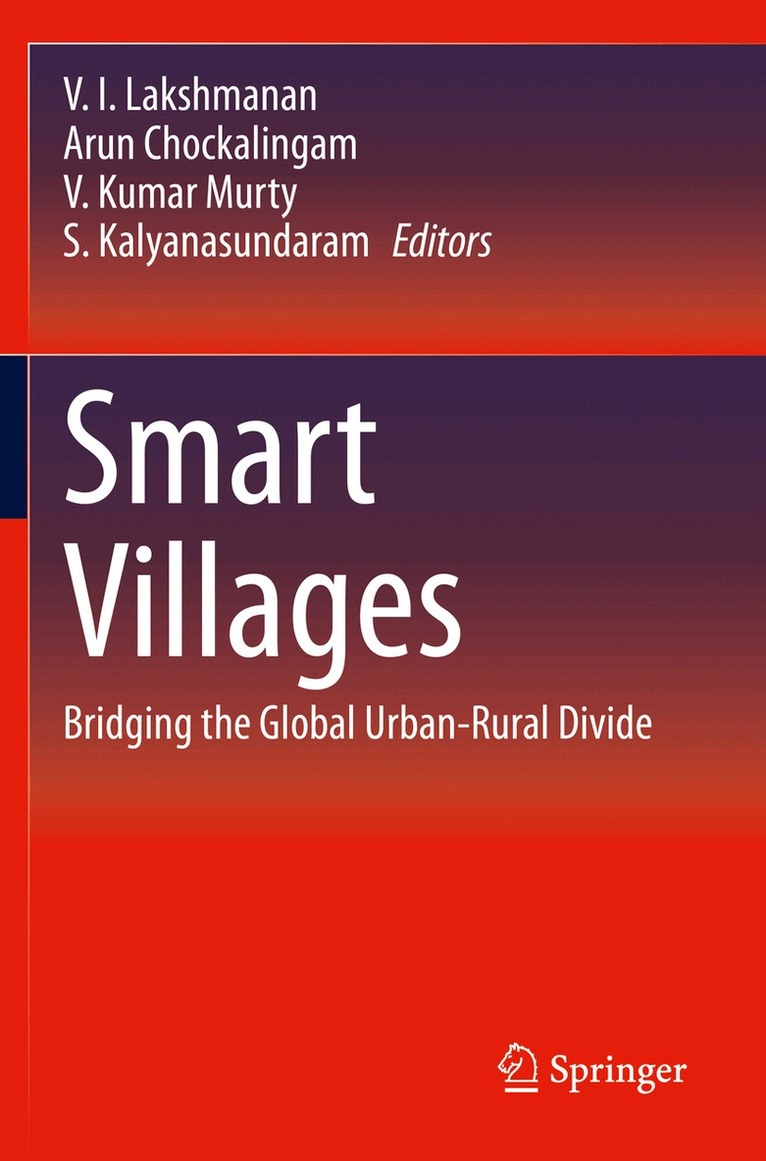
This book brings together technical expertise, best practices, case studies and ground-level application of the ideas for empowering the rural population of the world to live economically prosperous, environmentally sustainable, and socially progressive lives, on par or comparable with the quality of life enjoyed by the global urban population. The idea of Smart Villages takes on greater urgency in light of the investments made in this millennium on “Smart Cities”, taking advantage of the technological advances, particularly in digital connectivity. These investments have and will continue to expand the urban-rural divide, unless similar investments are made in the villages as well. The book provides a much-needed guide for a holistic development of a Smart Village, by defining the need, developing the framework, and describing the delivery, complete with successful case studies. Contributors to the book, from Canada, USA, Africa and India bring years of academic, industry andgovernmental experience, including organization of several Smart Village conferences. The knowledge base in the book will be of great value to anyone interested in or active in rural planning, including governmental and non-governmental organizations, industrial solution providers, public healthcare professionals, public policy professionals and students, as well as rural communities around the world. Consolidates all the aspects of creating/developing a Smart Village;Delivers an effective tool-kit for practitioners in the area of Smart Villages;Provides a policy-based framework for the development of an ideal Smart Village;Illustrates, through case studies, the fulfillment of key requirements of a Smart Village;Brings together experts from around the world to share their vision of a Smart Village;Highlights the importance of balancing development with social/gender equity and cultural traditions.