Aryeh L. Unger – författare
Visar alla böcker från författaren Aryeh L. Unger. Handla med fri frakt och snabb leverans.
5 produkter
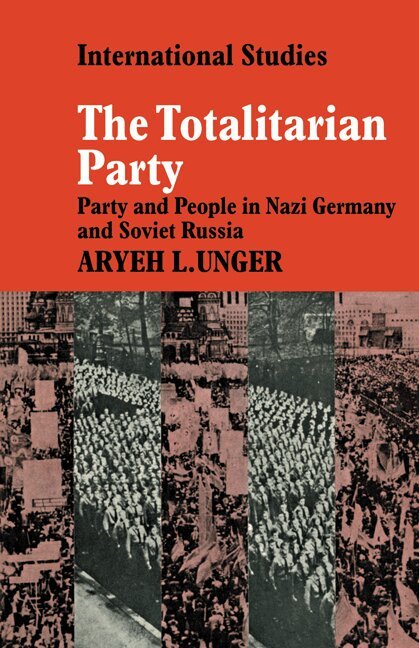
The Totalitarian Party
Party and People in Nazi Germany and Soviet Russia
Häftad, 2010
569 kr
Lägg i varukorg
Originally published in 1974, this book deals with the role of the totalitarian party in relation to the people under its rule. Drawing upon a wide range of published and unpublished sources from the two foremost examples of totalitarian government in the twentieth century, the book examines the …
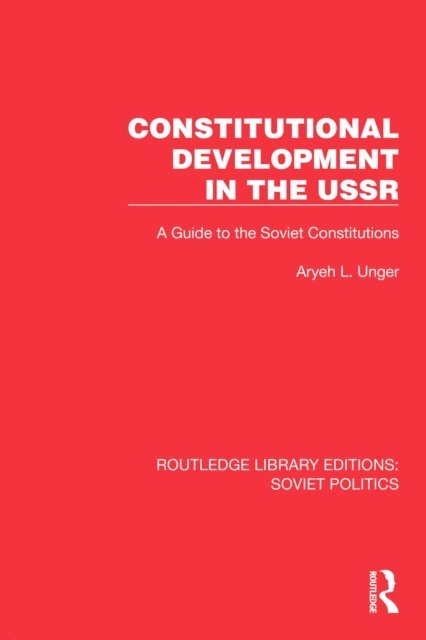
Constitutional Development in the USSR
A Guide to the Soviet Constitutions
Inbunden, 2024
2190 kr
Lägg i varukorg
Constitutional Development in the USSR (1981) looks at the political institutions and practices of the Soviet state through the prism of its own constitutional texts. It contains the texts of all four Soviet constitutions, and a chapter of commentary precedes each text. An overall assessment of …
Constitutional Development in the USSR
A Guide to the Soviet Constitutions
Häftad, 2025
515 kr
Lägg i varukorg
Constitutional Development in the USSR (1981) looks at the political institutions and practices of the Soviet state through the prism of its own constitutional texts. It contains the texts of all four Soviet constitutions, and a chapter of commentary precedes each text. An overall assessment of …
Constitutional Development in the USSR
A Guide to the Soviet Constitutions
E-bok, 2024
542 kr
Lägg i varukorg
Constitutional Development in the USSR (1981) looks at the political institutions and practices of the Soviet state through the prism of its own constitutional texts. It contains the texts of all four Soviet constitutions, and a chapter of commentary precedes each text. An overall assessment of …
Constitutional Development in the USSR
A Guide to the Soviet Constitutions
E-bok, 2024
530 kr
Lägg i varukorg
Constitutional Development in the USSR (1981) looks at the political institutions and practices of the Soviet state through the prism of its own constitutional texts. It contains the texts of all four Soviet constitutions, and a chapter of commentary precedes each text. An overall assessment of …