Arza Churchman - Böcker
Visar alla böcker från författaren Arza Churchman. Handla med fri frakt och snabb leverans.
3 produkter
3 produkter
1 034 kr
Skickas inom 10-15 vardagar
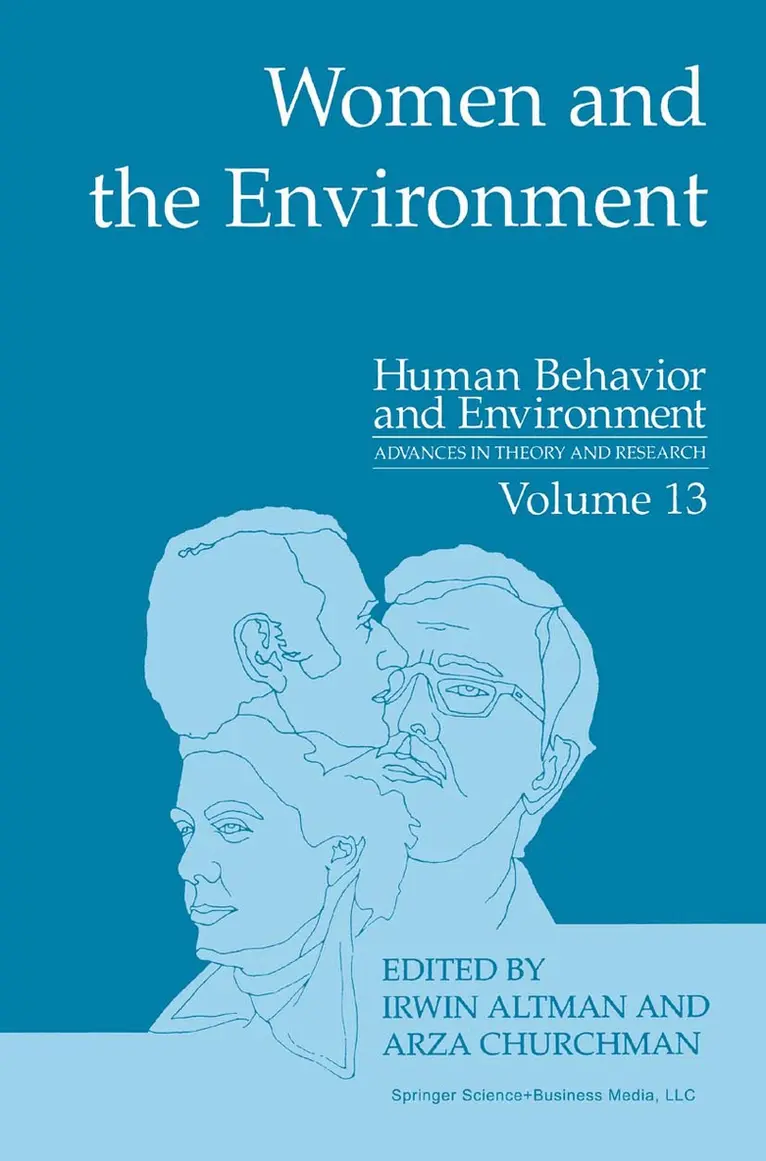
This thirteenth volume in the series addresses an increasingly salient worldwide research, design, and policy issue-women and physical environments. We live in an era of worldwide social change. Some nation-states are fracturing or disintegrating, migrations are resulting from political up heavals and economic opportunities, some ethnic and national animosi ties are resurfacing, and global and national economic systems are under stress. Furthermore, the variability of interpersonal and familial forms is increasing, and cultural subgroups-minorities, women, the physically challenged, gays, and lesbians-are vigorously demanding their rights in societies and are becoming significant economic and political forces. Although these social-system changes affect many people, their im pact on women is especially salient. Women are at the center of most forms of family life. Whether in traditional or contemporary cultures, women's roles in child rearing, home management, and community relations have and will continue to be central, regardless of emerging and changing family structures. And, because of necessity and oppor tunity, women are increasingly engaged in paid work in and outside the home (women in most cultures have historically always worked, but often not for pay). Their influence in cultures and societies is also mounting in the social, political, and economic spheres. In technological societies, women are playing higher-level roles, though still in small numbers, in economic and policy domains. This trend is likely to acceler ate in the twenty-first century.
1 703 kr
Skickas inom 7-10 vardagar
An international team of leading scholars explores the latesttheories, research, and applications critical to environmentalpsychology Featuring the latest research and concepts in the field straightfrom the world's leading scholars and practitioners, Handbook ofEnvironmental Psychology provides a balanced and comprehensiveoverview of this rapidly growing field. Bringing togethercontributions from an international team of top researchersrepresenting a myriad of disciplines, this groundbreaking resourceprovides you with a pluralistic approach to the field as aninterdisciplinary effort with links to other disciplines. Addressing a variety of issues and practice settings, Handbook ofEnvironmental Psychology is divided into five organized andaccessible parts to provide a thorough overview of the theories,research, and applications at the forefront of environmentalpsychology today. Part I deals with sharpening theories; Part IIlinks the subject to other disciplines; Part III focuses onmethods; Part IV highlights applications; and Part V examines thefuture of the field. Defining the ongoing revolution in thinking about how theenvironment and psychology interact, Handbook of EnvironmentalPsychology is must reading for anyone coping directly with theattitudes, beliefs, and behaviors that are destroying ourenvironment and putting our lives in jeopardy. Topics include:* Healthy design* Restorative environments* Links to urban planning* Contaminated environments* Women's issues* Environments for aging* Climate, weather, and crime* The history and future of disaster research* Children's environments* Personal space in a digital age* Community planning
1 034 kr
Skickas inom 10-15 vardagar
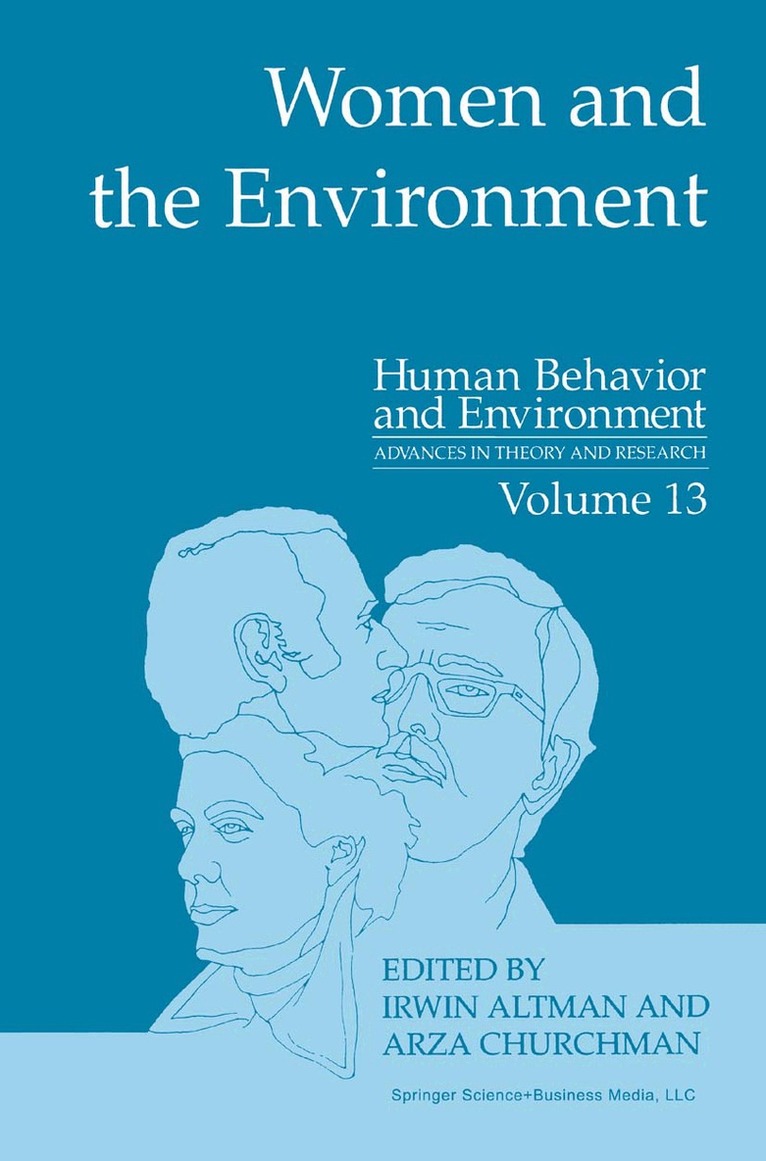
This thirteenth volume in the series addresses an increasingly salient worldwide research, design, and policy issue-women and physical environments. We live in an era of worldwide social change. Some nation-states are fracturing or disintegrating, migrations are resulting from political up heavals and economic opportunities, some ethnic and national animosi ties are resurfacing, and global and national economic systems are under stress. Furthermore, the variability of interpersonal and familial forms is increasing, and cultural subgroups-minorities, women, the physically challenged, gays, and lesbians-are vigorously demanding their rights in societies and are becoming significant economic and political forces. Although these social-system changes affect many people, their im pact on women is especially salient. Women are at the center of most forms of family life. Whether in traditional or contemporary cultures, women's roles in child rearing, home management, and community relations have and will continue to be central, regardless of emerging and changing family structures. And, because of necessity and oppor tunity, women are increasingly engaged in paid work in and outside the home (women in most cultures have historically always worked, but often not for pay). Their influence in cultures and societies is also mounting in the social, political, and economic spheres. In technological societies, women are playing higher-level roles, though still in small numbers, in economic and policy domains. This trend is likely to acceler ate in the twenty-first century.