Ashish Kumar Mishra - Böcker
Visar alla böcker från författaren Ashish Kumar Mishra. Handla med fri frakt och snabb leverans.
3 produkter
3 produkter
1 502 kr
Skickas inom 3-6 vardagar
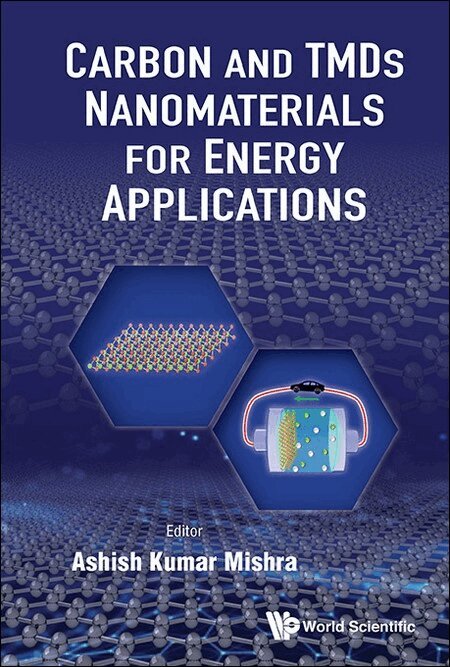
The world's increasing demand for energy is mainly being fulfilled by non-renewable fossil fuels. Its long-run usage is unsustainable due to depleting resources and adverse effects on the environment. To resolve these issues, researchers are transitioning toward high-performance renewable and sustainable energy sources and storage systems like electrochemical cells for hydrogen production, supercapacitors, batteries, and so forth. Currently, the main challenges to developing these systems require efficient electrode materials with properties like good electrical conductivity, high surface area, good catalytic activity, and so on. Carbon nanostructures (such as graphene and carbon nanotubes) and inorganic transition metal dichalcogenides (such as MoS2, WS2, MoSe2, etc.) are promising candidates for such energy applications owing to their unique properties and exceptional performance. This book summarizes the synthesis of carbon and TMDs to their applications in energy generation and storage. The aim of this book is to benefit the readers with recent aspects and future perspectives of carbon and TMDs-based nanomaterials dedicated to the field of energy generation and storage technologies. Also, professionals might find it useful in fabricating or characterizing these materials for targeted applications.
1 381 kr
Skickas inom 10-15 vardagar
This book highlights recent advances of spectroscopic techniques based on Raman scattering. Different applications are introduced that serve as examples for the versatile use of Raman techniques. Raman spectroscopy is a marker free technique, which is capable of yielding detailed information about molecular systems in a non-destructive way. This makes it a valuable tool for, e.g., material science or medical research. The access to vibrational energy and dynamics yields fundamental insights into static and dynamical structural properties of molecules being influenced by and influencing their material science or medical research environment. The better understanding of the basic building blocks of materials helps to improve the functionality in various applications. Raman spectroscopy has become a truly interdisciplinary research tool, and the ongoing development of techniques makes it attractive for growing variety of scientific and industrial applications, which will be demonstrated in the book. While the “classical” linear spontaneous Raman spectroscopy is restricted in its applicability due to low signal intensities or the excitation of strong fluorescence background, new techniques have helped to overcome such problems. Examples, presented in the book, are surface-enhanced Raman scattering (SERS), and various associated techniques are used to drastically increase signal intensity, confocal, and tip-enhanced Raman scattering (TERS) allowing for high and even sub-diffraction limited spatial resolutions, coherent anti-Stokes Raman scattering (CARS) avoiding fluorescence background and allowing for time-resolved observations of vibrational dynamics, or hyper- and resonance Raman scattering influencing the scattering based on electronic resonances, etc.
1 381 kr
Skickas inom 10-15 vardagar
This book highlights recent advances of spectroscopic techniques based on Raman scattering. Different applications are introduced that serve as examples for the versatile use of Raman techniques. Raman spectroscopy is a marker free technique, which is capable of yielding detailed information about molecular systems in a non-destructive way. This makes it a valuable tool for, e.g., material science or medical research. The access to vibrational energy and dynamics yields fundamental insights into static and dynamical structural properties of molecules being influenced by and influencing their material science or medical research environment. The better understanding of the basic building blocks of materials helps to improve the functionality in various applications. Raman spectroscopy has become a truly interdisciplinary research tool, and the ongoing development of techniques makes it attractive for growing variety of scientific and industrial applications, which will be demonstrated in the book. While the “classical” linear spontaneous Raman spectroscopy is restricted in its applicability due to low signal intensities or the excitation of strong fluorescence background, new techniques have helped to overcome such problems. Examples, presented in the book, are surface-enhanced Raman scattering (SERS), and various associated techniques are used to drastically increase signal intensity, confocal, and tip-enhanced Raman scattering (TERS) allowing for high and even sub-diffraction limited spatial resolutions, coherent anti-Stokes Raman scattering (CARS) avoiding fluorescence background and allowing for time-resolved observations of vibrational dynamics, or hyper- and resonance Raman scattering influencing the scattering based on electronic resonances, etc.