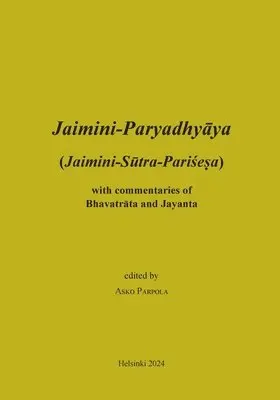
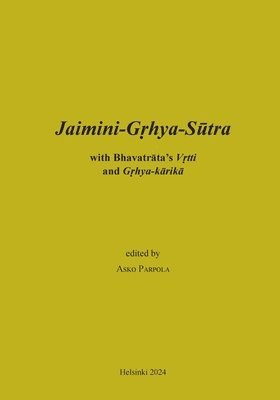
Asko Parpola – författare
Visar alla böcker från författaren . Handla med fri frakt och snabb leverans.
10 produkter
10 produkter
E-bok
PDF, Engelska, 2015586 kr
Läs direkt efter köp
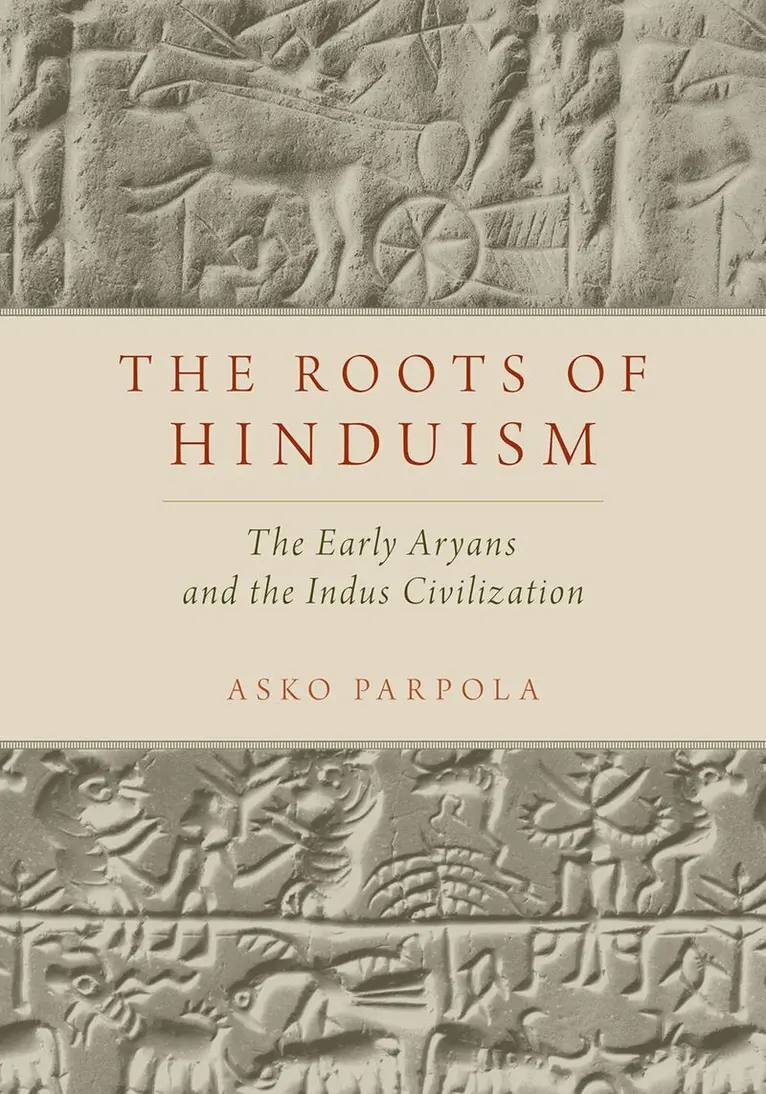
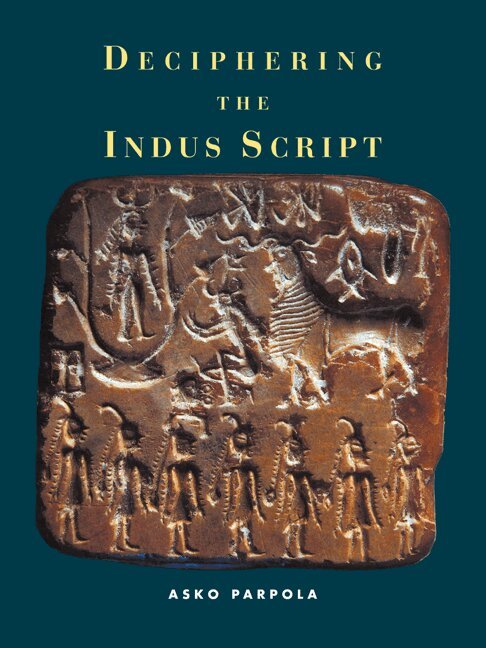
Hinduism has two major roots. The more familiar is the religion brought to South Asia in the second millennium BCE by speakers of Aryan or Indo-Iranian languages, a branch of the Indo-European language family. Another, more enigmatic, root is the Indus civilization of the third millennium BCE, which left behind exquisitely carved seals and thousands of short inscriptions in a long-forgotten pictographic script. Discovered in the valley of the Indus River in the early 1920s, the Indus civilization had a population estimated at one million people, in more than 1000 settlements, several of which were cities of some 50,000 inhabitants. With an area of nearly a million square kilometers, the Indus civilization was more extensive than the contemporaneous urban cultures of Mesopotamia and Egypt. Yet, after almost a century of excavation and research the Indus civilization remains little understood. How might we decipher the Indus inscriptions? What language did the Indus people speak? What deities did they worship?Asko Parpola has spent fifty years researching the roots of Hinduism to answer these fundamental questions, which have been debated with increasing animosity since the rise of Hindu nationalist politics in the 1980s. In this pioneering book, he traces the archaeological route of the Indo-Iranian languages from the Aryan homeland north of the Black Sea to Central, West, and South Asia. His new ideas on the formation of the Vedic literature and rites and the great Hindu epics hinge on the profound impact that the invention of the horse-drawn chariot had on Indo-Aryan religion. Parpola''s comprehensive assessment of the Indus language and religion is based on all available textual, linguistic and archaeological evidence, including West Asian sources and the Indus script. The results affirm cultural and religious continuity to the present day and, among many other things, shed new light on the prehistory of the key Hindu goddess Durga and her Tantric cult.
Inbunden, Engelska, 2015
1 980 kr
Skickas inom 7-10 vardagar
Hinduism has two major roots. The more familiar is the religion brought to South Asia in the second millennium BCE by speakers of Aryan or Indo-Iranian languages, a branch of the Indo-European language family. Another, more enigmatic, root is the Indus civilization of the third millennium BCE, which left behind thousands of short inscriptions in a forgotten pictographic script. Discovered in the valley of the Indus River in the early 1920s, the Indus civilization had a population estimated at one million people, in more than 1000 settlements, several of which were cities of some 50,000 inhabitants. With an area of nearly a million square kilometers, the Indus civilization was more extensive than the other key urban cultures of the time, in Mesopotamia and Egypt. Yet, after almost a century of excavation and research the Indus civilization remains little understood. What language did the Indus people speak? How might we decipher the exquisitely carved Indus inscriptions? What deities did they worship? Are the roots of contemporary Hinduism to be found in the religion of the Indus civilization as well as in the Vedic religion?Since the rise of Hindu nationalist politics in the 1980s, these questions have been debated with increasing animosity, colored by the history of modern colonialism in India. This is especially true of the enigmatic Indus script, which is at the hub of the debates, and a particular focus of this book. Asko Parpola has spent fifty years researching the roots of Hinduism to answer these fundamental questions. In this pioneering book, he traces the Indo-Iranian speakers from the Aryan homeland north of the Black Sea through the Eurasian steppes to Central, West, and South Asia. Among many other things, he discusses the profound impact of the invention of the horse-drawn chariot on Indo-Aryan religion, and presents new ideas on the origin and formation of the Vedic literature and rites, and the great Hindu epics.
Häftad, Engelska, 2015
505 kr
Skickas inom 5-8 vardagar
Hinduism has two major roots. The more familiar is the religion brought to South Asia in the second millennium BCE by speakers of Aryan or Indo-Iranian languages, a branch of the Indo-European language family. Another, more enigmatic, root is the Indus civilization of the third millennium BCE, which left behind thousands of short inscriptions in a forgotten pictographic script. Discovered in the valley of the Indus River in the early 1920s, the Indus civilization had a population estimated at one million people, in more than 1000 settlements, several of which were cities of some 50,000 inhabitants. With an area of nearly a million square kilometers, the Indus civilization was more extensive than the other key urban cultures of the time, in Mesopotamia and Egypt. Yet, after almost a century of excavation and research the Indus civilization remains little understood. What language did the Indus people speak? How might we decipher the exquisitely carved Indus inscriptions? What deities did they worship? Are the roots of contemporary Hinduism to be found in the religion of the Indus civilization as well as in the Vedic religion?Since the rise of Hindu nationalist politics in the 1980s, these questions have been debated with increasing animosity, colored by the history of modern colonialism in India. This is especially true of the enigmatic Indus script, which is at the hub of the debates, and a particular focus of this book. Asko Parpola has spent fifty years researching the roots of Hinduism to answer these fundamental questions. In this pioneering book, he traces the Indo-Iranian speakers from the Aryan homeland north of the Black Sea through the Eurasian steppes to Central, West, and South Asia. Among many other things, he discusses the profound impact of the invention of the horse-drawn chariot on Indo-Aryan religion, and presents new ideas on the origin and formation of the Vedic literature and rites, and the great Hindu epics.
E-bok
Engelska, 2015586 kr
Läs direkt efter köp
Hinduism has two major roots. The more familiar is the religion brought to South Asia in the second millennium BCE by speakers of Aryan or Indo-Iranian languages, a branch of the Indo-European language family. Another, more enigmatic, root is the Indus civilization of the third millennium BCE, which left behind exquisitely carved seals and thousands of short inscriptions in a long-forgotten pictographic script. Discovered in the valley of the Indus River in the early 1920s, the Indus civilization had a population estimated at one million people, in more than 1000 settlements, several of which were cities of some 50,000 inhabitants. With an area of nearly a million square kilometers, the Indus civilization was more extensive than the contemporaneous urban cultures of Mesopotamia and Egypt. Yet, after almost a century of excavation and research the Indus civilization remains little understood. How might we decipher the Indus inscriptions? What language did the Indus people speak? What deities did they worship?Asko Parpola has spent fifty years researching the roots of Hinduism to answer these fundamental questions, which have been debated with increasing animosity since the rise of Hindu nationalist politics in the 1980s. In this pioneering book, he traces the archaeological route of the Indo-Iranian languages from the Aryan homeland north of the Black Sea to Central, West, and South Asia. His new ideas on the formation of the Vedic literature and rites and the great Hindu epics hinge on the profound impact that the invention of the horse-drawn chariot had on Indo-Aryan religion. Parpola''s comprehensive assessment of the Indus language and religion is based on all available textual, linguistic and archaeological evidence, including West Asian sources and the Indus script. The results affirm cultural and religious continuity to the present day and, among many other things, shed new light on the prehistory of the key Hindu goddess Durga and her Tantric cult.
Häftad, Engelska, 2009
672 kr
Skickas inom 7-10 vardagar
Of the writing systems of the ancient world which still await deciphering, the Indus script is the most important. It developed in the Indus or Harappan Civilization, which flourished c. 2500-1900 BC in and around modern Pakistan, collapsing before the earliest historical records of South Asia were composed. Nearly 4,000 samples of the writing survive, mainly on stamp seals and amulets, but no translations. Professor Parpola is the chief editor of the Corpus of Indus Seals and Inscriptions. His ideas about the script, the linguistic affinity of the Harappan language, and the nature of the Indus religion are informed by a remarkable command of Aryan, Dravidian, and Mesopotamian sources, archaeological materials, and linguistic methodology. His fascinating study confirms that the Indus script was logo-syllabic, and that the Indus language belonged to the Dravidian family.
Häftad, Finska, 2024
830 kr
Skickas inom 5-8 vardagar
Häftad, Engelska, 2024
409 kr
Skickas inom 5-8 vardagar
Häftad, Engelska, 2024
996 kr
Skickas inom 5-8 vardagar
Häftad, Finska, 2024
802 kr
Skickas inom 5-8 vardagar
Häftad, Engelska, 2024
506 kr
Skickas inom 5-8 vardagar