Astrid Graslund – författare
Visar alla böcker från författaren Astrid Graslund. Handla med fri frakt och snabb leverans.
6 produkter
6 produkter
Häftad, Engelska, 2019
948 kr
Skickas inom 10-15 vardagar
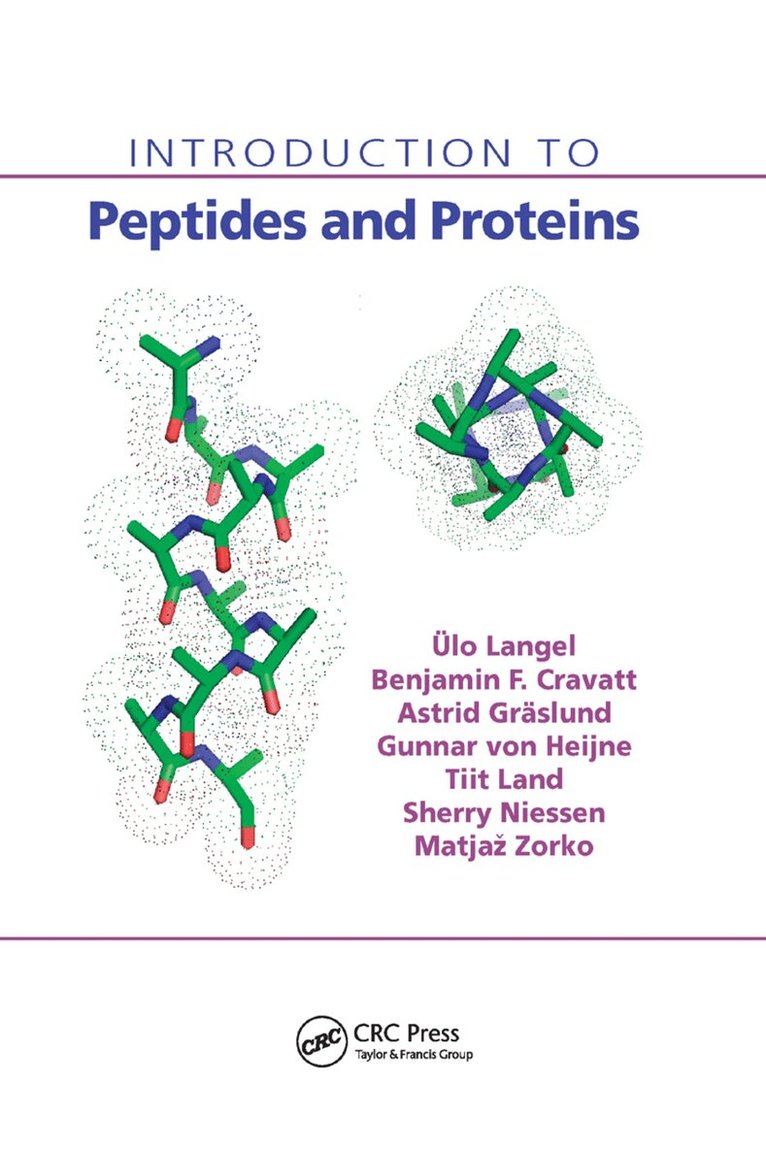
Human cells produce at least 30,000 different proteins. Each has a specific function characterized by a unique sequence and native conformation that allows it to perform that function. While research in this post-genomic era has created a deluge of invaluable information, the field has lacked for an authoritative introductory text needed to inform researchers and students in all of those fields now concerned with protein research.Introduction to Peptides and Proteins brings together some of the most respected researchers in protein science to present a remarkably coherent introduction to modern peptide and protein chemistry. The first sections of the book delve into – Basic peptide and protein science from assembly through degradation Traditional and emerging research methods including those used in bioinformatics and proteomics New computational approaches and algorithms used to find patterns in the vast data collected by sequencing projects After providing a foundation in tools and methods, the authors closely examine six protein families, including representative classes such as enzymes, cell-surface receptors, antibodies, fibrous proteins, and bioactive peptide classes. They concentrate on biochemical mechanisms and where possible indicate therapeutic or biotechnical possibilities.Then focusing on clinical aspects, the authors investigate misfolding as found in prion diseases, miscleavage as found in Alzheimer’s, and mis-sequencing as found with some cancers. Drawing from some of their own research, the authors summarize recent achievements and emerging applications. They discuss the use of proteins and peptides as drugs and the solid-phase synthesis required for drug production. They also look at the use of peptides as functional biomolecules and research tools.No longer just th
E-bok
Engelska, 20091 103 kr
Läs direkt efter köp
Human cells produce at least 30,000 different proteins. Each has a specific function characterized by a unique sequence and native conformation that allows it to perform that function. While research in this post-genomic era has created a deluge of invaluable information, the field has lacked for an authoritative introductory text needed to inform
Inbunden, Engelska, 2009
2 635 kr
Skickas inom 10-15 vardagar
Human cells produce at least 30,000 different proteins. Each has a specific function characterized by a unique sequence and native conformation that allows it to perform that function. While research in this post-genomic era has created a deluge of invaluable information, the field has lacked for an authoritative introductory text needed to inform researchers and students in all of those fields now concerned with protein research.Introduction to Peptides and Proteins brings together some of the most respected researchers in protein science to present a remarkably coherent introduction to modern peptide and protein chemistry. The first sections of the book delve into – Basic peptide and protein science from assembly through degradation Traditional and emerging research methods including those used in bioinformatics and proteomics New computational approaches and algorithms used to find patterns in the vast data collected by sequencing projects After providing a foundation in tools and methods, the authors closely examine six protein families, including representative classes such as enzymes, cell-surface receptors, antibodies, fibrous proteins, and bioactive peptide classes. They concentrate on biochemical mechanisms and where possible indicate therapeutic or biotechnical possibilities.Then focusing on clinical aspects, the authors investigate misfolding as found in prion diseases, miscleavage as found in Alzheimer’s, and mis-sequencing as found with some cancers. Drawing from some of their own research, the authors summarize recent achievements and emerging applications. They discuss the use of proteins and peptides as drugs and the solid-phase synthesis required for drug production. They also look at the use of peptides as functional biomolecules and research tools.No longer just th
E-bok
PDF, Engelska, 20091 103 kr
Läs direkt efter köp
Human cells produce at least 30,000 different proteins. Each has a specific function characterized by a unique sequence and native conformation that allows it to perform that function. While research in this post-genomic era has created a deluge of invaluable information, the field has lacked for an authoritative introductory text needed to inform
E-bok
PDF, Engelska, 20092 741 kr
Läs direkt efter köp
E-bok
PDF, Engelska, 20121 367 kr
Läs direkt efter köp
This is a collection of papers presented and discussed at the first EBSA workshop held at Saltsj6baden outside stockholm in Sweden, July 6-10, 1986. The common theme of these papers is dynamics of biomolecules, and how the dynamics depends on the molecular structure and organi zation, and connects to and determines the biological function. This is a rapidly expanding field of research which combines many different aspects of molecular bio physics. Much material is new and presented for the first time. Even if the work so far has been of the kind that is usually called basic research, practical applications are clearly indicated in some articles, and are waiting around the corner in several other cases. At the workshop only one third of the time was used for the formal presentations and two thirds for discussion. To this should also be added discussions during the poster sessions. During these lively and unrecorded discussions fresh viewpoints emerged and new ideas were created. Ad mittedly, our knowledge at present is only fragmentary but when pieces of the puzzle are brought together at a workshop or in a publication of this kind more extended and sometimes unexpected contours and shapes become vi sible. It is our hope that this rapid publication of camera-ready manuscripts will transfer some of the spi rit at the workshop to the reader, and in his or her institute or laboratory initiate further discussions, bring forward more ideas and start new experimental ap roaches.