Astrid Skjerven – författare
749 kr
Skickas inom 10-15 vardagar
654 kr
Läs direkt efter köp
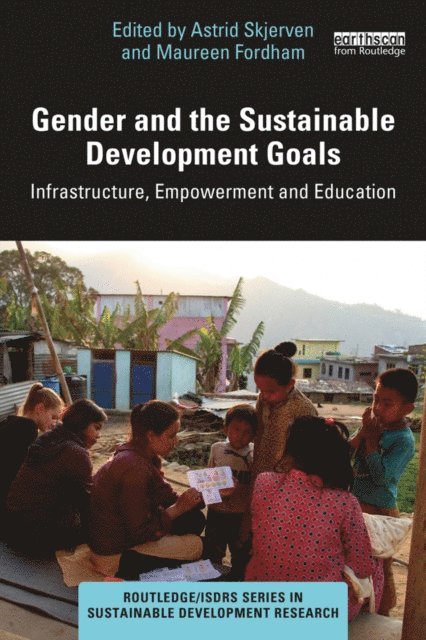
This book sheds light on the important and mostly neglected role that gender plays in achieving the UN Sustainable Development Goals, doing so by investigating three key problem areas: empowerment, education, and infrastructure.
Starting with a theoretical and methodological framework, this edited collection contains 12 chapters from scholars and researchers from around the world. The book includes numerous case studies discussing the current status of gender equality relating to the SDGs. It reinforces the significance of gender for sustainable and just development, highlighting how women play a major role in work organization, disaster management, income, household maintenance, and mediation of knowledge. "Women" as a classification encompasses much diversity with many intersecting axes of difference; this book focuses on the excluded and disadvantaged majority social group, without imposing homogeneity on that categorization. Many chapters focus on critical situations occurring in the Global South, where these issues are highly prominent, and importantly, these contributions are written by local scholars. Finally, the volume provides pathways for basic and professional gender responsive education and innovation in the field.
The book will generate important discussions in interdisciplinary research and higher education settings focusing on sustainable development, gender, equality, human rights, and education.
654 kr
Läs direkt efter köp
This book sheds light on the important and mostly neglected role that gender plays in achieving the UN Sustainable Development Goals, doing so by investigating three key problem areas: empowerment, education, and infrastructure.
Starting with a theoretical and methodological framework, this edited collection contains 12 chapters from scholars and researchers from around the world. The book includes numerous case studies discussing the current status of gender equality relating to the SDGs. It reinforces the significance of gender for sustainable and just development, highlighting how women play a major role in work organization, disaster management, income, household maintenance, and mediation of knowledge. "Women" as a classification encompasses much diversity with many intersecting axes of difference; this book focuses on the excluded and disadvantaged majority social group, without imposing homogeneity on that categorization. Many chapters focus on critical situations occurring in the Global South, where these issues are highly prominent, and importantly, these contributions are written by local scholars. Finally, the volume provides pathways for basic and professional gender responsive education and innovation in the field.
The book will generate important discussions in interdisciplinary research and higher education settings focusing on sustainable development, gender, equality, human rights, and education.
572 kr
Skickas inom 10-15 vardagar
2 198 kr
Skickas inom 10-15 vardagar
2 438 kr
Skickas inom 10-15 vardagar
685 kr
Skickas inom 10-15 vardagar
797 kr
Läs direkt efter köp
This book sheds light on the role and impact of sustainability mediation, an effective tool for political authorities and business enterprises to persuade consumers of the integrity of their actions, products, and services.
In this era of ecological and societal crises fuelled by increasing consumption, sustainability has become a key buzzword and target to attain. Governments around the world argue that they will meet their sustainability goals through environmental actions, by enabling consumers to make better choices and expecting brands to respond accordingly. At the same time, consumers are overwhelmed by the messaging conveyed in sustainability marketing campaigns, often featuring misleading greenwashing, with political authorities, organisations, and business enterprises all having conflicting interests. In this complex scenario, mediation has become a crucial issue. This book offers a critical and multidisciplinary view of sustainability mediation from experts in the fields of philosophy, consumption research, media studies, fashion, design, and citizenship, offering a unique, holistic view. Each chapter highlights different and problematic aspects of the cultural narratives being communicated, for example, the necessity of growth and the notion of a green economy. They present current theories, methods, indicators, and strategies used to assess and measure the relation between mediation, behaviour, and sustainable development.
This book is of interest to scholars, researchers, and postgraduate students in all subject fields concerned with sustainability, including design, visual communication, fashion, consumption, media and journalism, and sustainable development.
797 kr
Läs direkt efter köp
This book sheds light on the role and impact of sustainability mediation, an effective tool for political authorities and business enterprises to persuade consumers of the integrity of their actions, products, and services.
In this era of ecological and societal crises fuelled by increasing consumption, sustainability has become a key buzzword and target to attain. Governments around the world argue that they will meet their sustainability goals through environmental actions, by enabling consumers to make better choices and expecting brands to respond accordingly. At the same time, consumers are overwhelmed by the messaging conveyed in sustainability marketing campaigns, often featuring misleading greenwashing, with political authorities, organisations, and business enterprises all having conflicting interests. In this complex scenario, mediation has become a crucial issue. This book offers a critical and multidisciplinary view of sustainability mediation from experts in the fields of philosophy, consumption research, media studies, fashion, design, and citizenship, offering a unique, holistic view. Each chapter highlights different and problematic aspects of the cultural narratives being communicated, for example, the necessity of growth and the notion of a green economy. They present current theories, methods, indicators, and strategies used to assess and measure the relation between mediation, behaviour, and sustainable development.
This book is of interest to scholars, researchers, and postgraduate students in all subject fields concerned with sustainability, including design, visual communication, fashion, consumption, media and journalism, and sustainable development.
2 511 kr
Skickas inom 10-15 vardagar
1 208 kr
Skickas inom 5-8 vardagar
1 325 kr
Läs direkt efter köp
1 278 kr
Läs direkt efter köp
849 kr
Läs direkt efter köp
As culture is becoming increasingly recognised as a crucial element of sustainable development, design competence has emerged as a useful tool in creating a meaningful life within a sustainable mental, cultural and physical environment.
Design for a Sustainable Culture explores the relationship between sustainability, culture and the shaping of human surroundings by examining the significance and potential of design as a tool for the creation of sustainable development. Drawing on interdisciplinary case studies and investigations from Europe, North America and India, this book discusses theoretical, methodological and educational aspects of the role of design in relation to human well-being and provides a unique perspective on the interface between design, culture and sustainability.
This book will appeal to researchers as well as postgraduate and undergraduate students in design and design literacy, crafts, architecture and environmental planning, but also scholars of sustainability from other disciplines who wish to understand the role and impact of design and culture in sustainable development.
849 kr
Läs direkt efter köp
As culture is becoming increasingly recognised as a crucial element of sustainable development, design competence has emerged as a useful tool in creating a meaningful life within a sustainable mental, cultural and physical environment.
Design for a Sustainable Culture explores the relationship between sustainability, culture and the shaping of human surroundings by examining the significance and potential of design as a tool for the creation of sustainable development. Drawing on interdisciplinary case studies and investigations from Europe, North America and India, this book discusses theoretical, methodological and educational aspects of the role of design in relation to human well-being and provides a unique perspective on the interface between design, culture and sustainability.
This book will appeal to researchers as well as postgraduate and undergraduate students in design and design literacy, crafts, architecture and environmental planning, but also scholars of sustainability from other disciplines who wish to understand the role and impact of design and culture in sustainable development.
128 kr
Skickas