Ata Anzali - Böcker
Visar alla böcker från författaren Ata Anzali. Handla med fri frakt och snabb leverans.
3 produkter
3 produkter
413 kr
Skickas inom 7-10 vardagar
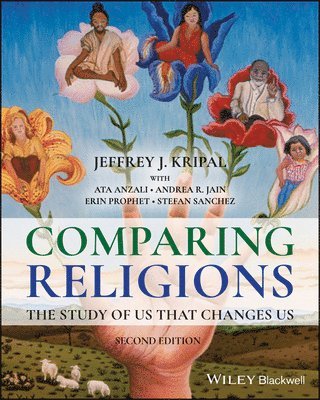
Teaches students the art and practice of comparison in the globalizing world, fully updated to reflect recent scholarship and major developments in the fieldComparing Religions: The Study of Us that Changes Us is a wholly original, absorbing, and provocative reimagining of the comparative study of religion in the 21st century. The first textbook of its kind to foreground the extraordinary or “paranormal” aspects of religious experience, this innovative volume reviews the fundamental tenets of the world’s religions, discusses the benefits and problems of comparative inquiry, explores how the practice can impact a person's worldview and values, and much more.Asserting that religions have always engaged in comparing one another, the authors provide insights into the history, trends, debates, and questions of explicit comparativism in the modern world. Easily accessible chapters examine the challenges of studying religion using a comparative approach rather than focusing on religious identity, inspiring students to think seriously about religious pluralism as they engage in comparative practice. Throughout the text, a wealth of diverse case studies and vivid illustrations are complemented by chapter outlines, summaries, toolkits, discussion questions, and other learning features. Substantially updated with new and revised material, the second edition of Comparing Religions: Draws from both comparative work and critical theory to present a well-balanced introduction to contemporary practiceExplains classic comparative themes, provides a historical outline of comparative practices, and offers key strategies for understanding, analyzing, and re-reading religionDraws on a wide range of religious traditions to illustrate the complexity and efficacy of comparative practiceEmbraces the transcendent nature of the religious experience in all its forms, including in popular culture, film, and televisionContains a classroom-proven, three-part structure with easy-to-digest, thematically organized chaptersFeatures a companion website with information on individual religious traditions, additional images, a glossary, discussion questions, and links to supplementary materialComparing Religions: The Study of Us that Changes Us, Second Edition, is the perfect textbook for undergraduate students and faculty in comparative religion, the study of religion, and world religions, as well as a valuable resource for general readers interested in understanding this rewarding area.
593 kr
Skickas inom 10-15 vardagar
“Mysticism” in Iran is an in-depth analysis of significant transformations in the religious landscape of Safavid Iran that led to the marginalization of Sufism and the eventual emergence of ‘irfan as an alternative Shi‘i model of spirituality. Ata Anzali draws on a treasure-trove of manuscripts from Iranian archives to offer an original study of the transformation of Safavid Persia from a majority Sunni country to a Twelver Shi‘i realm. The work straddles social and intellectual history, beginning with an examination of late Safavid social and religious contexts in which Twelver religious scholars launched a successful campaign against Sufism with the tacit approval of the court. This led to the social, political, and economic marginalization of Sufism, which was stigmatized as an illegitimate mode of piety rooted in a Sunni past. Anzali directs the reader’s attention to creative and successful attempts by other members of the ulama to incorporate the Sufi tradition into the new Twelver milieu. He argues that the category of ‘irfan, or “mysticism,” was invented at the end of the Safavid period by mystically minded scholars such as Shah Muhammad Darabi and Qutb al-Din Nayrizi in reference to this domesticated form of Sufism. Key aspects of Sufi thought and practice were revisited in the new environment, which Anzali demonstrates by examining the evolving role of the spiritual master. This traditional Sufi function was reimagined by Shi‘i intellectuals to incorporate the guidance of the infallible imams and their deputies, the ulama.Anzali goes on to address the institutionalization of ‘irfan in Shi‘i madrasas and the role played by prominent religious scholars of the eighteenth and early nineteenth centuries in this regard. The book closes with a chapter devoted to fascinating changes in the thought and practice of ‘irfan in the twentieth century during the transformative processes of modernity. Focusing on the little-studied figure of Kayvan Qazvini and his writings, Anzali explains how ‘irfan was embraced as a rational, science-friendly, nonsectarian, and anticlerical concept by secular Iranian intellectuals.
Del 3 - Islamicate Intellectual History
Opposition to Philosophy in Safavid Iran
Mulla Muḥammad-Ṭāhir Qummi’s Ḥikmat al-ʿĀrifīn
Inbunden, Arabiska, 2017
2 013 kr
Skickas inom 5-8 vardagar
In Opposition to Philosophy in Safavid Iran, Ata Anzali and S. M. Hadi Gerami offer a critical edition of a hitherto unpublished manuscript that is arguably the most erudite and extensive polemical work against philosophy and philosophical mysticism from the Safavid period. The introduction offers an extensive and in-depth analysis of the status of philosophy in the late Safavid period, placing Mulla Muhammad-Tahir Qummi’s (d. 1689) work in the broader context of the relevant cultural and intellectual developments of his time.The content of Hikmat al-‘arifin itself is divided between a refutation of many traditional philosophical arguments about the nature of God and His attributes and, more importantly for those interested in Safavid intellectual history, attacks on Mulla Sadra and his students for synthesizing fundamental elements Ibn ‘Arabi’s thought into the framework of traditional philosophical discourse.