Atri Hatef Naiemi – författare
Visar alla böcker från författaren Atri Hatef Naiemi. Handla med fri frakt och snabb leverans.
4 produkter
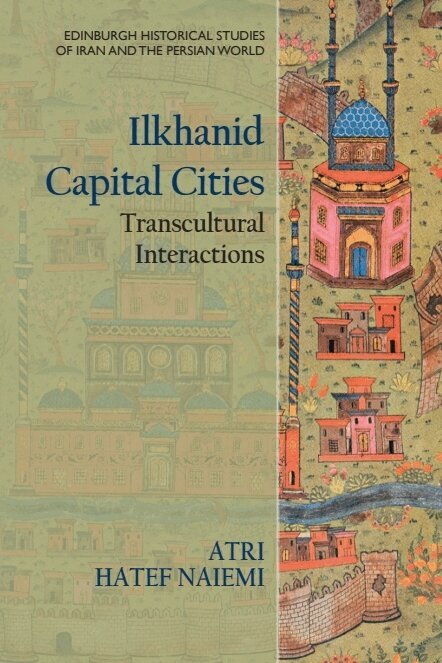
Ilkhanid Capital Cities
Transcultural Interactions
Inbunden, 2025
1203 kr
Lägg i varukorg
Ilkhanid Capital Cities studies the capital cities founded by the Mongol Ilkhans in Iran during the Ilkhanid period (1256 1335). It primarily focuses on two major cities in the northwest of Iran, Ghazaniyya and Sultaniyya, and examines how the court-sponsored urban projects in these two cities …
Ilkhanid Capital Cities
Transcultural Interactions
Häftad, 2026
322 kr
Lägg i varukorg
Ilkhanid Capital Cities studies the capital cities founded by the Mongol Ilkhans in Iran during the Ilkhanid period (1256–1335). It primarily focuses on two major cities in the northwest of Iran, Ghazaniyya and Sultaniyya, and examines how the court-sponsored urban projects in these two cities …
Ilkhanid Capital Cities
Transcultural Interactions
E-bok, 2025
420 kr
Lägg i varukorg
Ilkhanid Capital Cities studies the capital cities founded by the Mongol Ilkhans in Iran during the Ilkhanid period (1256–1335). It primarily focuses on two major cities in the northwest of Iran, Ghazaniyya and Sultaniyya, and examines how the court-sponsored urban projects in these two cities …
Ilkhanid Capital Cities
Transcultural Interactions
E-bok, 2025
420 kr
Lägg i varukorg
Ilkhanid Capital Cities studies the capital cities founded by the Mongol Ilkhans in Iran during the Ilkhanid period (1256–1335). It primarily focuses on two major cities in the northwest of Iran, Ghazaniyya and Sultaniyya, and examines how the court-sponsored urban projects in these two cities …