Aubrey Burl – författare
Visar alla böcker från författaren Aubrey Burl. Handla med fri frakt och snabb leverans.
6 produkter
6 produkter
372 kr
Skickas inom 5-8 vardagar
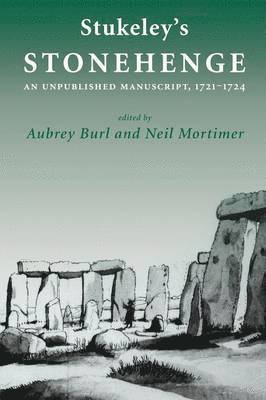
William Stukeley (1667-1765), one of the first to conduct fieldwork at Stonehenge and to recognize its historic importance, meticulously recorded his findings in a manuscript that has remained unpublished for hundreds of years. That manuscript is transcribed here, accompanied by detailed annotations that confirm the value of Stukeley’s archaeological research and set it apart from his later unsustainable theories and obsessions with Druids.Trained as a medical doctor, Stukeley’s interests were antiquarian and archaeological, with a particular enthusiasm for evidence of early sacred ritual. His Stonehenge field notes include careful measurements, drawings, and plans as well as original analyses and remarkable discoveries, among them the enigmatic cursus which no one before him had seen. Stukeley’s manuscript provides a fascinating review of what could be said of the stone circle and its landscape in the early eighteenth century.
109 kr
Skickas inom 10-15 vardagar
This little book has become a classic. Re-issued yet again with revisions and colour pictures, it provides an excellent introduction to stone circles, including Stonehenge, and shows how we are gradually coming to an understanding of their significance.
107 kr
Skickas inom 5-8 vardagar
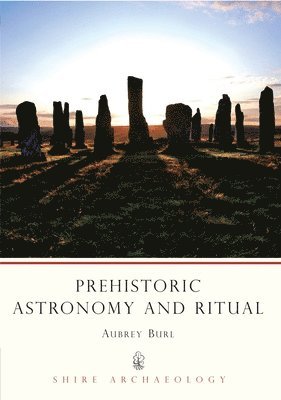
Stonehenge was not an observatory used by druidical astronomer-priests. It was, instead, a monument in which the moon and the sun and the dead were joined together. In this book the author explains how people in the British Isles, four thousand or more years ago, identified life and death with the cycle of midwinter and midsummer and with the risings and settings of the sun and moon. This is why so many megalithic monuments have astronomical sightlines built into them. This book describes how astronomical customs developed in the British Isles. Unlike other works about 'megalithic astronomy' technical explanations about azimuths and declinations are kept to their simplest. The emphasis here is upon people rather than pertrubations and eclipses.
Courts of Love, Castles of Hate
Troubadours and Trobairitz in Southern France 1071-1321
Inbunden, Engelska, 2008
233 kr
Tillfälligt slut
The figure of the Troubadour combines the ideals of knighthood with the inspiration of the poet and musician and created a cultural explosion which influenced the whole course of Western art and civilisation. Burl traces the story from the birth of the first Troubadour in 1071 to the execution of the last Cathar Good Man in 1231 and the close of the distinctive southern French culture that had given rise to it. The tale incorporates the Crusades to the Holy Lands and the Albigensian Crusades through the Languedoc and the regular incursions from the English. In telling his story of the Troubadours and their song he brings to life the world of medieval Languedoc. The author is acknowledged as an authority on the Troubadours, one of the most evocative subjects in history.
888 kr
Skickas inom 5-8 vardagar
143 kr
Skickas inom 5-8 vardagar
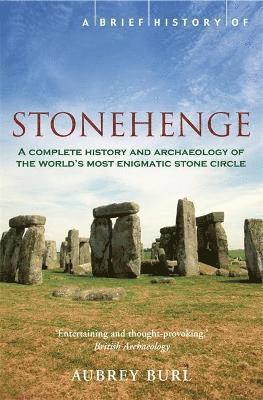
A concise history of the world's greatest stone circle, Stonehenge, by Britain's leading expert. Every aspect of Stonehenge is re-considered in Aubrey Burl's new analysis. He explains for the first time how the outlying Heel Stone long predates Stonehenge itself, serving as a trackway marker in the prehistoric Harroway. He uncovers new evidence that the Welsh bluestones were brought to Stonehenge by glaciation rather than by man. And he reveals just how far the design of Stonehenge was influenced by Breton styles and by Breton cults of the dead.Meticulously research sets the record straight on the matter of Stonehenge's astronomical alignments. Although the existence of a sightline to the midsummer sunrise is well known, the alignment and the viewing-position are different from popular belief. And the existence of an earlier alignment to the moon and a later one to the midwinter sunset has been largely unrealised.One puzzle remains. The site of Stonehenge lies at the heart of a vast six-mile wide graveyard, but before it was built there appears to have been a mysterious gap two miles across on that site. Burl argues that earlier totem-pole style constructions served a ceremonial purpose for the living -- to celebrate success in the hunt.