Aurobrata Ghosh - Böcker
Visar alla böcker från författaren Aurobrata Ghosh. Handla med fri frakt och snabb leverans.
3 produkter
3 produkter
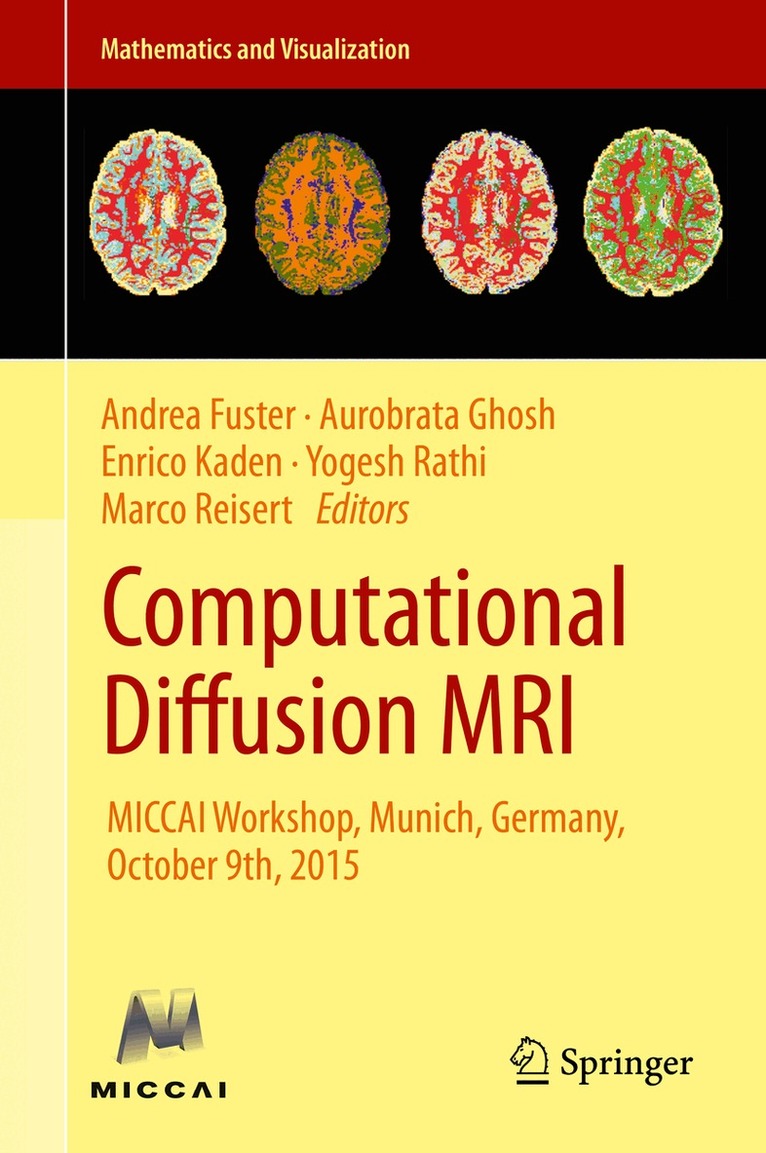
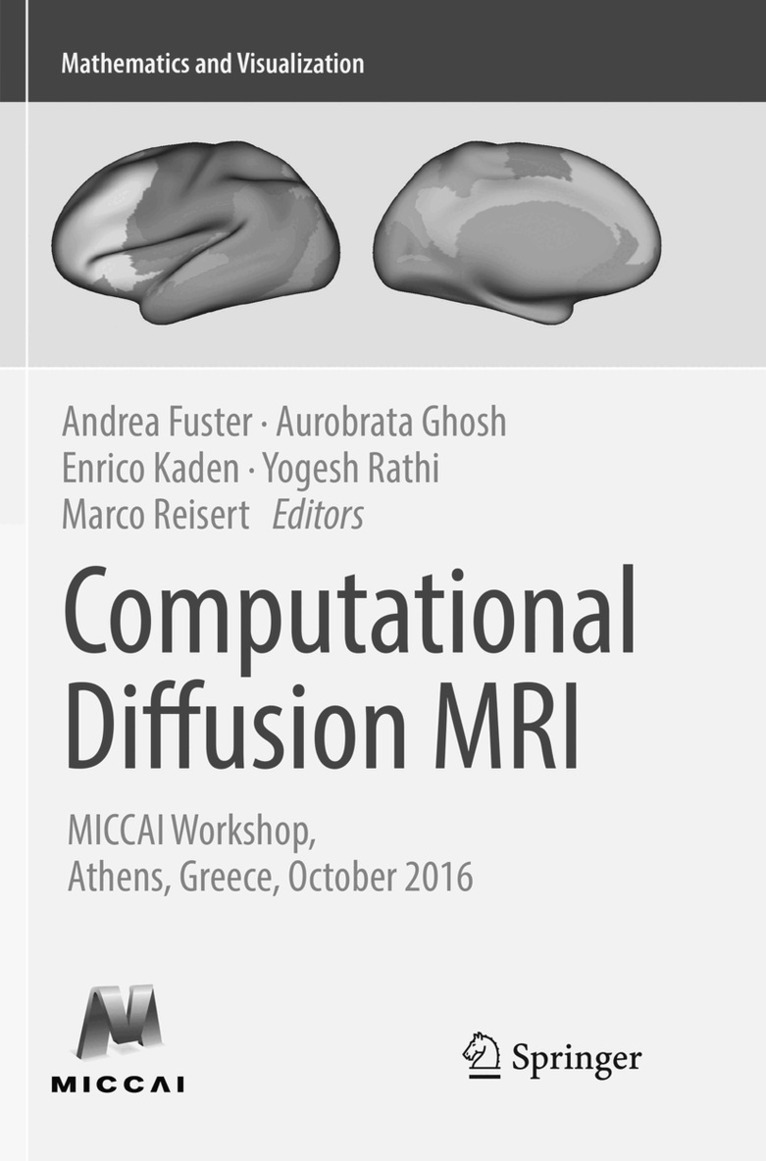
Computational Diffusion MRI
MICCAI Workshop, Munich, Germany, October 9th, 2015
Inbunden, Engelska, 2016
1 064 kr
Skickas inom 10-15 vardagar
TheseProceedings of the 2015 MICCAI Workshop “Computational Diffusion MRI” offer asnapshot of the current state of the art on a broad range of topics within thehighly active and growing field of diffusion MRI. The topics vary fromfundamental theoretical work on mathematical modeling, to the development andevaluation of robust algorithms, new computational methods applied to diffusionmagnetic resonance imaging data, and applications in neuroscientific studiesand clinical practice.Over thelast decade interest in diffusion MRI has exploded. The technique providesunique insights into the microstructure of living tissue and enables in-vivoconnectivity mapping of the brain. Computational techniques are key to thecontinued success and development of diffusion MRI and to its widespreadtransfer into clinical practice. New processing methods are essential for addressingissues at each stage of the diffusion MRI pipeline: acquisition, reconstruction,modeling and model fitting, image processing, fiber tracking, connectivitymapping, visualization, group studies and inference.Thisvolume, which includes both careful mathematical derivations and a wealth ofrich, full-color visualizations and biologically or clinically relevantresults, offers a valuable starting point for anyone interested in learningabout computational diffusion MRI and mathematical methods for mapping brainconnectivity, as well as new perspectives and insights on current researchchallenges for those currently working in the field. It will be of interest toresearchers and practitioners in the fields of computer science, MR physics,and applied mathematics.
1 095 kr
Skickas inom 10-15 vardagar
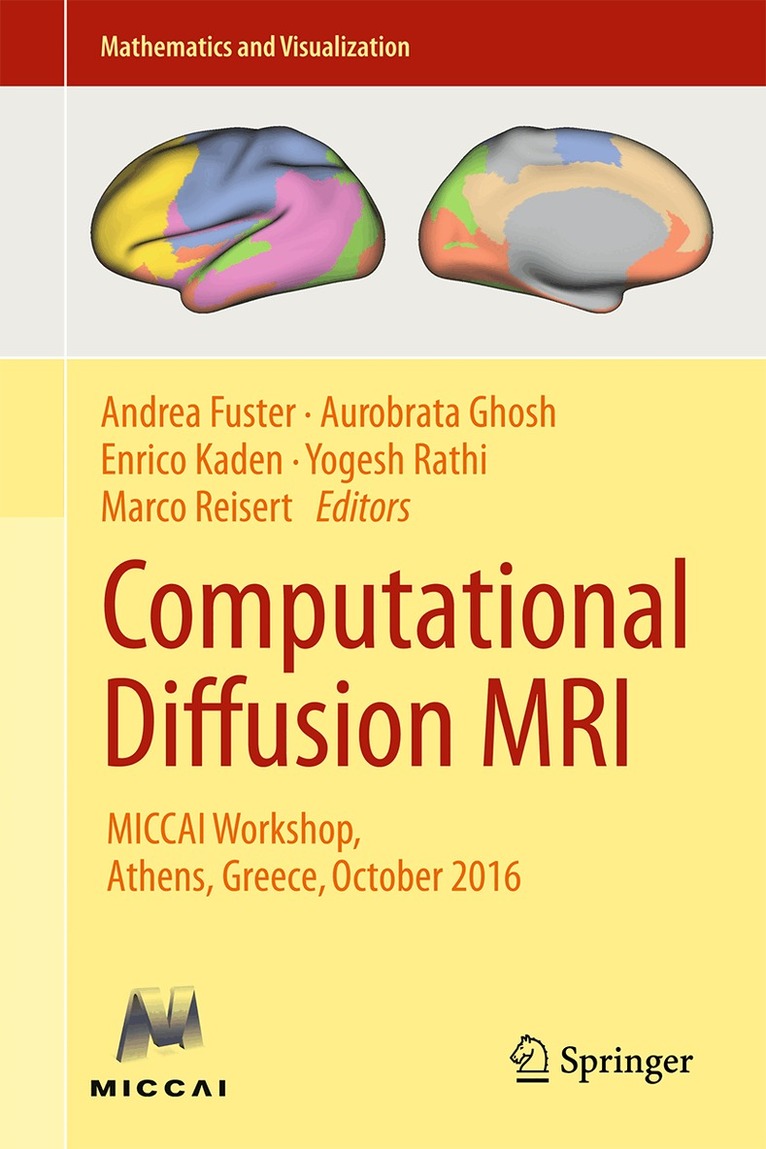
This volume offers a valuable starting point for anyone interested in learning computational diffusion MRI and mathematical methods for brain connectivity, while also sharing new perspectives and insights on the latest research challenges for those currently working in the field.Over the last decade, interest in diffusion MRI has virtually exploded. The technique provides unique insights into the microstructure of living tissue and enables in-vivo connectivity mapping of the brain. Computational techniques are key to the continued success and development of diffusion MRI and to its widespread transfer into the clinic, while new processing methods are essential to addressing issues at each stage of the diffusion MRI pipeline: acquisition, reconstruction, modeling and model fitting, image processing, fiber tracking, connectivity mapping, visualization, group studies and inference.These papers from the 2016 MICCAI Workshop “Computational Diffusion MRI” – which was intended to provide a snapshot of the latest developments within the highly active and growing field of diffusion MR – cover a wide range of topics, from fundamental theoretical work on mathematical modeling, to the development and evaluation of robust algorithms and applications in neuroscientific studies and clinical practice. The contributions include rigorous mathematical derivations, a wealth of rich, full-color visualizations, and biologically or clinically relevant results. As such, they will be of interest to researchers and practitioners in the fields of computer science, MR physics, and applied mathematics.
1 409 kr
Skickas inom 5-8 vardagar
This volume offers a valuable starting point for anyone interested in learning computational diffusion MRI and mathematical methods for brain connectivity, while also sharing new perspectives and insights on the latest research challenges for those currently working in the field.Over the last decade, interest in diffusion MRI has virtually exploded. The technique provides unique insights into the microstructure of living tissue and enables in-vivo connectivity mapping of the brain. Computational techniques are key to the continued success and development of diffusion MRI and to its widespread transfer into the clinic, while new processing methods are essential to addressing issues at each stage of the diffusion MRI pipeline: acquisition, reconstruction, modeling and model fitting, image processing, fiber tracking, connectivity mapping, visualization, group studies and inference.These papers from the 2016 MICCAI Workshop “Computational Diffusion MRI” – which was intended to provide a snapshot of the latest developments within the highly active and growing field of diffusion MR – cover a wide range of topics, from fundamental theoretical work on mathematical modeling, to the development and evaluation of robust algorithms and applications in neuroscientific studies and clinical practice. The contributions include rigorous mathematical derivations, a wealth of rich, full-color visualizations, and biologically or clinically relevant results. As such, they will be of interest to researchers and practitioners in the fields of computer science, MR physics, and applied mathematics.