Aurora Nogales – författare
Visar alla böcker från författaren Aurora Nogales. Handla med fri frakt och snabb leverans.
6 produkter
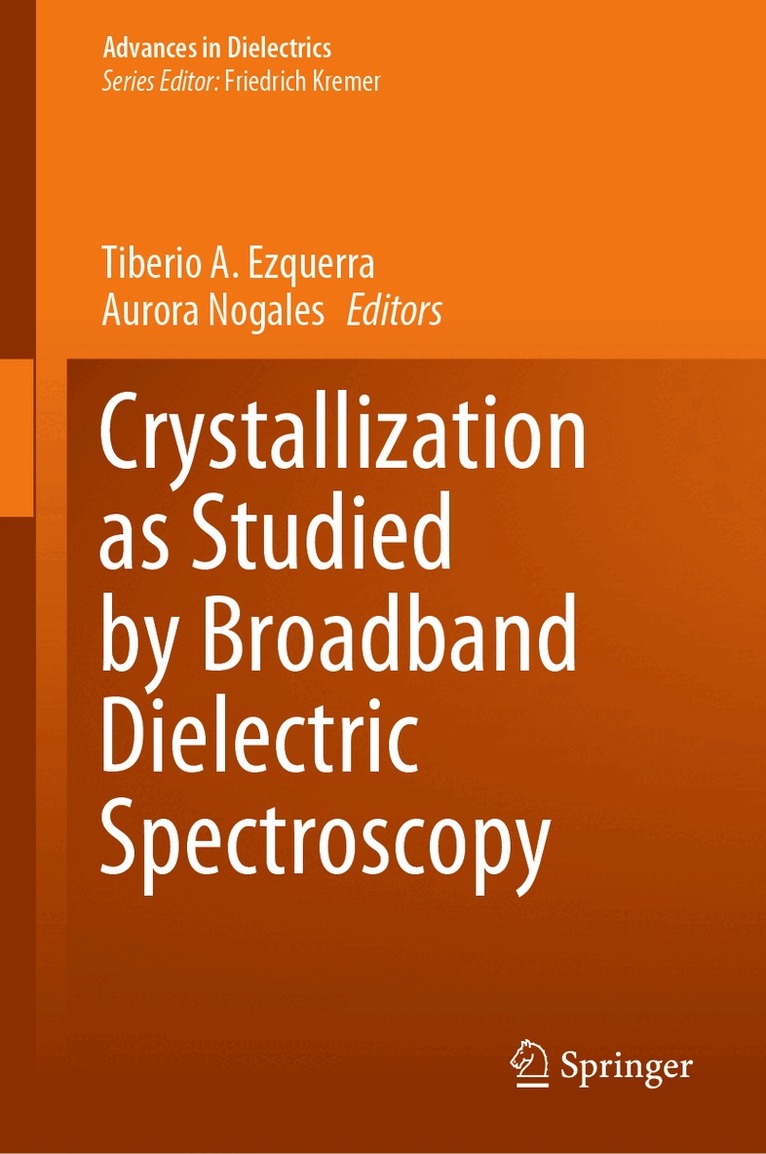
Crystallization as Studied by Broadband Dielectric Spectroscopy
Av Tiberio A. Ezquerra, Aurora Nogales
Inbunden, 2020
1098 kr
Lägg i varukorg
This book presents new approaches that offer a better characterization of the interrelationship between crystalline and amorphous phases. In recent years, the use of dielectric spectroscopy has significantly improved our understanding of crystallization. The combination of modern scattering …
Crystallization as Studied by Broadband Dielectric Spectroscopy
Av Aurora Nogales, Tiberio A. Ezquerra
E-bok, 2020
1459 kr
Lägg i varukorg
This book presents new approaches that offer a better characterization of the interrelationship between crystalline and amorphous phases. In recent years, the use of dielectric spectroscopy has significantly improved our understanding of crystallization. The combination of modern scattering …
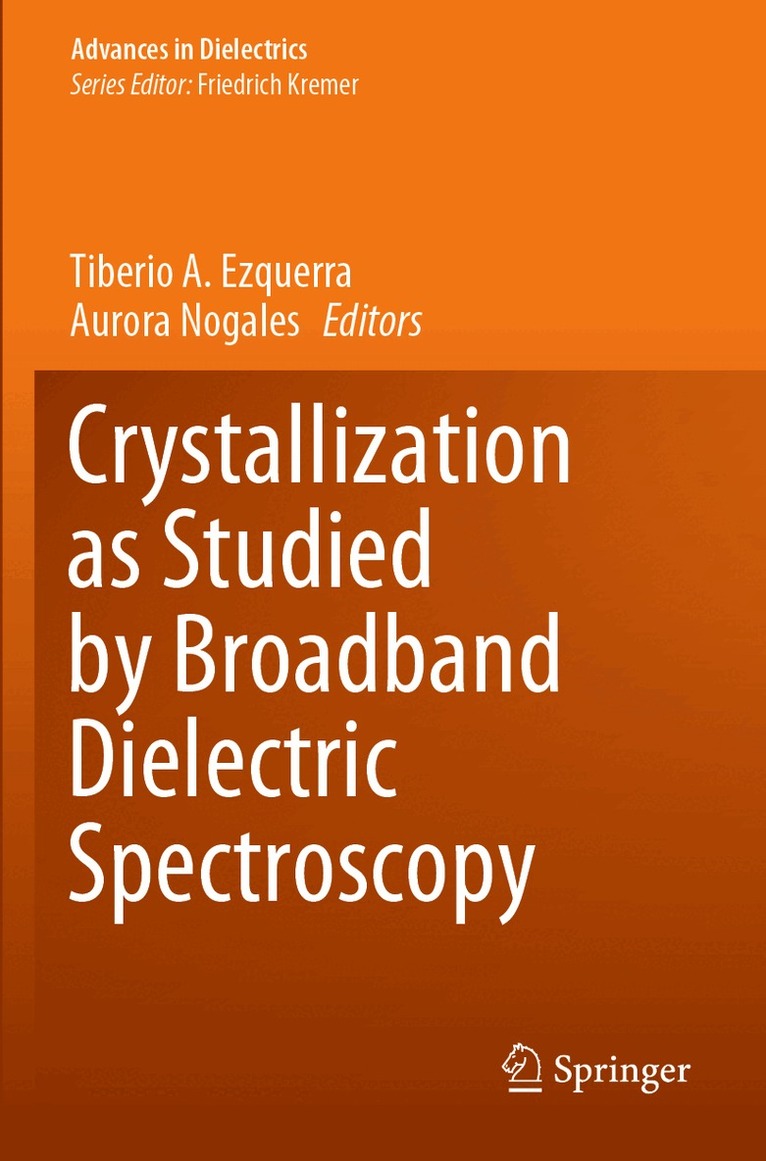
Crystallization as Studied by Broadband Dielectric Spectroscopy
Av Tiberio A. Ezquerra, Aurora Nogales
Häftad, 2021
1098 kr
Lägg i varukorg
This book presents new approaches that offer a better characterization of the interrelationship between crystalline and amorphous phases. In recent years, the use of dielectric spectroscopy has significantly improved our understanding of crystallization. The combination of modern scattering …
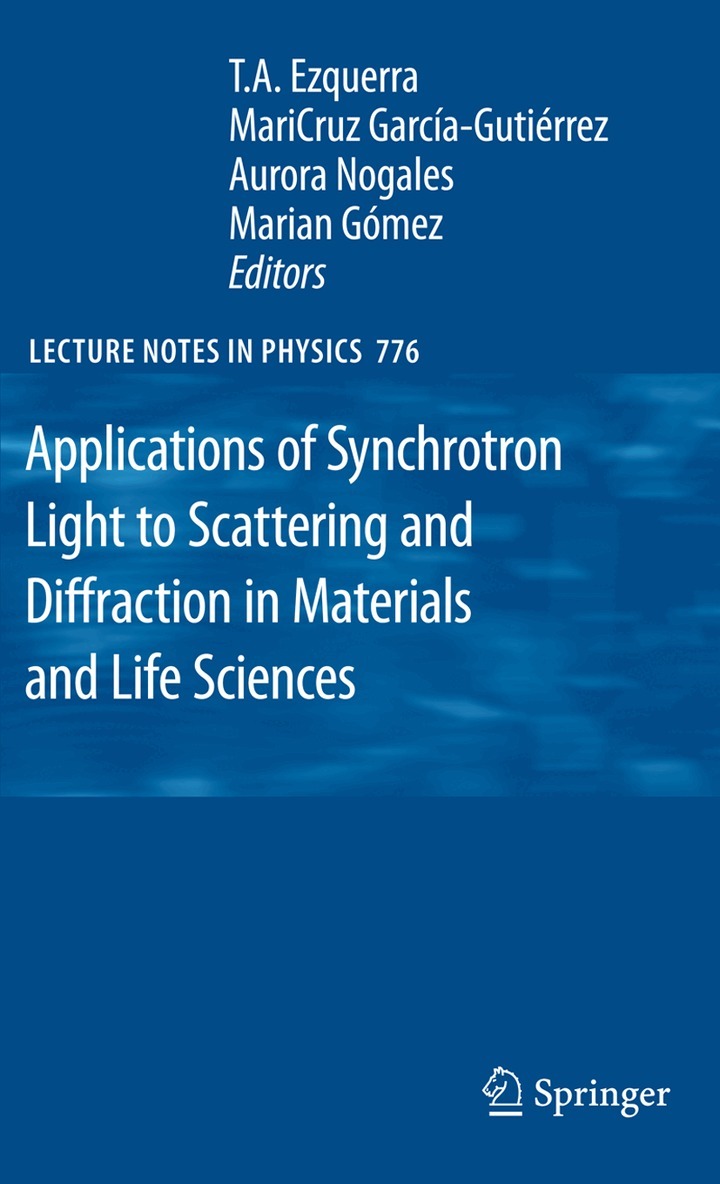
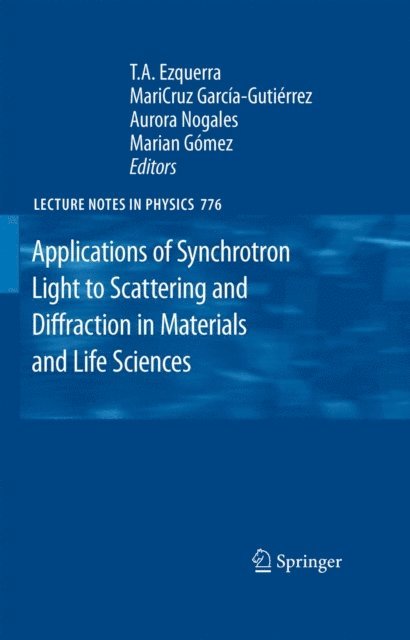
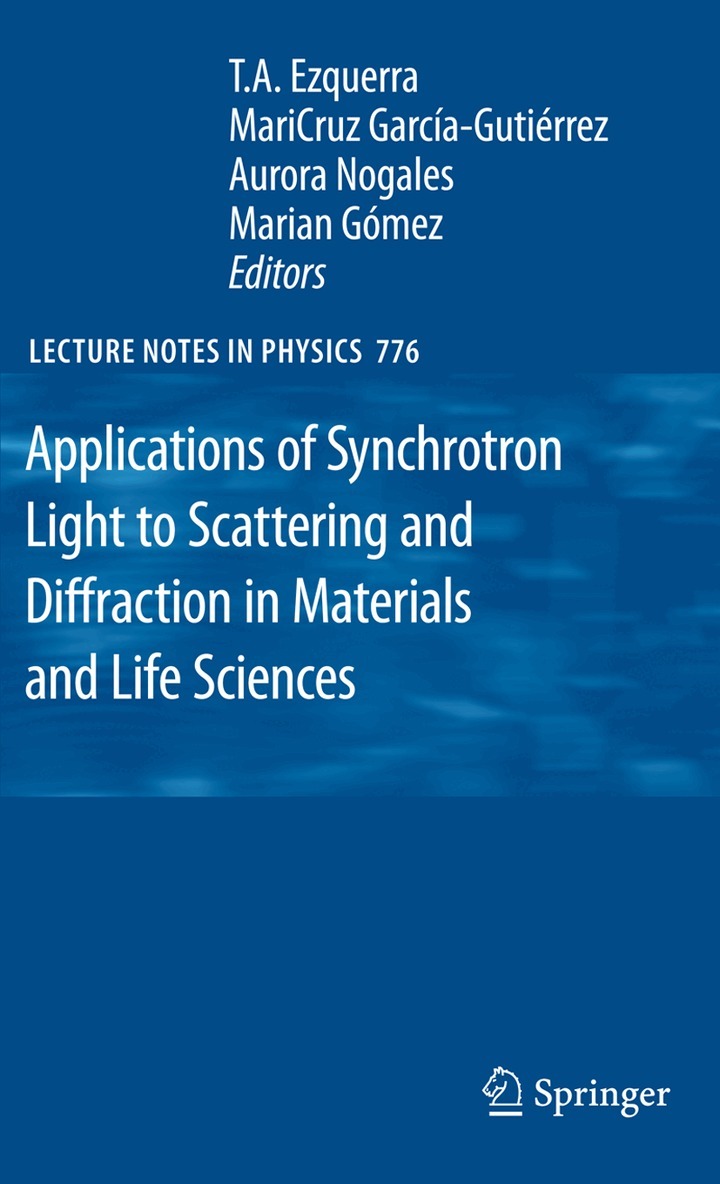
Applications of Synchrotron Light to Scattering and Diffraction in Materials and Life Sciences
Av T.A. Ezquerra, Mari Cruz Garcia-Gutierrez m. fl.
Inbunden, 2009
551 kr
Lägg i varukorg
In a ?rst approximation, certainly rough, one can de?ne as non-crystalline materials those which are neither single-crystals nor poly-crystals. Within this category, we canincludedisorderedsolids,softcondensed matter,andlivesystemsamong others. Contrary to crystals, non-crystalline materials have …
Applications of Synchrotron Light to Scattering and Diffraction in Materials and Life Sciences
Av Marian Gomez, Aurora Nogales m. fl.
E-bok, 2009
718 kr
Lägg i varukorg
In a ?rst approximation, certainly rough, one can de?ne as non-crystalline materials those which are neither single-crystals nor poly-crystals. Within this category, we canincludedisorderedsolids,softcondensed matter,andlivesystemsamong others. Contrary to crystals, non-crystalline materials have …
Applications of Synchrotron Light to Scattering and Diffraction in Materials and Life Sciences
Av T.A. Ezquerra, Mari Cruz Garcia-Gutierrez m. fl.
Häftad, 2010
551 kr
Lägg i varukorg
In a ?rst approximation, certainly rough, one can de?ne as non-crystalline materials those which are neither single-crystals nor poly-crystals. Within this category, we canincludedisorderedsolids,softcondensed matter,andlivesystemsamong others. Contrary to crystals, non-crystalline materials have …