Austin D. Sarat – författare
Visar alla böcker från författaren Austin D. Sarat. Handla med fri frakt och snabb leverans.
5 produkter
Cultural Analysis, Cultural Studies, and the Law
Moving Beyond Legal Realism
Av Austin D. Sarat, Jonathan Simon
Häftad, 2003
384 kr
Lägg i varukorg
Cultural Analysis, Cultural Studies, and the Law is a field-defining collection of work at the intersection of law, cultural analysis and cultural studies. Over the past few decades the marked turn toward claims and policy arguments based on cultural identity-such as ethnicity, race, or …
Cultural Analysis, Cultural Studies, and the Law
Moving Beyond Legal Realism
Av Jonathan Simon, Austin D. Sarat
E-bok, 2003
599 kr
Lägg i varukorg
Cultural Analysis, Cultural Studies, and the Law is a field-defining collection of work at the intersection of law, cultural analysis and cultural studies. Over the past few decades the marked turn toward claims and policy arguments based on cultural identity—such as ethnicity, race, or …
Elgar Companion to Capital Punishment and Society
Av Benjamin Fleury-Steiner, Austin D. Sarat
Inbunden, 2024
3395 kr
Lägg i varukorg
The Elgar Companion to Capital Punishment and Society presents a multidisciplinary overview of capital punishment’s influences, processes and outcomes across society. A global range of philosophers, social scientists, legal experts, political theorists and historians critically analyse the …
Elgar Companion to Capital Punishment and Society
Av Austin D. Sarat, Benjamin Fleury-Steiner
E-bok, 2024
810 kr
Lägg i varukorg
The Elgar Companion to Capital Punishment and Society presents a multidisciplinary overview of capital punishment’s influences, processes and outcomes across society. A global range of philosophers, social scientists, legal experts, political theorists and historians critically analyse the …
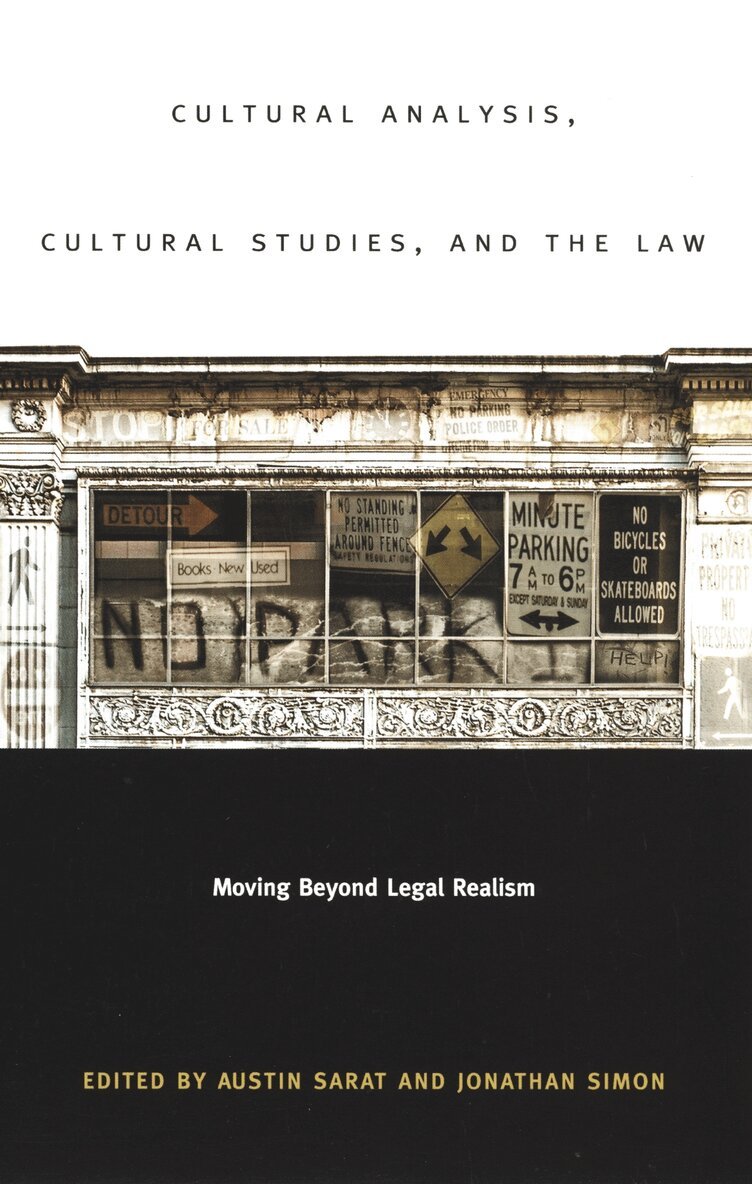
Cultural Analysis, Cultural Studies, and the Law
Moving Beyond Legal Realism
Av Austin D. Sarat, Jonathan Simon
Inbunden, 2003
1216 kr
Tillfälligt slut
Cultural Analysis, Cultural Studies, and the Law is a field-defining collection of work at the intersection of law, cultural analysis and cultural studies. Over the past few decades the marked turn toward claims and policy arguments based on cultural identity-such as ethnicity, race, or …