Avi Astor – författare
Visar alla böcker från författaren Avi Astor. Handla med fri frakt och snabb leverans.
2 produkter
2 produkter
Inbunden, Engelska, 2017
1 825 kr
Skickas inom 5-8 vardagar
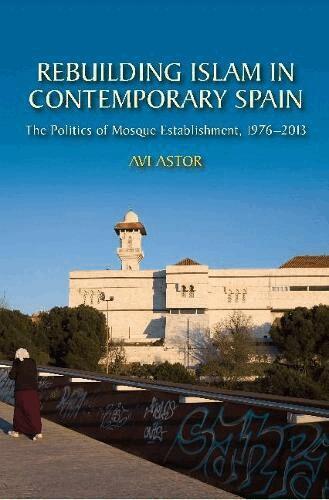
Following Spain's democratic transition during the late 1970s, political and business elites strategically exploited Spain's rich Islamic heritage in order to further projects of national redefinition, tourist promotion, and urban revitalisation. Large and ornate mosques were built in several Spanish regions, and the State granted Muslim communities an extensive array of rights and privileges that was arguably without parallel in Europe. Toward the onset of the 21st century, however, tensions surrounding Islam's growing presence in Spain became increasingly common, especially in the northeastern region of Catalonia. These tensions centered largely around the presence, or proposed establishment, of mosques in Barcelona and its greater metropolitan area. This book examines how Islam went from being an aspect of Spain's national heritage to be recovered and commemorated to a pressing social problem to be managed and controlled. It traces the events and developments that gave rise to this transformation, the diverse actors involved in the process, and the manner in which disputes over Muslim incorporation have become entangled with deeply-divisive debates over church-state relations and territorial autonomy. The core of the book centres on the shifting political and social dynamics surrounding the establishment of mosques, and the question of why anti-mosque mobilisations have been more prevalent and intense in Catalonia than other Spanish regions.
E-bok
Spanska, 2015209 kr
Läs direkt efter köp
El paradigma de la interculturalidad se encuentra en un punto clave en la agenda política local. Los autores que contribuyen en este volumen parten de la premisa que la interculturalidad es un conjunto de políticas impulsadas por una idea básica: que la interacción entre personas de diferentes orígenes (incluidos los inmigrantes y los ciudadanos) importa, y que este hecho ha sido obviado en las políticas multiculturales. Este volumen se adentra en este debate internacional desde el análisis de nuestra realidad urbana más inmediata. El objetivo es ofrecer a través de los diferentes casos empíricos y teorizaciones fundamentales, unas contribuciones al debate incipiente compartiendo un marco de reflexión (espacio público intercultural), un enfoque basado en las condiciones que faciliten las relaciones interpersonales, y la perspectiva de que la estrategia de interculturalidad es básicamente una política de proximidad. Sin duda este libro será útil, por un lado, para los políticos y para aquellos que gestionan ciudades diversas, y por el otro, para los investigadores y estudiosos de la diversidad y de la inmigración en nuestro país.