Aviezer Tucker - Böcker
Visar alla böcker från författaren Aviezer Tucker. Handla med fri frakt och snabb leverans.
15 produkter
15 produkter
560 kr
Skickas inom 7-10 vardagar
How do historians, comparative linguists, biblical and textual critics and evolutionary biologists establish beliefs about the past? How do they know the past? This book presents a philosophical analysis of the disciplines that offer scientific knowledge of the past. Using the analytic tools of contemporary epistemology and philosophy of science the book covers such topics as evidence, theory, methodology, explanation, determination and underdetermination, coincidence, contingency and counterfactuals in historiography. Aviezer Tucker's central claim is that historiography as a scientific discipline should be thought of as an effort to explain the evidence of past events. He also emphasizes the similarity between historiographic methodology to Darwinian evolutionary biology. This is an important, fresh approach to historiography and will be read by philosophers, historians and social scientists interested in the methodological foundations of their disciplines.
1 245 kr
Skickas inom 7-10 vardagar
How do historians, comparative linguists, biblical and textual critics and evolutionary biologists establish beliefs about the past? How do they know the past? This book presents a philosophical analysis of the disciplines that offer scientific knowledge of the past. Using the analytic tools of contemporary epistemology and philosophy of science the book covers such topics as evidence, theory, methodology, explanation, determination and underdetermination, coincidence, contingency and counterfactuals in historiography. Aviezer Tucker's central claim is that historiography as a scientific discipline should be thought of as an effort to explain the evidence of past events. He also emphasizes the similarity between historiographic methodology to Darwinian evolutionary biology. This is an important, fresh approach to historiography and will be read by philosophers, historians and social scientists interested in the methodological foundations of their disciplines.
698 kr
Skickas inom 10-15 vardagar
Panarchy is a normative political meta-theory that advocates non-territorial states founded on actual social contracts that are explicitly negotiated and signed between states and their prospective citizens. The explicit social contract, or a constitution, sets the terms under which a state may use coercion against its citizens and the conditions under which the contract may be annulled, revised, rescinded, or otherwise exited from. Panarchy does not advocate any particular model of the state or social justice, but intends to encourage political variety, innovation, experimentation, and choice. With its emphasis on explicit social contracts, Panarchy offers an interesting variation on traditional social contract theories. Today, Panarchist political thought is particularly relevant and interesting in the context of globalization, increased international migration, the weakening of national sovereignty, the rise of the internet "cloud" as a non-territorial locus of political and protopolitical social networks that are not geographic, the invention of cryptocurrencies that may replace national currencies, and the rise of urban centers where people of many different political identities live and work together. This is the first volume to bring together key philosophically and politically interesting yet often overlooked Panarchist texts. From the first published translation of de Puydt seminal 1860 article to contemporary Silicon Valley political theory, the volume includes Panarchist texts from different eras, cultures and geographical regions. The amassed wealth of theoretical insight enables readers to compare different texts in this tradition of political thought and distinguish different streams and varieties within this political tradition, in comparison with Cosmopolitanism, Contractarianism, and Anarchism.
700 kr
Skickas inom 7-10 vardagar
A critical study of the philosophy and political practice of the Czech dissident movement Charter 77. Aviezer Tucker examines how the political philosophy of Jan Patocka (1907-1977), founder of Charter 77, influenced the thinking and political leadership of Vaclav Havel as dissident and president. Presents the first serious treatment of Havel as philosopher and Patocka as a political thinker. Through the Charter 77 dissident movement in Czechoslovakia, opponents of communism based their civil struggle for human rights on philosophic foundations, and members of the Charter 77 later led the Velvet Revolution. After Patocka's self-sacrifice in 1977, Vaclav Havel emerged a strong philosophical and political force, and he continued to apply Patocka's philosophy in order to understand the human condition under late communism and the meaning of dissidence. However, the political/philosophical orientation of the Charter 77 movement failed to provide President Havel with an adequate basis for comprehending and responding to the extraordinary political and economic problems of the postcommunist period.In his discussion of Havel's presidency and the eventual corruption of the Velvet Revolution, Tucker demonstrates that the weaknesses in Charter 77 member's understanding of modernity, which did not matter while they were dissidents, seriously harmed their ability to function in a modern democratic system. Within this context, Tucker also examines Havel's recent attempt to topple the democratic but corrupt government in 1997-1998. The Philosophy and Politics of Czech Dissidence from Patocka to Havel will be of interest to students of philosophy and politics, scholars and students of Slavic studies, and historians, as well as anyone fascinated by the nature of dissidence.
234 kr
Skickas inom 7-10 vardagar
Historiographic reasoning from evidentiary inputs is sui generis. Historiography is neither empirical, nor self-knowledge, nor a genre of fiction or ideology. Historiographic reasoning is irreducible to general scientific or social science reasoning. The book applies Bayesian insights to explicate historiographic reasoning as probable. It distinguishes epistemic transmission of knowledge from evidence from the generation of detailed historiographic knowledge from multiple coherent and independent evidentiary inputs in three modular stages. A history of historiographic reasoning since the late 18th century demonstrates that there was a historiographic scientific revolution across the historical sciences in the late 18th and early 19th centuries. The underdetermination of historiography by the evidence, counterfactual historiographic reasoning, and false reasoning and other fallacies are further explained and discussed in terms of the probabilistic relations between the evidence and historiography.
753 kr
Skickas inom 7-10 vardagar
Historiographic reasoning from evidentiary inputs is sui generis. Historiography is neither empirical, nor self-knowledge, nor a genre of fiction or ideology. Historiographic reasoning is irreducible to general scientific or social science reasoning. The book applies Bayesian insights to explicate historiographic reasoning as probable. It distinguishes epistemic transmission of knowledge from evidence from the generation of detailed historiographic knowledge from multiple coherent and independent evidentiary inputs in three modular stages. A history of historiographic reasoning since the late 18th century demonstrates that there was a historiographic scientific revolution across the historical sciences in the late 18th and early 19th centuries. The underdetermination of historiography by the evidence, counterfactual historiographic reasoning, and false reasoning and other fallacies are further explained and discussed in terms of the probabilistic relations between the evidence and historiography.
1 245 kr
Skickas inom 7-10 vardagar
The first political theory of post-Communism examines its implications for understanding liberty, rights, transitional justice, property rights, privatization, rule of law, centrally planned public institutions, and the legacies of totalitarian thought in language and discourse. The transition to post-totalitarianism was the spontaneous adjustment of the rights of the late-totalitarian elite to its interest. Post-totalitarian governments faced severe scarcity in the supply of justice. Rough justice punished the perpetrators and compensated their victims. Historical theories of property rights became radical, and consequentialist theories, conservative. Totalitarianism in Europe disintegrated but did not end. The legacies of totalitarianism in higher education met New Public Management, totalitarian central planning under a new label. Totalitarianism divorced language from reality through the use of dialectics that identified opposites and the use of logical fallacies to argue for ideological conclusions. This book illustrates these legacies in the writings of Habermas, Derrida, and Žižek about democracy, personal responsibility, dissidence, and totalitarianism.
323 kr
Skickas inom 7-10 vardagar
The first political theory of post-Communism examines its implications for understanding liberty, rights, transitional justice, property rights, privatization, rule of law, centrally planned public institutions, and the legacies of totalitarian thought in language and discourse. The transition to post-totalitarianism was the spontaneous adjustment of the rights of the late-totalitarian elite to its interest. Post-totalitarian governments faced severe scarcity in the supply of justice. Rough justice punished the perpetrators and compensated their victims. Historical theories of property rights became radical, and consequentialist theories, conservative. Totalitarianism in Europe disintegrated but did not end. The legacies of totalitarianism in higher education met New Public Management, totalitarian central planning under a new label. Totalitarianism divorced language from reality through the use of dialectics that identified opposites and the use of logical fallacies to argue for ideological conclusions. This book illustrates these legacies in the writings of Habermas, Derrida, and Žižek about democracy, personal responsibility, dissidence, and totalitarianism.
2 289 kr
Skickas inom 10-15 vardagar
Panarchy is a normative political meta-theory that advocates non-territorial states founded on actual social contracts that are explicitly negotiated and signed between states and their prospective citizens. The explicit social contract, or a constitution, sets the terms under which a state may use coercion against its citizens and the conditions under which the contract may be annulled, revised, rescinded, or otherwise exited from. Panarchy does not advocate any particular model of the state or social justice, but intends to encourage political variety, innovation, experimentation, and choice. With its emphasis on explicit social contracts, Panarchy offers an interesting variation on traditional social contract theories. Today, Panarchist political thought is particularly relevant and interesting in the context of globalization, increased international migration, the weakening of national sovereignty, the rise of the internet "cloud" as a non-territorial locus of political and protopolitical social networks that are not geographic, the invention of cryptocurrencies that may replace national currencies, and the rise of urban centers where people of many different political identities live and work together. This is the first volume to bring together key philosophically and politically interesting yet often overlooked Panarchist texts. From the first published translation of de Puydt seminal 1860 article to contemporary Silicon Valley political theory, the volume includes Panarchist texts from different eras, cultures and geographical regions. The amassed wealth of theoretical insight enables readers to compare different texts in this tradition of political thought and distinguish different streams and varieties within this political tradition, in comparison with Cosmopolitanism, Contractarianism, and Anarchism.
Bloomsbury Handbook of the Philosophy of the Historical Sciences and Big History
Inbunden, Engelska, 2025
1 703 kr
Skickas inom 10-15 vardagar
This handbook examines the philosophy of the historical sciences and their synthesis in concepts like Big or Deep History. Written by interdisciplinary philosophers, historians, and scientists, it acts as a valuable guide for anybody interested in scientific knowledge of the deep past, Big History, and the philosophy of science.The Bloomsbury Handbook of the Philosophy of the Historical Sciences and Big History is the first philosophical reference work to recognize that History is not what it used to be: the historical sciences, Deep History, Big History, and even the history of the Anthropocene have now expanded the scope of historiography beyond that of literate civilizations to cover all scientific inferences about the past, from the Big Bang through the history of the planet and the history of life to the history of humanity. Different views about the scope of History have ontological, epistemic, methodological, explanatory, ethical, and educational reasons and implications. The historical sciences and the knowledge they have generated are founded on theories of knowledge of the past, epistemology of history. The contributions in this book consider whether there are common epistemic properties to all the historical sciences that distinguish them from non-historical or theoretical sciences.The first part of the handbook examines the recent expansion of the scope of the historical sciences in Big History, natural history, global history, and environmental history, and older broader concepts of history like universal history and philosophy of history. The second part of the handbook addresses the ontology and epistemology of the past, including the basic concepts of the historical sciences such as origins, the end of history, determination and underdetermination, contingency and necessity, historical predictions and counterfactuals, and historical pseudoscience. The third part examines the philosophies of the special historical sciences, historical linguistics, textual criticism, geology, evolutionary biology, systematics, archaeology, cosmology, history of the environment, and most significantly, their integrations and combinations – for example, how genetics, archaeology, and historical linguistics have generated a whole new knowledge of deep human history.This collection offers an overview of what the philosophy of the historical sciences is and is becoming for students and experts alike.
Del 46 - Blackwell Companions to Philosophy
Companion to the Philosophy of History and Historiography
Inbunden, Engelska, 2008
2 407 kr
Skickas inom 11-20 vardagar
A COMPANION TO THE PHILOSOPHY OF HISTORY AND HISTORIOGRAPHY The philosophy of historiography examines our representations and knowledge of the past, the relation between evidence, inference, explanation and narrative. Do we possess knowledge of the past? Do we just have probable beliefs about the past, or is historiography a piece of convincing fiction? The philosophy of history is the direct philosophical examination of history, whether it is necessary or contingent, whether it has a direction or whether it is coincidental, and if it has a direction, what it is, and how and why it is unfolding? The fifty entries in this Companion cover the main issues in the philosophies of historiography and history, including natural history and the practices of historians. Written by an international and multi-disciplinary group of experts, these clearly written entries present a cutting-edge updated picture of current research in the philosophies of historiography and history. This Companion will be of interest to philosophers, historians, natural historians, and social scientists.
Del 92 - Blackwell Companions to Philosophy
Companion to the Philosophy of History and Historiography
Häftad, Engelska, 2010
535 kr
Skickas inom 7-10 vardagar
A COMPANION TO THE PHILOSOPHY OF HISTORY AND HISTORIOGRAPHY The philosophy of historiography examines our representations and knowledge of the past, the relation between evidence, inference, explanation and narrative. Do we possess knowledge of the past? Do we just have probable beliefs about the past, or is historiography a piece of convincing fiction? The philosophy of history is the direct philosophical examination of history, whether it is necessary or contingent, whether it has a direction or whether it is coincidental, and if it has a direction, what it is, and how and why it is unfolding? The fifty entries in this Companion cover the main issues in the philosophies of historiography and history, including natural history and the practices of historians. Written by an international and multi-disciplinary group of experts, these clearly written entries present a cutting-edge updated picture of current research in the philosophies of historiography and history. This Companion will be of interest to philosophers, historians, natural historians, and social scientists.
617 kr
Skickas inom 11-20 vardagar
It should not surprise anyone that democracies can become dangerously illiberal; indeed, it was one of the classical critiques of ancient democracies. Is the contemporary backlash against liberal democracy merely the same old story, or are we witnessing something unprecedented? In this witty and engaging book, Aviezer Tucker argues that the contemporary revival of authoritarian populism combines the historically familiar with new technologies to produce a highly unstable and contagious new synthesis that threatens basic liberal norms, from freedom of the press to independent judiciaries. He examines how the economic crisis blocked social mobility and thereby awakened the dark, dormant political passions exploited by demagogues such as Orban and Trump. He argues that this slide towards ‘neo-illiberal democracy’ can be countered if we hard-headedly restore a ‘liberalism without nostalgia’ which institutes policies that can dampen down populist passions and strengthen liberal institutional barriers against them. Readers interested in current affairs, social science, history, and political and social theory will find Aviezer Tucker’s original theoretical and historical analysis incisive, innovative, and entertaining.
204 kr
Skickas inom 7-10 vardagar
It should not surprise anyone that democracies can become dangerously illiberal; indeed, it was one of the classical critiques of ancient democracies. Is the contemporary backlash against liberal democracy merely the same old story, or are we witnessing something unprecedented? In this witty and engaging book, Aviezer Tucker argues that the contemporary revival of authoritarian populism combines the historically familiar with new technologies to produce a highly unstable and contagious new synthesis that threatens basic liberal norms, from freedom of the press to independent judiciaries. He examines how the economic crisis blocked social mobility and thereby awakened the dark, dormant political passions exploited by demagogues such as Orban and Trump. He argues that this slide towards ‘neo-illiberal democracy’ can be countered if we hard-headedly restore a ‘liberalism without nostalgia’ which institutes policies that can dampen down populist passions and strengthen liberal institutional barriers against them. Readers interested in current affairs, social science, history, and political and social theory will find Aviezer Tucker’s original theoretical and historical analysis incisive, innovative, and entertaining.
263 kr
Skickas inom 5-8 vardagar
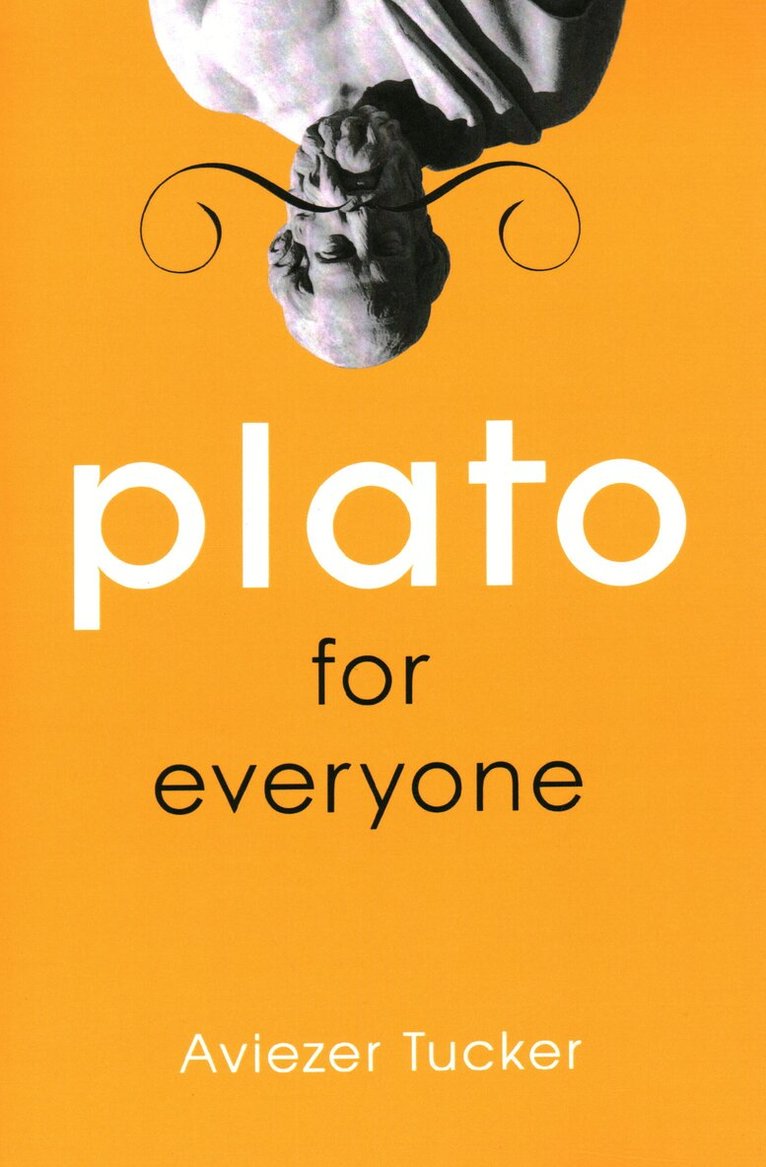
Plato's dialogues, featuring his famous mentor Socrates, often prove difficult to understand for many contemporary readers. Students today miss the ancient cultural and historical references, and they have trouble following Plato's arguments as presented in dialogue format. This book remedies these problems by recasting five of Plato's dialogues into accessible and entertaining short stories in modern settings. The Euthyphro becomes a tale about a televangelist bent on disowning his son at a denominational boarding school in rural Virginia; the Crito - retitled "What do you have to do for your country?" - is focused on the question of whether a US citizen who considers a current war to be unjust should avoid a military draft by moving to Canada. In all of the stories (the Meno, the Statesman, and Phaedo are also included), the central character is Socrates, just as in the original dialogues, but here the maverick philosopher appears in twenty-first-century guise. The author, who has taught philosophy for many years, captures the tone, wit, and philosophical essence of Plato's dialogues in a modern English interpretation that is often amusing and fun to read. For instructors looking for an engaging way to interest undergraduates in Plato and for students who find the original works a bit daunting, this book offers an enlightening and enjoyable read.