Avijit Gupta - Böcker
Visar alla böcker från författaren Avijit Gupta. Handla med fri frakt och snabb leverans.
9 produkter
9 produkter
6 745 kr
Skickas inom 7-10 vardagar
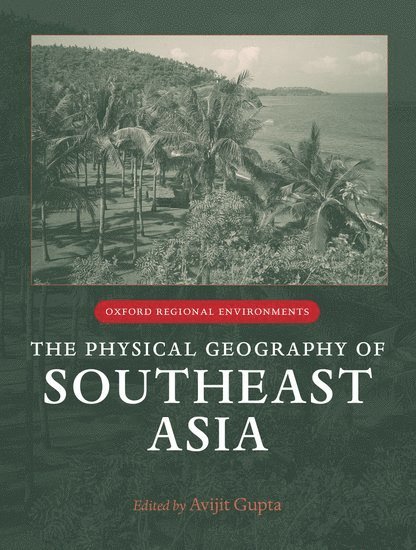
The Physical Geography of Southeast Asia examines the complex mosaic of physical environments which comprise Southeast Asia, and the current environmental problems and management practices which have arisen in this part of the world. The book is in three sections. The first section introduces the basic environmental components (geology, landforms, rivers, vegetation, and others) across the entire region. The second section discusses specific environments that are characteristic of this assemblage of continental and maritime landscapes (volcanic islands, coastal environment, granitic terrains, karst, etc.). The third and final section illustrates the ecological relationship between the environment and people (volcanic hazards, urban environment, coastal zone development, coral reefs, and others).The physical environment of Southeast Asia is examined at different levels, covering a world region that ranges from ancient, stable landmasses to dynamic, unstable plate boundaries, from aged, primary rainforests to brash, vibrant, resource-demanding built environments. Southeast Asia has been perceived as a laboratory for studying plate tectonics. It is an assemblage of large river basins, peninsulas and archipelagos, and seas surrounded by islands. It is an area of great physical variations where parts of the physical environment have been significantly degraded anthropogenically, following rapid population growth and development. In large parts of the region, the forms and processes on land and offshore should no longer be seen as entirely natural. As this book repeatedly illustrates, plate tectonics and people are both important contributors to the physical geography of Southeast Asia. The contributors to this volume are distinguished, scholarly, and have a long association with Southeast Asia. The chapters are not only skilfully built on state-of-the-art research findings but also include new material from the on-going research activities of the authors. The book goes beyond being the first comprehensive and detailed volume of the biophysical geography of Southeast Asia in that it also deals with the tropical environment and the relationship between environment and people in a rapidly developing world region.
348 kr
Skickas inom 10-15 vardagar
This comprehensive second edition provides an up-to-date introduction to the nature of ecological degradation in a world of dramatic environmental change.
498 kr
Skickas inom 10-15 vardagar
This comprehensive second edition provides an up-to-date introduction to the nature of ecological degradation in a world of dramatic environmental change.
2 608 kr
Tillfälligt slut
Del 4 - International Association of Geomorphologists
Varieties of Fluvial Form
Inbunden, Engelska, 1999
2 729 kr
Tillfälligt slut
This collection of papers is based largely on contributions by participants in a series of special sessions at the June 1995 South East Asia Conference of the International Association of Geomorphologists. The concept that draws these papers together is best explained in the following excerpt from the call for papers that was issued in advance of the conference: The purpose of this special session is to provide an opportunity for discussion of the diversity of fluvial forms that may arise in unusual settings These may include settings where external forcing factors exert a powerful influence precluding or modifying the type of equilibrium form that is expected to develop under quasi-stable conditions in an alluvial channel: for example, patterns of response to tectonic activity longitudinal variations in channel and floodplain form associated with spatially varying patterns of bedrock lithology or jointing arid region rivers with longitudinal discharge trends that are not mono-tonically increasing. Also of potential interest are morphological features forming under climatic/hydrologic regimes associated with monsoon, tropical wet, extremely arid or extremely cold environments; or patterns of vegetation distribution that exert a controlling influence on channel form. It is hoped that the papers contributed to this session will encompass a broad range of geographic as well as morphological diversity. The underlying premise was that the world s rivers encompass a wide range of influences and associated fluvial forms, but that the geomorphic literature traditionally has focused most intensively on a subset of those forms (mostly comprised of alluvial rivers from humid temperate, semiarid or proglacial environments), and may not treat a spectrum of morphological types that is proportionately representative of the rivers that actually exist on the earth s surface. Thus the intention of this volume is, first and foremost, to present an international set of case studies with a strong descriptive component, representing the diversity of fluvial forms. To quote Baker and Komatsu in the opening paper of this volume "excitement and pleasure in science derive not so much from achieving the final explanation as from discovering the fascinating range of new phenomena to be explained". It is our hope that readers of this volume will share some of that excitement and pleasure.
1 185 kr
Skickas inom 7-10 vardagar
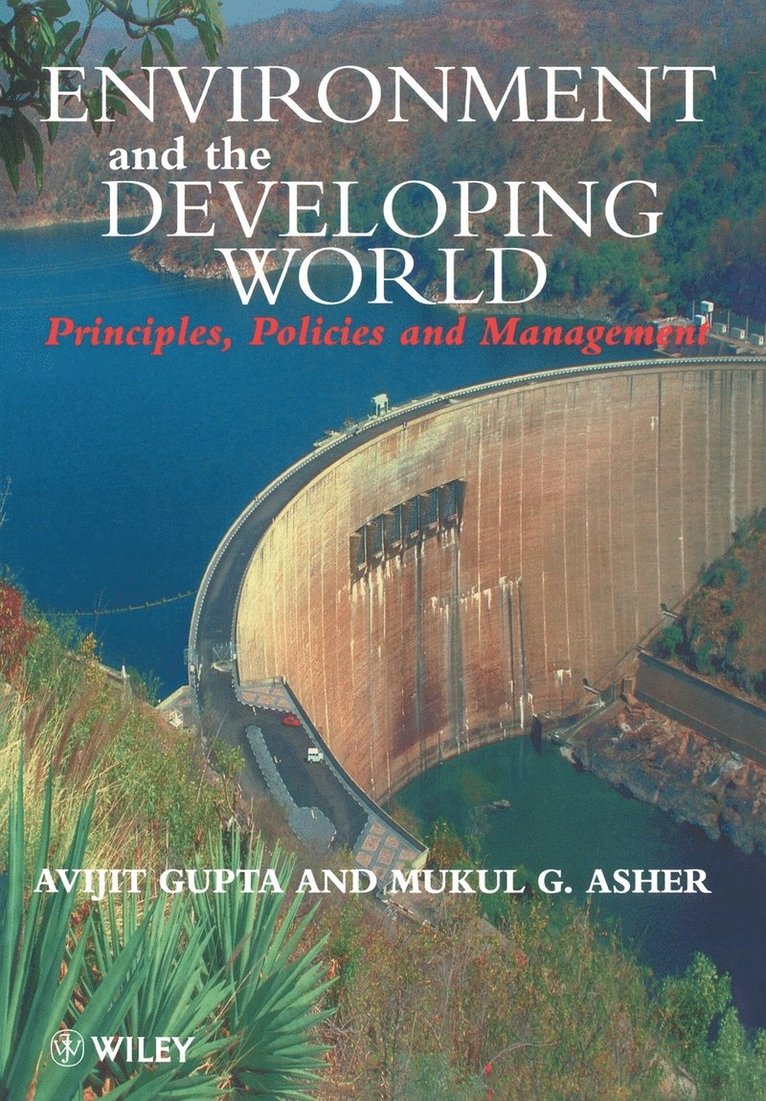
Environment and the Developing World brings together the various aspects of environmental studies and management (earth and natural sciences, engineering and economics) as they relate to the developing world. It discusses environmental issues as well as the techniques and infrastructure for their management at various levels: global, national and local. The examples range from global warming and ozone depletion to the management of water resources and indoor air pollution. The book stresses the interrelated and interdisciplinary nature of environment, discusses the concept of sustainable development, explores the role of non-governmental organisations, and evaluates the importance attributed by international and multilateral organisations to monitoring environmental aspects of development projects. It critically reviews various economic, social and regulatory policies which address environmental issues. The different disciplines of the two authors (a physical geographer and a public policy economist) help to maintain the balanced and interdisciplinary nature of the book. Written primarily for advanced undergraduates, this is a stimulating text for any environment related course. Written in simple language and avoiding unnecessary jargon the book explains clearly the technical aspects of environmental management. Profuse illustrations, a large number of examples from a range of geographical areas, boxed case studies and stimulating exercises make the book attractive and comprehensive. All these features make the book a unique teaching tool in environmental management in the developing world.
758 kr
Skickas inom 7-10 vardagar
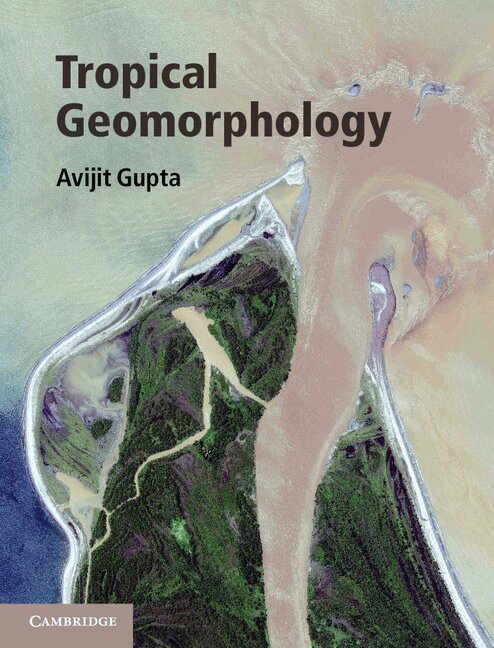
Although similar geomorphic processes take place in other regions, in the tropics these processes operate at different rates and with varying intensities. Tropical geomorphology therefore provides many new discoveries regarding geomorphic processes. This textbook describes both the humid and arid tropics. It provides thoroughly up-to-date concepts and relevant case studies, and emphasises the importance of geomorphology in the management and sustainable development of the tropical environment, including climate change scenarios. The text is supported by a large number of illustrations, including satellite images. Student exercises accompany each chapter. Tropical Geomorphology is an ideal textbook for any course on tropical geomorphology or the tropical environment, and is also invaluable as a reference text for researchers and environmental managers in the tropics.
393 kr
Skickas inom 7-10 vardagar
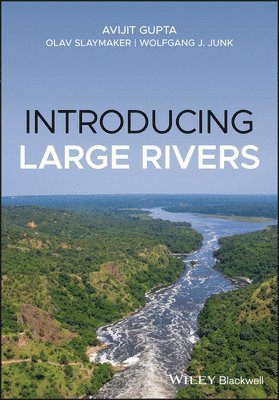
An accessible introduction to large rivers, including coverage of the geomorphology, hydrology, ecology, and environments of large river systemsThis indispensible book takes a structured and global approach to the subject of large rivers, covering geomorphology, hydrology, ecology, and anthropogenic environment. It offers a thorough foundation for readers who are new to the field and presents enlightening discussions about issues of management at the worldwide scale. The book also examines possible future adaptations that may come about due to climate change. The book has benefitted from contributions by Professor W.J. Junk on the ecology of floodplains and Professor Olav Slaymaker on the large arctic rivers.Introducing Large Rivers is presented in three parts. Part 1 provides an introduction to the world’s large rivers and their basins. It covers source, transfer, and storage of their water and sediment; Pleistocene inheritance; the ecology of channels and floodplains; deltas; and more. Several large rivers are discussed in the next part. These include the Amazon Mississippi, Nile, Ganga-Brahmaputra System, Mekong, and Yangtze. The last part examines changes in large rivers and our management of river systems. It studies anthropogenic alterations such as land use and deforestation in large river basins; structural control systems like dams and reservoirs on channels; and ecological changes. It finishes with chapters on the management of large rivers, covering both technical and political aspects, and the future of the world’s big river systems. Introducing Large Rivers is ideal as an introductory textbook on large rivers for future earth and environmental scientists and river managers. It will also benefit advanced undergraduate and graduate students studying geography, geology, ecology, and river management.
3 308 kr
Skickas inom 7-10 vardagar
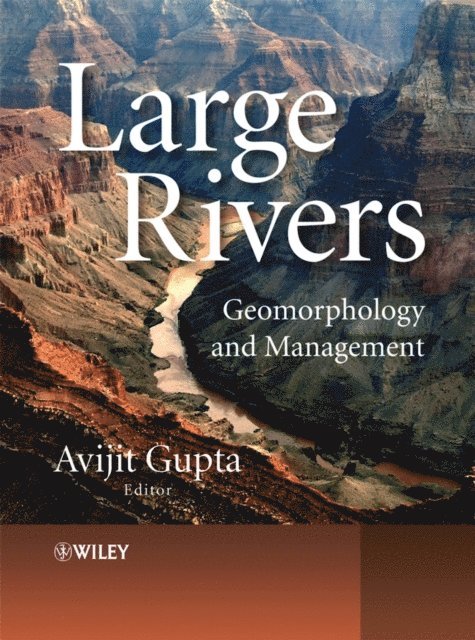
An updated treatment of management and geomorphology of large rivers around the world The newly revised Second Edition of Large Rivers: Geomorphology and Management delivers a thoroughly updated exploration of the form and function of major rivers. The book brings together a set of papers on the large rivers of the world, offering readers an insightful examination of a demanding subject. The new Second Edition of the book includes fully updated and revised chapters, as well as two entirely new chapters on the Ayeyarwady and the Arctic rivers. This fascinating volume describes the environmental requirements for creating and maintaining a major river system, case studies on over a dozen large rivers from different continents in a variety of physical environments, and the measurement and management of large rivers. Unmatched in scope, Large Rivers sheds light on a subject lacking in comprehensive study. Readers will benefit from the inclusion of: A thorough introduction to the geology of large river systems, hydrology and discharge, transcontinental moving and storage of sediment, and the greatest floods and largest riversAn exploration of the classification, architecture, and evolution of large-river deltasDiscussions of sedimentology and stratigraphy of large river deposits, including their recognition in the ancient record and the distinction from incised valley fillsAn examination of the effects of tectonism, climate change, and sea-level change on the form and behavior of the modern Amazon river and its floodplainMeasurement and management of large riversThe effect of climatic change on large riversPerfect for postgraduate students and researchers in fluvial geomorphology, hydrology, sedimentary geology, and river management, Large Rivers: Geomorphology and Management will also earn a place in the libraries of engineers and environmental consultants in the private and public sectors working on major rivers around the world.