Avishai Henik – författare
Visar alla böcker från författaren Avishai Henik. Handla med fri frakt och snabb leverans.
8 produkter
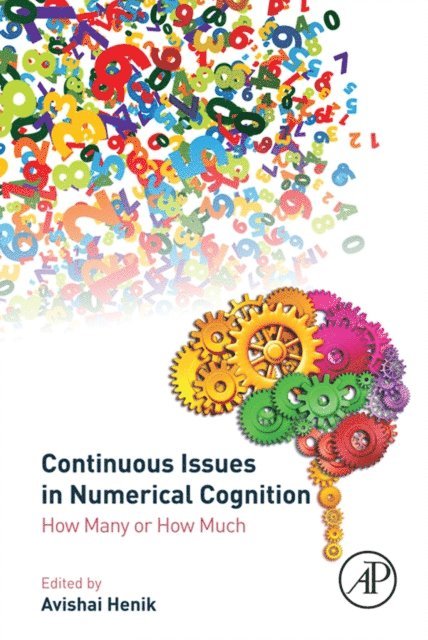
Continuous Issues in Numerical Cognition
How Many or How Much
Inbunden, 2016
1200 kr
Lägg i varukorg
Continuous Issues in Numerical Cognition: How Many or How Much re-examines the widely accepted view that there exists a core numerical system within human beings and an innate ability to perceive and count discrete quantities. This core knowledge involves the brain's intraparietal sulcus, and a …
Continuous Issues in Numerical Cognition
How Many or How Much
E-bok, 2016
1393 kr
Lägg i varukorg
Continuous Issues in Numerical Cognition: How Many or How Much re-examines the widely accepted view that there exists a core numerical system within human beings and an innate ability to perceive and count discrete quantities. This core knowledge involves the brain''s intraparietal sulcus, and a …
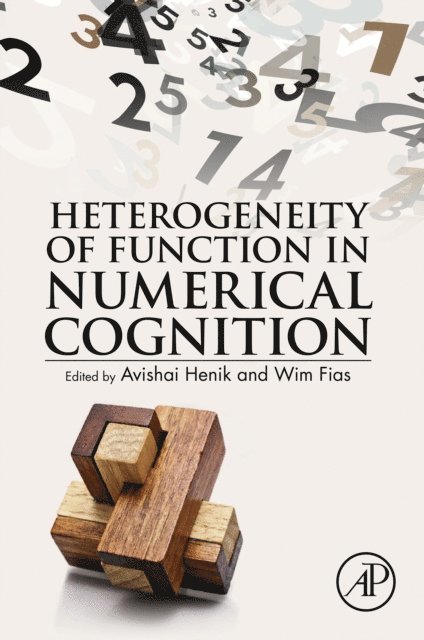
Heterogeneity of Function in Numerical Cognition
Inbunden, 2018
1265 kr
Lägg i varukorg
Heterogeneity of Function in Numerical Cognition presents the latest updates on ongoing research and discussions regarding numerical cognition. With great individual differences in the development or function of numerical cognition at neuroanatomical, neuropsychological, behavioral, and …
Heterogeneity of Function in Numerical Cognition
E-bok, 2018
1759 kr
Lägg i varukorg
Heterogeneity of Function in Numerical Cognition presents the latest updates on ongoing research and discussions regarding numerical cognition. With great individual differences in the development or function of numerical cognition at neuroanatomical, neuropsychological, behavioral, and …
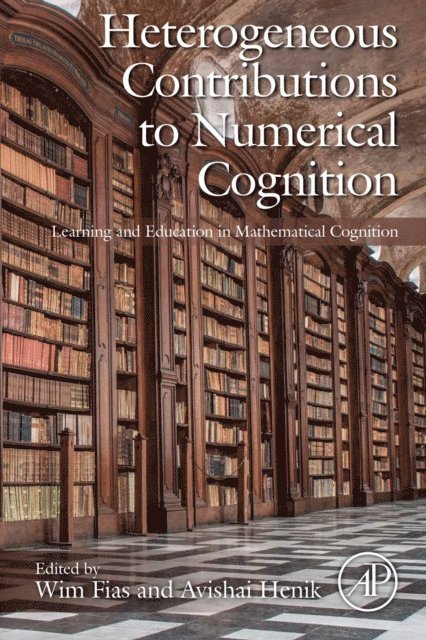
Heterogeneous Contributions to Numerical Cognition
Learning and Education in Mathematical Cognition
Inbunden, 2021
1765 kr
Lägg i varukorg
Arithmetic disability stems from deficits in neurodevelopment, with great individual differences in development or function of an individual at neuroanatomical, neuropsychological, behavioral, and interactional levels. Heterogeneous Contributions to Numerical Cognition: Learning and Education in …
Heterogeneous Contributions to Numerical Cognition
Learning and Education in Mathematical Cognition
E-bok, 2021
2457 kr
Lägg i varukorg
Arithmetic disability stems from deficits in neurodevelopment, with great individual differences in development or function of an individual at neuroanatomical, neuropsychological, behavioral, and interactional levels. Heterogeneous Contributions to Numerical Cognition: Learning and Education in …
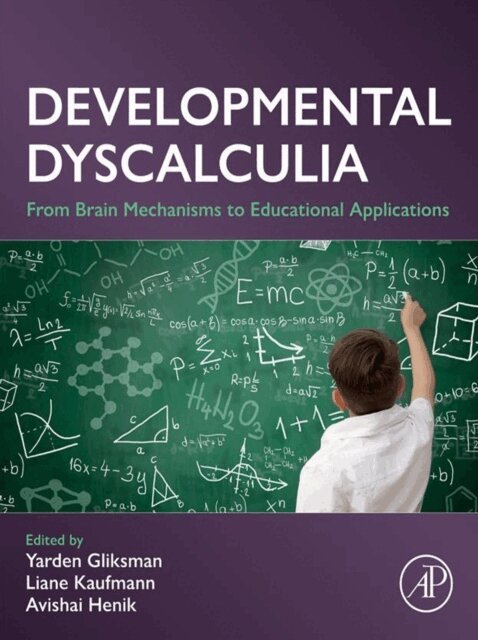
Developmental Dyscalculia
From Brain Mechanisms to Educational Applications
Av Avishai Henik, Liane Kaufmann m. fl.
E-bok, 2025
2184 kr
Lägg i varukorg
Developmental Dyscalculia: From Brain Mechanisms to Educational Applications presents research with a domain-general approach. It examines issues in the fields of numerical and non-numerical cognitive domains, neuro- mechanisms, and pedagogic issues to pave the way to a bridge between lab research, …
Developmental Dyscalculia
From Brain Mechanisms to Educational Applications
Av Yarden Gliksman, Liane Kaufmann m. fl.
Häftad, 2025
1727 kr
Lägg i varukorg
Developmental Dyscalculia: From Brain Mechanisms to Educational Applications presents research with a domain-general approach. It examines issues in the fields of numerical and non-numerical cognitive domains, neuro- mechanisms, and pedagogic issues to pave the way to a bridge between lab research, …