A.W. Moore – författare
Visar alla böcker från författaren A.W. Moore. Handla med fri frakt och snabb leverans.
9 produkter
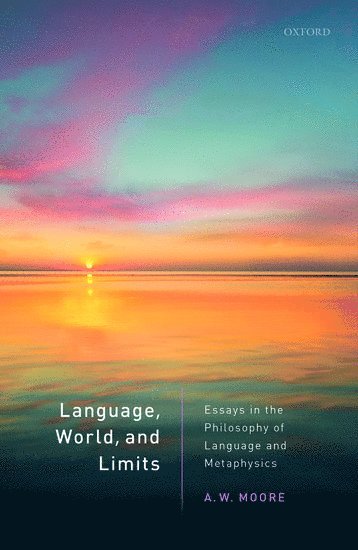
Language, World, and Limits
Essays in the Philosophy of Language and Metaphysics
Av A.W. Moore
Inbunden, 2019
1362 kr
Lägg i varukorg
These essays by A.W. Moore are all concerned with the business of representing how things are - its nature, its scope, and its limits. The essays in Part One deal with linguistic representation and discuss topics such as rules of representation and their nature, the sorites paradox, and the very …
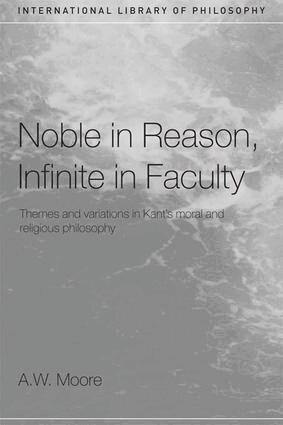
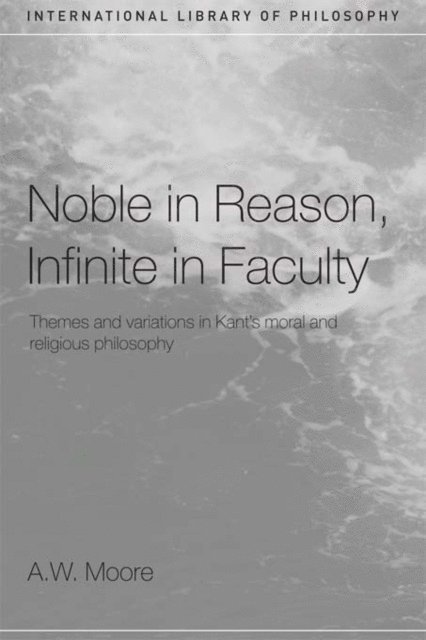
Noble in Reason, Infinite in Faculty
Themes and Variations in Kants Moral and Religious Philosophy
Av A.W. Moore
Inbunden, 2003
2513 kr
Lägg i varukorg
In this bold and innovative new work, Adrian Moore poses the question of whether it is possible for ethical thinking to be grounded in pure reason. In order to understand and answer this question, he takes a refreshing and challenging look at Kant’s moral and religious philosophy. Identifying three …
Noble in Reason, Infinite in Faculty
Themes and Variations in Kants Moral and Religious Philosophy
Av A.W. Moore
Häftad, 2005
735 kr
Lägg i varukorg
Is it possible for ethical thinking to be grounded in pure reason? In this bold and innovative new work, Adrian Moore provides a refreshing and challenging look at Kant's moral and religious philosophy and uses it to arrive at a distinctive way of understanding and answering this question. Noble in …
Noble in Reason, Infinite in Faculty
Themes and Variations in Kants Moral and Religious Philosophy
Av A.W. Moore
E-bok, 2012
866 kr
Lägg i varukorg
In this bold and innovative new work, Adrian Moore poses the question of whether it is possible for ethical thinking to be grounded in pure reason. In order to understand and answer this question, he takes a refreshing and challenging look at Kant’s moral and religious philosophy. Identifying three …
Noble in Reason, Infinite in Faculty
Themes and Variations in Kants Moral and Religious Philosophy
Av A.W. Moore
E-bok, 2012
866 kr
Lägg i varukorg
In this bold and innovative new work, Adrian Moore poses the question of whether it is possible for ethical thinking to be grounded in pure reason. In order to understand and answer this question, he takes a refreshing and challenging look at Kant’s moral and religious philosophy. Identifying three …
Infinite
Av A.W. Moore
Inbunden, 2018
2513 kr
Lägg i varukorg
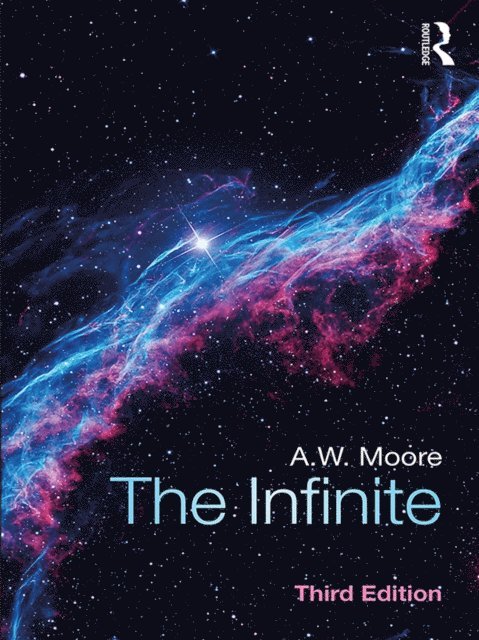
We are all captivated and puzzled by the infinite, in its many varied guises; by the endlessness of space and time; by the thought that between any two points in space, however close, there is always another; by the fact that numbers go on forever; and by the idea of an all-knowing, all-powerful …
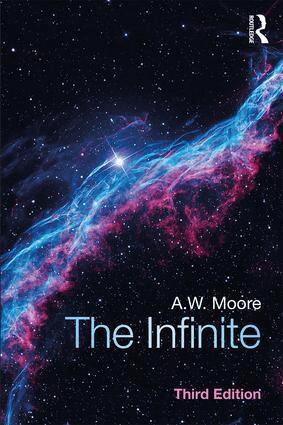
Infinite
Av A.W. Moore
Häftad, 2018
619 kr
Lägg i varukorg
We are all captivated and puzzled by the infinite, in its many varied guises; by the endlessness of space and time; by the thought that between any two points in space, however close, there is always another; by the fact that numbers go on forever; and by the idea of an all-knowing, all-powerful …
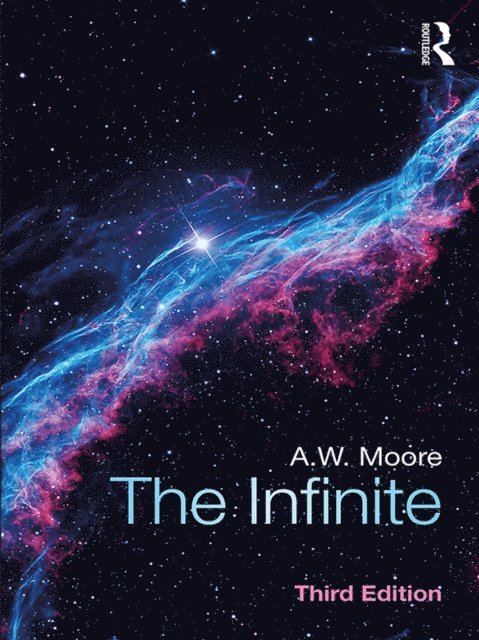
Infinite
Av A.W. Moore
E-bok, 2018
727 kr
Lägg i varukorg
We are all captivated and puzzled by the infinite, in its many varied guises; by the endlessness of space and time; by the thought that between any two points in space, however close, there is always another; by the fact that numbers go on forever; and by the idea of an all-knowing, all-powerful …
Infinite
Av A.W. Moore
E-bok, 2018
712 kr
Lägg i varukorg
We are all captivated and puzzled by the infinite, in its many varied guises; by the endlessness of space and time; by the thought that between any two points in space, however close, there is always another; by the fact that numbers go on forever; and by the idea of an all-knowing, all-powerful …