Axel R. Schäfer - Böcker
Visar alla böcker från författaren Axel R. Schäfer. Handla med fri frakt och snabb leverans.
4 produkter
4 produkter
324 kr
Skickas inom 10-15 vardagar
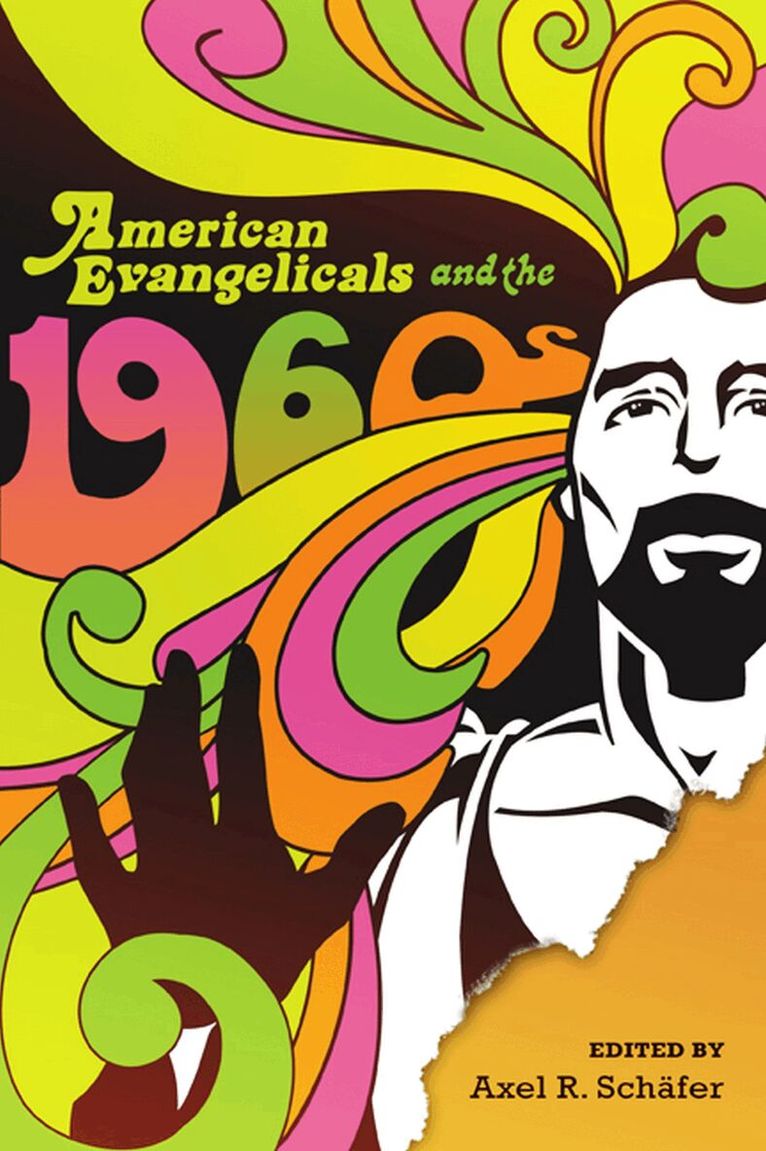
In the late 1970s, the New Christian Right emerged as a formidable political force, boldly announcing itself as a unified movement representing the views of a ""moral majority."" But that movement did not spring fully formed from its predecessors. American Evangelicals and the 1960s refutes the thesis that evangelical politics were a purely inflammatory backlash against the cultural and political upheaval of the decade.Bringing together fresh research and innovative interpretations, this book demonstrates that evangelicals actually participated in broader American developments during ""the long 1960s,"" that the evangelical constituency was more diverse than often noted, and that the notion of right-wing evangelical politics as a backlash was a later creation serving the interests of both Republican-conservative alliances and their critics. Evangelicalism's involvement with - rather than its reaction against - the main social movements, public policy initiatives, and cultural transformations of the 1960s proved significant in its 1970s political ascendance. Twelve essays that range thematically from the oil industry to prison ministry and from American counterculture to the Second Vatican Council depict modern evangelicalism both as a religious movement with its own internal dynamics and as one fully integrated into general American history.
595 kr
Skickas inom 10-15 vardagar
How is it that some conservative groups are viscerally antigovernment even while enjoying the benefits of government funding? In Piety and Public Funding historian Axel R. SchÄfer offers a compelling answer to this question by chronicling how, in the first half century since World War II, conservative evangelical groups became increasingly adept at accommodating their hostility to the state with federal support.Though holding to the ideals of church-state separation, evangelicals gradually took advantage of expanded public funding opportunities for religious foreign aid, health care, education, and social welfare. This was especially the case during the Cold War, when groups such as the National Association of Evangelicals were at the forefront of battling communism at home and abroad. It was evident, too, in the Sunbelt, where the military-industrial complex grew exponentially after World War II and where the postwar right would achieve its earliest success. Contrary to evangelicals' own claims, liberal public policies were a boon for, not a threat to, their own institutions and values. The welfare state, forged during the New Deal and renewed by the Great Society, hastened-not hindered-the ascendancy of a conservative political movement that would, in turn, use its resurgence as leverage against the very system that helped create it.By showing that the liberal state's dependence on private and nonprofit social services made it vulnerable to assaults from the right, Piety and Public Funding brings a much needed historical perspective to a hotly debated contemporary issue: the efforts of both Republican and Democratic administrations to channel federal money to "faith-based" organizations. It suggests a major reevaluation of the religious right, which grew to dominate evangelicalism by exploiting institutional ties to the state while simultaneously brandishing a message of free enterprise and moral awakening.
1 184 kr
Skickas inom 10-15 vardagar
Assessing the grand American evangelical missionary venture to convert the world, this international group of leading scholars reveals how theological imperatives have intersected with worldly imaginaries from the nineteenth century to the present. Countering the stubborn notion that conservative Protestant groups have steadfastly maintained their distance from governmental and economic affairs, these experts show how believers' ambitious investments in missionizing and humanitarianism have connected with worldly matters of empire, the Cold War, foreign policy, and neoliberalism. They show, too, how evangelicals' international activism redefined the content and the boundaries of the movement itself. As evangelical voices from Africa, Asia, and Latin America became more vocal and assertive, U.S. evangelicals took on more pluralistic, multidirectional identities not only abroad but also back home. Applying this international perspective to the history of American evangelicalism radically changes how we understand the development and influence of evangelicalism, and of globalizing religion more broadly.In addition to a critical introduction and essays by editors John Corrigan, Melani McAlister, and Axel R. Schafer are essays by Lydia Boyd, Emily Conroy-Krutz, Christina Cecelia Davidson, Helen Jin Kim, David C. Kirkpatrick, Candace Lukasik, Sarah Miller-Davenport, Dana L. Robert, Tom Smith, Lauren F. Turek, and Gene Zubovich.
341 kr
Skickas inom 10-15 vardagar
Assessing the grand American evangelical missionary venture to convert the world, this international group of leading scholars reveals how theological imperatives have intersected with worldly imaginaries from the nineteenth century to the present. Countering the stubborn notion that conservative Protestant groups have steadfastly maintained their distance from governmental and economic affairs, these experts show how believers' ambitious investments in missionizing and humanitarianism have connected with worldly matters of empire, the Cold War, foreign policy, and neoliberalism. They show, too, how evangelicals' international activism redefined the content and the boundaries of the movement itself. As evangelical voices from Africa, Asia, and Latin America became more vocal and assertive, U.S. evangelicals took on more pluralistic, multidirectional identities not only abroad but also back home. Applying this international perspective to the history of American evangelicalism radically changes how we understand the development and influence of evangelicalism, and of globalizing religion more broadly.In addition to a critical introduction and essays by editors John Corrigan, Melani McAlister, and Axel R. Schafer are essays by Lydia Boyd, Emily Conroy-Krutz, Christina Cecelia Davidson, Helen Jin Kim, David C. Kirkpatrick, Candace Lukasik, Sarah Miller-Davenport, Dana L. Robert, Tom Smith, Lauren F. Turek, and Gene Zubovich.