Axelle Rougeulle – författare
Visar alla böcker från författaren . Handla med fri frakt och snabb leverans.
3 produkter
3 produkter
E-bok
PDF, Engelska, 2015326 kr
Läs direkt efter köp
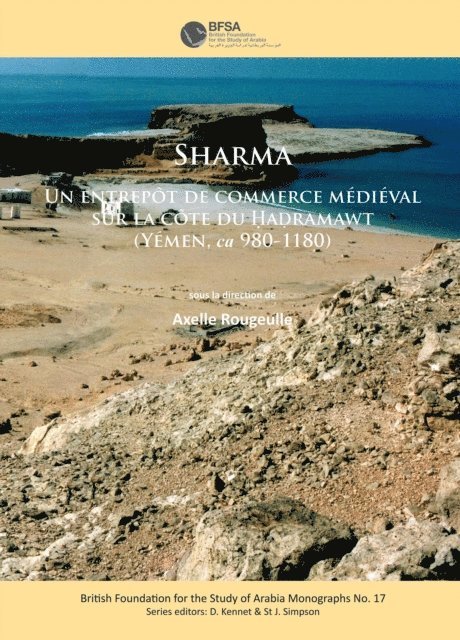
Cited by al-Muqaddasī in c.985 and then by al-Idrīsī in c.1150, the medieval port of Sharma was discovered in 1996 at the extremity of the Ra''s Sharma, 50km east of al-Shiḥr on the Ḥaḍramawt coast of Yemen; it was excavated in 2001-2005. This unique site was actually a transit entrepôt, a cluster of warehouses probably founded by Iranian merchants and entirely devoted to the maritime trade. It knew a rather short period of activity, between around 980 and the second half of the 12th century, which may be acknowledged as the Sharma horizon. Excavations proved that this settlement experienced six occupation phases, which are closely related to the political and economic developments in the region at that time. The material is mainly transit merchandises, small objects, resins, glass and pottery; some of the ceramics were locally made, in the nearby kilns of Yaḍghaṭ, but most (70%) were imported, from all parts of the Indian Ocean from China to East Africa. The typo-chronological study of this closed assemblage brings very precise information on the dating and evolution of the various types recorded, and the historical analyse sheds new light on the history of the Islamic maritime trade in the 10th to 12th centuries. French text throughout.
Häftad, Franska, 2018
618 kr
Skickas
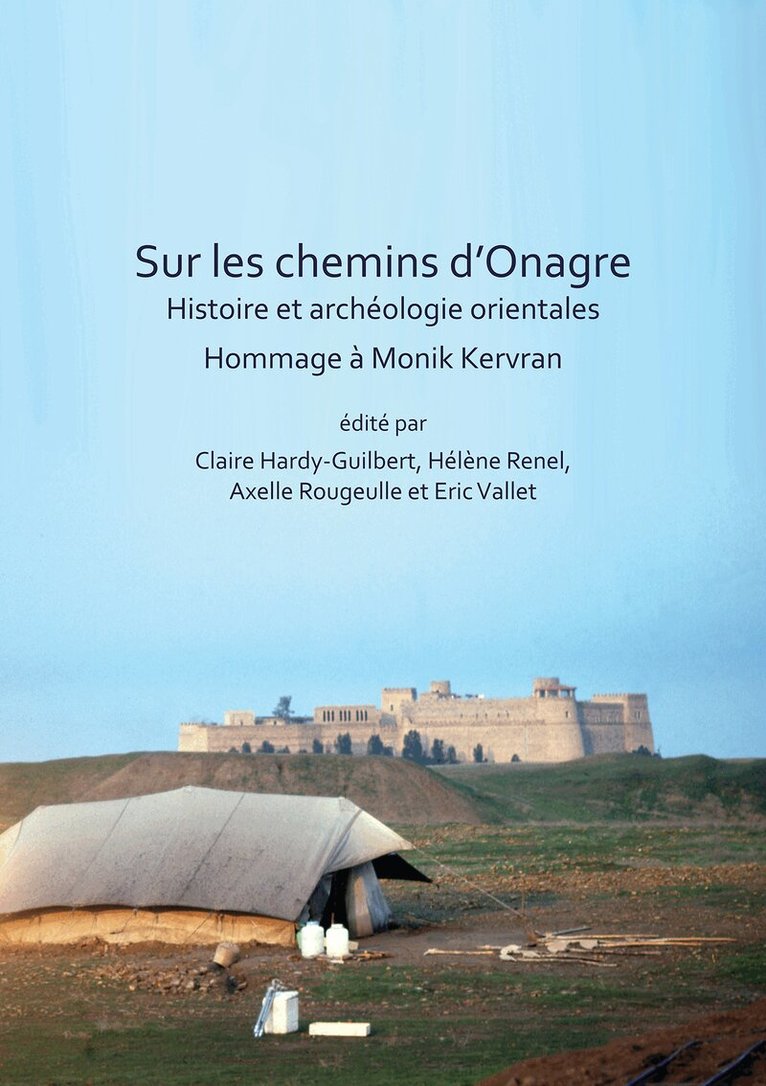
A pioneer of the French Islamic archaeology in the Middle East, Monik Kervran (CNRS, lab The Orient & The Mediterranean) was first renowned for her excavations at Susa in Iran and the discovery of the Darius’ statue at the start of her career in 1972. She then directed in the 70’s and 80’s excavations on the Arabian coasts of the Persian Gulf and Sea of Oman, at the main pre-Islamic and Islamic maritime centers of Qal’at al-Bahrain and Sohar. She also led researches in Central Asia and Eastern Iran, excavating Nishapur, and, since the 90’s, in the Indus delta where she opened excavations at Sehwan Sharif and Banbhore. Through the nineteen international contributions of this volume, the editors and contributors wish to highlight the variety of Monik Kervran’s scientific interests. In this way, they express their admiration and gratitude for her many achievements, in the archaeology, history, architecture, iconography and material culture of the Middle East and Western Indian Ocean during the late pre-Islamic and Islamic periods. | Pionnière de l’archéologie islamique française au Moyen-Orient, Monik Kervran (Cnrs, laboratoire Orient & Méditerranée) s’est illustrée dès le début de sa carrière par ses fouilles à Suse en Iran et la découverte de la statue de Darius en 1972. Elle a dirigé dans les années 70 et 80 la fouille d’importants sites portuaires de la côte arabe du golfe Persique et de la mer d’Oman, à Qal’at al-Bahrain et Sohar. Elle a également mené des recherches en Asie centrale et en Iran oriental, notamment à Nishapour, puis, depuis les années 90, dans le delta de l’Indus où elle a ouvert des fouilles à Sehwan Sharif et Banbhore. A travers les dix-neuf contributions internationales présentées dans cet ouvrage, les éditeurs et les contributeurs ont désiré mettre en lumière la diversité des intérêts scientifiques de Monik Kervran. Ils souhaitent ainsi exprimer leur admiration et leur gratitude pour ses apports majeurs aux champs de l’archéologie, de l’histoire, de l’architecture, de l’iconographie et de la culture matérielle du Moyen-Orient et de l’océan Indien occidental aux périodes pré-islamique tardive et islamique.
Del 11 - Archaeological Heritage of Oman
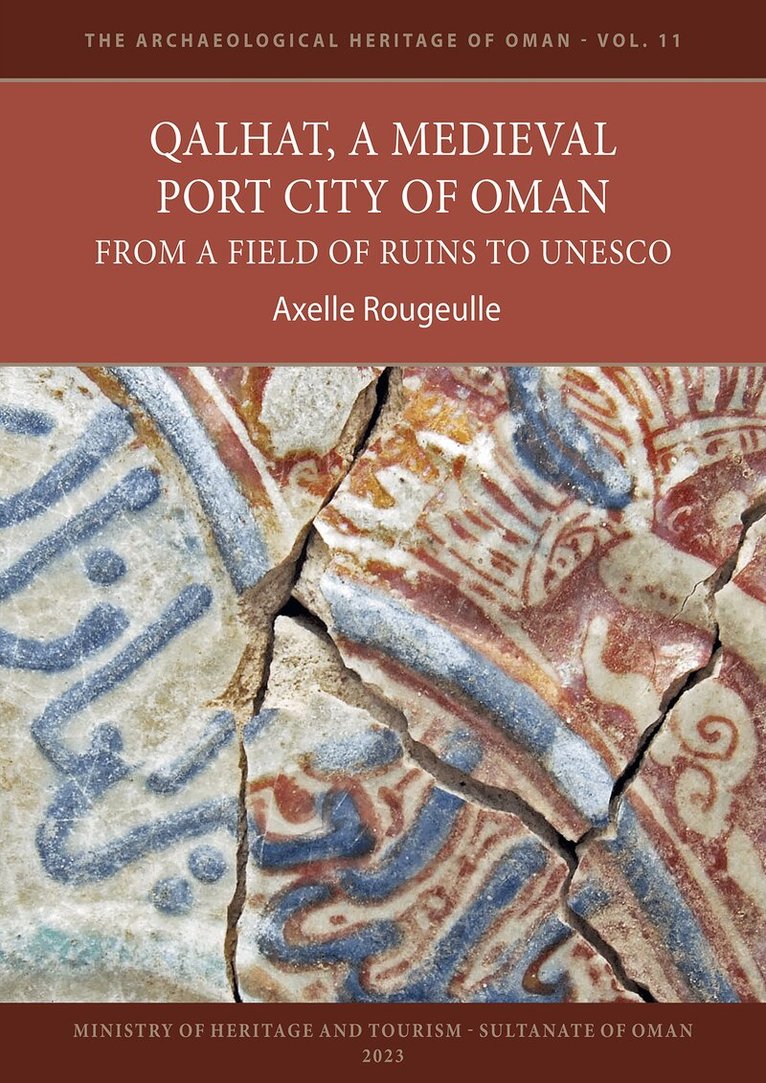
Qalhat, a Medieval Port City of Oman
From a Field of Ruins to UNESCO
Häftad, Engelska, 2023
715 kr
Tillfälligt slut
Although it is one of the main archaeological sites in Oman, the medieval port of Qalhat, near Sur in Ash-Sharqiyah Governorate, has long remained poorly documented. The extensive research initiated in 2008 by the Ministry of Heritage and Tourism (at the time, Heritage and Culture) shed striking light on the history of this famous harbour city, which was the twin capital of the Kingdom of Hormuz from the 13th to the 16th century. Surface surveys and excavations have revealed the plan and chronology of the city and its different districts. Mosques (including the Great Mosque built by Bibi Maryam around 1300) and other religious buildings, fortifications, and water supply systems have been identified and studied. The craft and economic activities of the city and the regional and international commercial links of the port have been reconstructed, as well as the daily life of its inhabitants, revealing the wealth and cosmopolitan character of this ancient Omani metropolis. All these results highlighted the Outstanding Universal Value of the site and eventually led to the inscription of Qalhat on the UNESCO World Heritage List in 2018.